CBSE Class 10 Previous Year Question Papers PDF | All Subjects Solved (2020–2025)
Class 10
"Sir, what questions will come in boards? How do I know what to focus on?"
If this question is running through your mind right now, then grab a notebook and pay close attention. CBSE previous year question papers Class 10 aren't just practice material — they're your secret weapon for cracking board exams with confidence.
Before starting PYQ practice, cross-check the CBSE Class 10 syllabus to ensure you’re not wasting time on deleted or low-weightage chapters.
Think about it: textbooks teach you concepts, but PYQs show you exactly how those concepts become questions. They reveal the exam's DNA — format, marks distribution, question types, everything. When you solve these papers systematically, you're not just studying. You're training your brain to think like the exam itself.
But here's what most students miss: these papers decode the entire examination strategy for you. Every subject — Maths, Science, Social Science, English, Hindi — follows specific patterns. When you practice within time limits, your speed automatically improves. Your time management becomes sharp. Your confidence builds naturally.
The real power? Most board exam questions come from a limited question pool. Solve the last 10 years' papers properly, and you'll notice the same concepts, same formats, same styles appearing again and again. This isn't coincidence. This is pattern.
Why CBSE Class 10 Previous Year Question Papers Matter
Board exams aren't just another test. They're the gateway to your future — and CBSE previous year question papers Class 10 are your master key to unlock that gateway.
Most students treat PYQs as "just practice papers." Big mistake. These papers are actually intelligence reports from the examination battlefield, showing you exactly what works, what doesn't, and what the enemy (exam) is planning next.
India's Best Exam Preparation for Class 10th - Download Now
Crack the Exam Code: Pattern + Structure = Power
If you want to understand the latest paper pattern and marking schemes deeply, make sure to check the updated CBSE Class 10 Sample Papers 2025 with solutions and marking scheme
Every CBSE exam follows a hidden blueprint. The examiners don't change this blueprint randomly — they stick to tested patterns because it works. When you solve CBSE previous year question papers Class 10, you're basically downloading this blueprint directly into your brain.
Here's what happens when you understand the structure:
· You know exactly how much time each section deserves
· Question difficulty becomes predictable, not scary
· You plan your attack strategy before entering the exam hall
· Zero surprises on exam day
Science papers have a different DNA than Maths papers. Social Science follows its own logic. Once you see these patterns clearly, exam anxiety disappears because you know what's coming.
Hunt Down the High-Frequency Targets
Smart students don't study everything equally. They hunt down the frequently asked questions like a sniper targeting high-value objectives.
The 80-20 rule applies perfectly here:
· 20% of topics give you 80% of the marks
· Some concepts appear in boards every single year
· Other topics show up once in 5 years

Pattern recognition becomes your superpower:
· History questions about Nationalism?
Appears almost every year
· Maths theorems on similarity?
High-frequency target
· Science diagrams for Human Eye?
Exam favorite
This focused approach transforms your preparation from scattered studying to surgical precision.
Bridge Theory to Reality: From Books to Marks
Always keep the latest NCERT Books for Class 10 as your base, because PYQs are 100% NCERT-based.
Along with solving PYQs, revise faster using Class 10 short notes and quick revision videos to strengthen concepts in minimum time.
Textbooks teach you concepts. CBSE class 10 previous year question papers teach you how to convert concepts into marks.
There's a massive difference between "knowing" and "answering correctly." PYQs show you:
· Exact answer formats that earn full marks
· Keywords that examiners hunt for
· Presentation styles that impress, not confuse
· Time allocation that actually works in real conditions
For Maths: You learn which steps to show, which to skip For Science: You discover when diagrams are mandatory vs optional
For Social Science: You master the art of structured, keyword-rich answers
Regular practice doesn't just build knowledge — it builds exam temperament. Fear reduces. Confidence grows. Your brain gets comfortable with the pressure cooker environment.
Solve 5-6 papers per subject and you simultaneously sharpen content knowledge, speed, presentation, and mental toughness.
Bottom line: CBSE previous year question papers aren't just practice tools. They're strategic weapons that give you insider access to the examination system itself, turning you from a hopeful student into a confident exam warrior.
Most-Asked Questions in CBSE Class 10 PYQs
When you analyze CBSE previous year question papers class 10 from the last 5 years, clear patterns emerge. This isn't guesswork — this is data. Some question types appear so frequently that ignoring them is basically throwing away easy marks.
Smart students don't study everything equally. They focus on high-probability questions that show up year after year. Here's exactly what appears most often:
1. Science: Diagrams Rule the Paper
Most repeated question types:
· Labeled diagrams → Human eye, electric circuits, refraction through lenses (guaranteed 6-8 marks every year)
· Definition questions → Ohm's law, refraction, chemical reactions (2-3 marks each, very predictable)
· Experiment-based questions → Testing for CO₂, observing stomata, verifying reflection laws
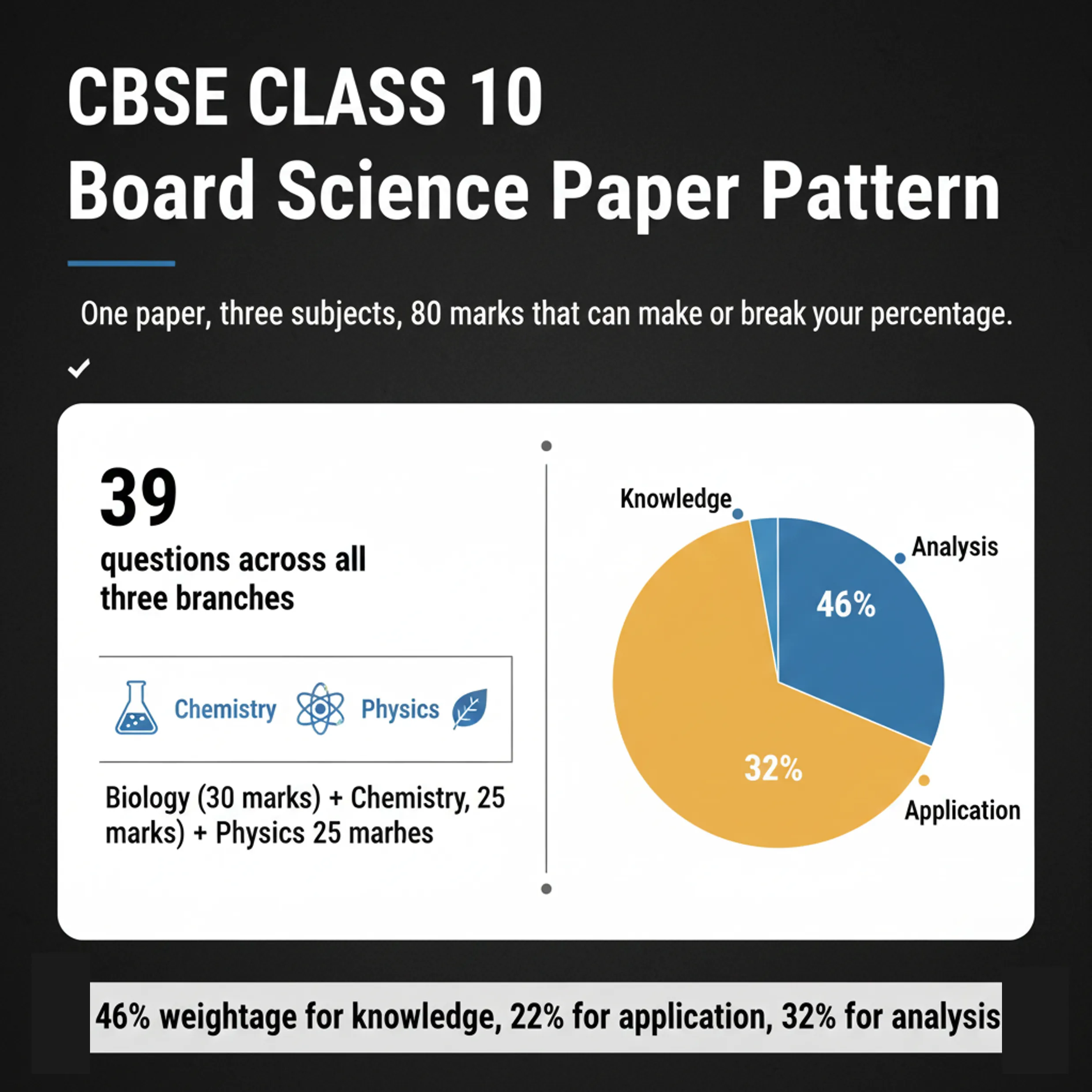
Recent papers show one clear trend: daily life application questions are increasing. Carbon cycle, food chains, environmental impact — these aren't just theory anymore. They're direct question sources.
Pro tip: If you can draw and label 8-10 standard diagrams perfectly, you've secured 15-20 marks before even touching theory.
2. Maths: Theorems + Case Studies = High Marks
For quick revision during Maths practice, keep the Class 10 Maths important formulas list handy — it helps reduce silly mistakes.
Guaranteed question patterns:
· Theorem proofs → Basic Proportionality Theorem, triangle similarity criteria (appears in 90% of papers)
· Case-based problems → Quadratic equations in real-life scenarios, arithmetic progressions
· Graph interpretation → Linear equations, coordinate geometry
One specific example: "Passenger boarding plane speed calculation" has appeared 4 times between 2011-2020. Same concept, slight variations. Master the method once, score every time.
Focus strategy: Theorems first, then case studies. These two categories alone give you 25-30 marks.
3. Social Science: Map Work + Long Answers
Fixed components:
· Map questions → Exactly 5 marks allocated every year, non-negotiable
· History patterns → Nationalism movements, industrialization impacts (8-10 marks)
· Geography focus → Resource distribution, economic activities
· Political Science → Federalism, democracy concepts (very predictable)
· Economics → Indian economy sectors, globalization effects
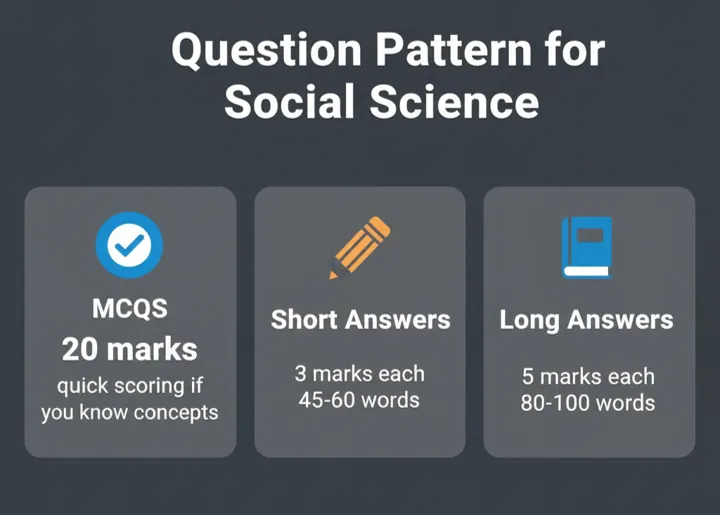
Reality check: Map work is free marks if you practice. Long answers follow exact formats. Master both, secure 40+ marks easily.
4. English: Literature + Grammar Combo
Consistent sections:
· Character analysis → Every literature text, every year
· Grammar trio → Transformation exercises, editing, gap-filling (12-15 marks total)
· Writing formats → Letters, articles, stories (format knowledge = instant marks)
· Unseen passages → Inference and vocabulary focus
Examiner feedback: Students who practice PYQs score 15-20% higher in writing sections. Format familiarity makes the difference.
5. Hindi: अपठित गद्यांश + Format Writing
Core question types:
· Unseen passages (अपठित गद्यांश/काव्यांश) → Comprehension-based, 8-10 marks
· Writing formats → Letter writing (पत्र लेखन), essays (निबंध), consistent every year
· Grammar focus → Sandhi, samas, language structures
· Literature → Character analysis, poem excerpts explanation
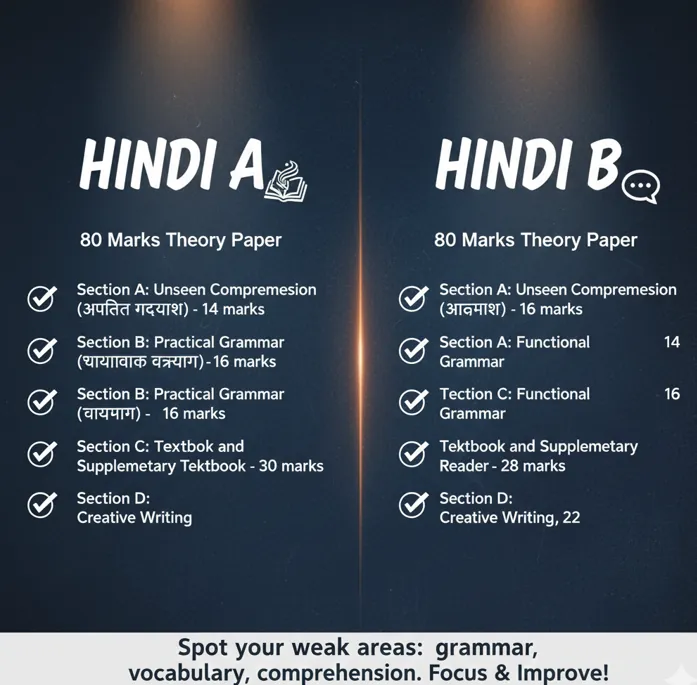
Success pattern: Master 5-6 standard formats, practice unseen passage techniques. These two areas give you 18-20 marks guaranteed.
6. Sanskrit: Translation + Grammar Foundation
Repeated elements:
· Translation exercises → Sanskrit to other languages, both directions
· Grammar trinity → Sandhi (joining words), samas (compounds), vibhakti (declensions)
· Applied grammar → Word joining/separation, compound identification
· Daily routine questions → Time expressions in Sanskrit (very common)
Smart approach: Grammar rules are limited. Master them once, apply everywhere.
7. Computer Applications: Code Analysis + Logic
Standard question types:
· Output prediction → Code analysis, result determination
· Logic questions → Algorithm understanding, flowchart interpretation
· Web tech basics → HTML, CSS, JavaScript applications
· Database operations → Query formulation, practical applications
Current trend: Practical application questions are increasing. Theory alone won't work.
8. Artificial Intelligence: Concepts + Case Studies
Regular components:
| Exam Component | Focus Area | Remarks / Weightage |
|---|---|---|
| MCQs | AI concepts and applications | Easy scoring, concept-based questions |
| Case Study Analysis | Real-world AI implementations | Tests practical understanding |
| Technical Concepts | Natural Language Processing, Data Science uses | Theory + application-based |
| Evaluation Metrics | Precision, Recall, F1 Score | Frequently tested topics |
| AI Project Cycle | Problem scoping to deployment | Asked in both objective & descriptive formats |
Preparation focus: Concepts are limited, applications are vast. Stick to NCERT + standard examples.
The pattern is clear: certain question types dominate every subject. Master these high-probability areas first. Random studying wastes time. Strategic studying wins boards.
Refer to Esaral for more detailed analysis of subject-wise previous year questions.
How to Use Previous Year Question Papers Effectively
Most students solve PYQs wrong. They treat them like homework instead of exam simulation.
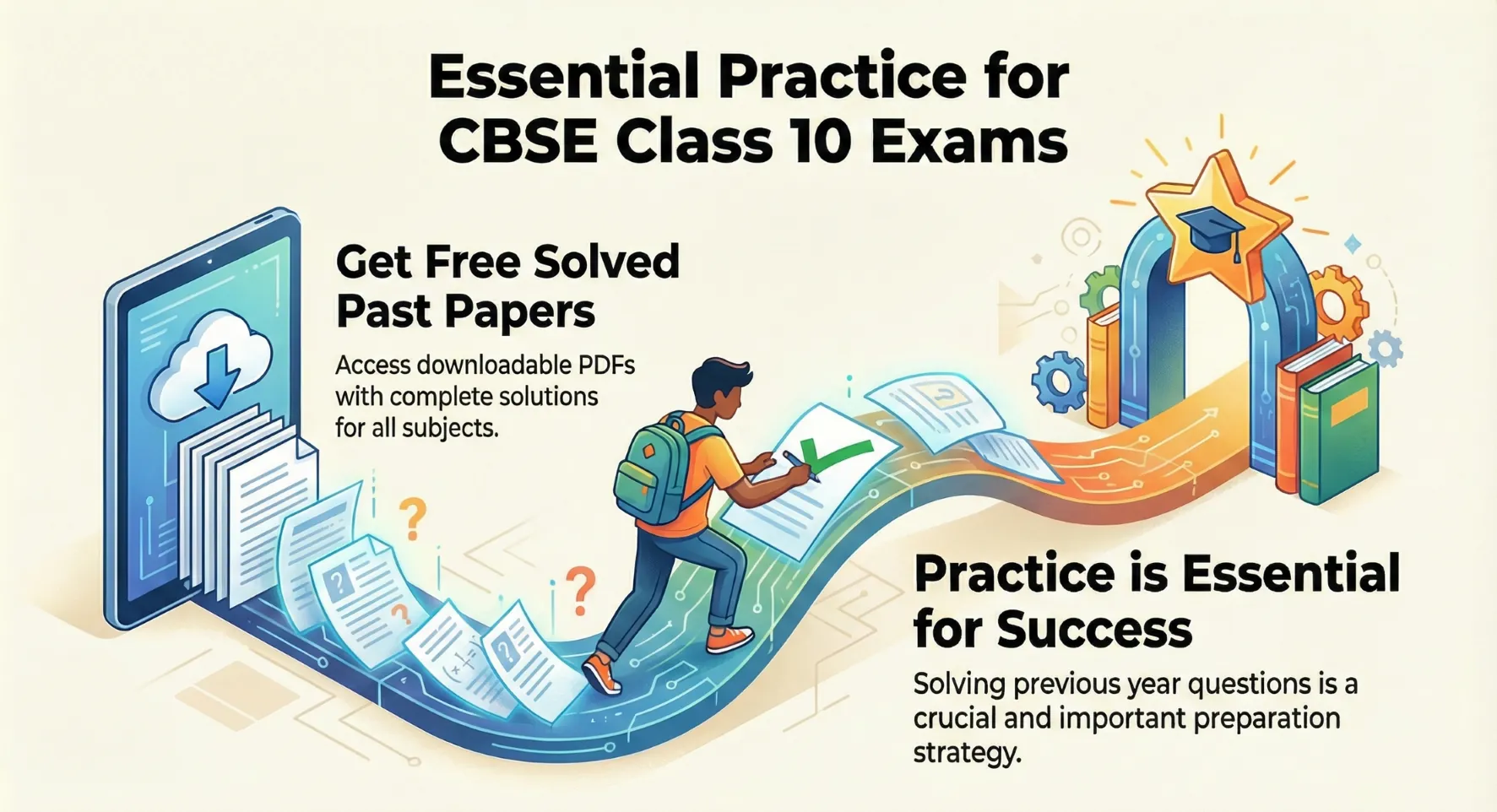
That's why their scores don't improve even after solving 20+ papers. They're missing the strategy that separates average students from toppers.
The difference is method, not effort.
Smart PYQ practice follows a system. Random solving gives random results. Strategic solving gives consistent improvement. Let me break down the exact approach that works.
Start with Your Strongest Subject
Don't jump straight into your weakest areas. That's a motivation killer.
Begin with the subject where you feel most confident. This builds psychological momentum and creates early wins. When you nail 2-3 papers in your strong subject, your brain gets programmed for success.
Example: If Maths is your strength, solve 3-4 Maths papers first. Score well. Feel good. Then move to tougher subjects with that confidence boost already working for you.
Smart tip: Focus on the last 3 years' papers first. These reflect current question styles and patterns. Older papers are useful for understanding long-term trends, but recent papers show you what's coming.
Create Real Exam Conditions
This is where most students mess up. They solve papers with:
· Phone nearby
· Music playing
· Snack breaks every 30 minutes
· No time pressure
Result? Zero exam readiness.
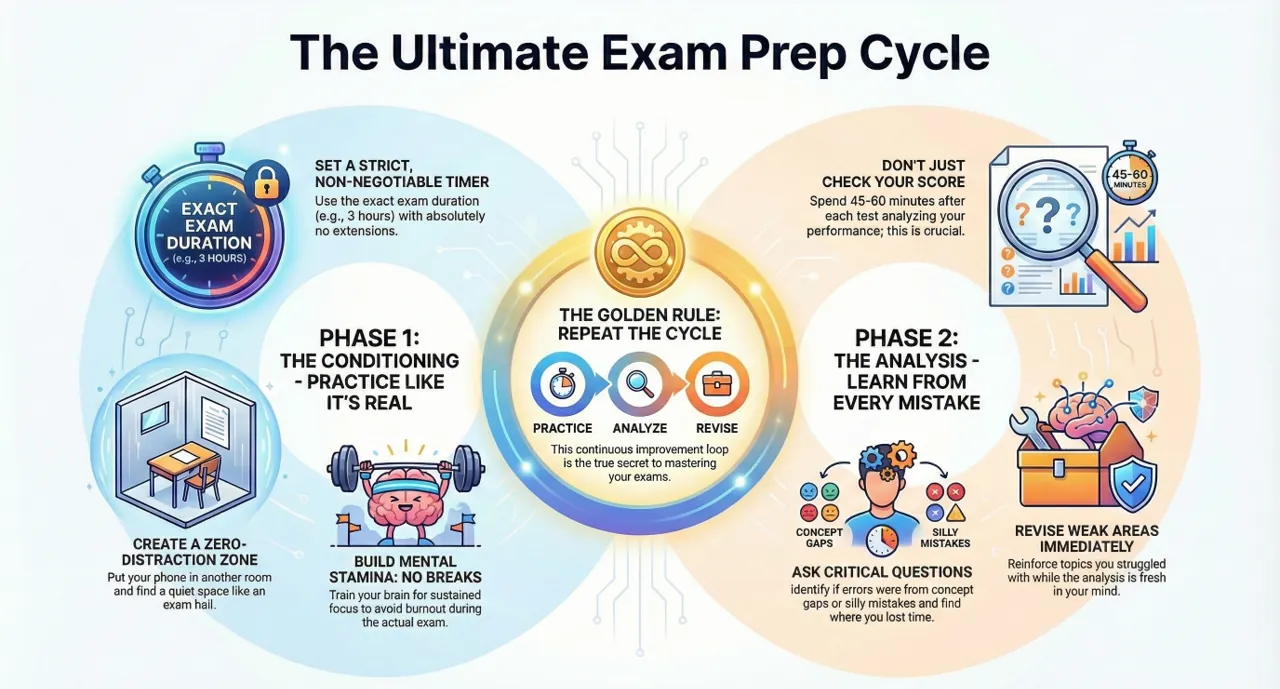
The right way:
1. Set timer for exactly 3 hours - no extensions, no mercy
2. Find a quiet space - treat it like the actual exam hall
3. Keep all stationery ready - don't waste time searching for erasers
4. Put phone in another room - distractions kill exam temperament
5. No breaks during the paper - build the stamina you'll need
Do this once every week minimum. Your brain needs to get comfortable with sustained focus under time pressure.
This isn't just practice. This is mental conditioning.
Analyze Like Your Rank Depends on It
Because it actually does.
The biggest mistake? Students solve a paper, check the answers, see the score, and move on. This approach wastes 80% of the learning opportunity.
After every paper, spend 45-60 minutes asking:
· Which questions did I get wrong and why?
· Was it a concept gap or silly mistake?
· Where did I lose time unnecessarily?
· Which topics are consistently weak for me?
· How can I improve my presentation?
For descriptive subjects like Social Science and English: Study the marking schemes carefully. Notice the keywords, formats, and presentation styles that get full marks.
For calculation subjects like Maths and Science: Check if your method matches the expected approach. Sometimes your answer is right but your method costs you marks.
The golden rule: After identifying weak areas, revise those topics immediately. Don't wait. Strike while the analysis is fresh.
Visit eSaral for detailed marking schemes and answer analysis guides.
This cycle - Practice → Analyze → Revise → Practice - is what separates serious students from casual ones.
Your PYQ strategy determines your board exam score. Make it count.
What Students Do Wrong With PYQs (And Why They Don't Improve)
Beta, here's the reality: having PYQs doesn't guarantee success. Most students make the same silly mistakes again and again, then wonder why their marks don't improve.
These aren't small errors. These are preparation-killing habits that destroy your chances even when you work hard. Let's fix them now.
Mistake #1: Treating Instructions Like Suggestions
Every single previous year question paper class 10 starts with specific instructions. But what do most students do? Skip them completely and jump straight to Question 1.
Big mistake.
Those instructions tell you:
· Which sections are compulsory
· Where you have choices
· Whether diagrams carry marks
· How to structure your answers
Here's what happens when you ignore them:
· Mathematics papers clearly state if showing steps gets you marks. Miss this, and you lose points even with correct answers
· Science papers specify when diagrams are mandatory. Skip this, face automatic mark deduction
· Social Science papers give you choices between questions. Attempt both by mistake? You waste 30-40 minutes on nothing
CBSE guidelines are crystal clear: follow instructions strictly. Yet students rush in without reading. This carelessness costs 15-20 marks easily.
Mistake #2: The Time Management Disaster
Most students practice PYQs like they're doing homework. No timer. No pressure. No reality check.
Then exam day comes. Panic sets in.
Common time-wasting patterns:
· Social Science: Spending 45 minutes on one History answer, leaving Geography and Civics incomplete
· English: Getting stuck on comprehension for too long, rushing through grammar and writing
· Mathematics: Fighting with one tough problem for 20 minutes while easy questions remain untouched
The simple rule CBSE recommends: practice within time limits to build confidence.
A 5-mark question needs more time than a 2-mark question. Obvious? Yes. Do students follow this? Rarely.
Mistake #3: Messy Presentation = Lost Marks
"Sir, I knew everything but got low marks."
Know why? Your presentation was probably terrible.
Examiners check hundreds of papers daily. Make their job difficult with messy writing, missing diagrams, or poor structure, and you pay the price.
What works:
· Science/Geography: Clean, labeled diagrams
· Mathematics: Highlighted final answers
· Social Science: Proper subheadings like "Causes," "Effects," "Solutions"
· Languages: Follow exact formats for letters, essays, reports
What doesn't work:
· Illegible handwriting
· Missing word counts
· Forgetting to mention formulas in Math
· Random, unstructured answers
Golden habit: Reserve the last 10-15 minutes of every practice session for reviewing your answer sheet. Check numbering, presentation, completeness.
This habit during practice becomes automatic during exams.
The difference between students who improve with PYQs and those who don't? How they practice, not how much they practice.
Fix these three mistakes, and your pyq class 10 practice will actually translate into better marks.
Benefits of Solving CBSE Class 10 PYQs
The moment you start solving CBSE previous year question papers Class 10 regularly, everything changes.
Not just your marks. Your entire approach to board exams transforms. Students who ignore PYQs struggle with uncertainty and anxiety. Students who master them walk into the exam hall with quiet confidence.
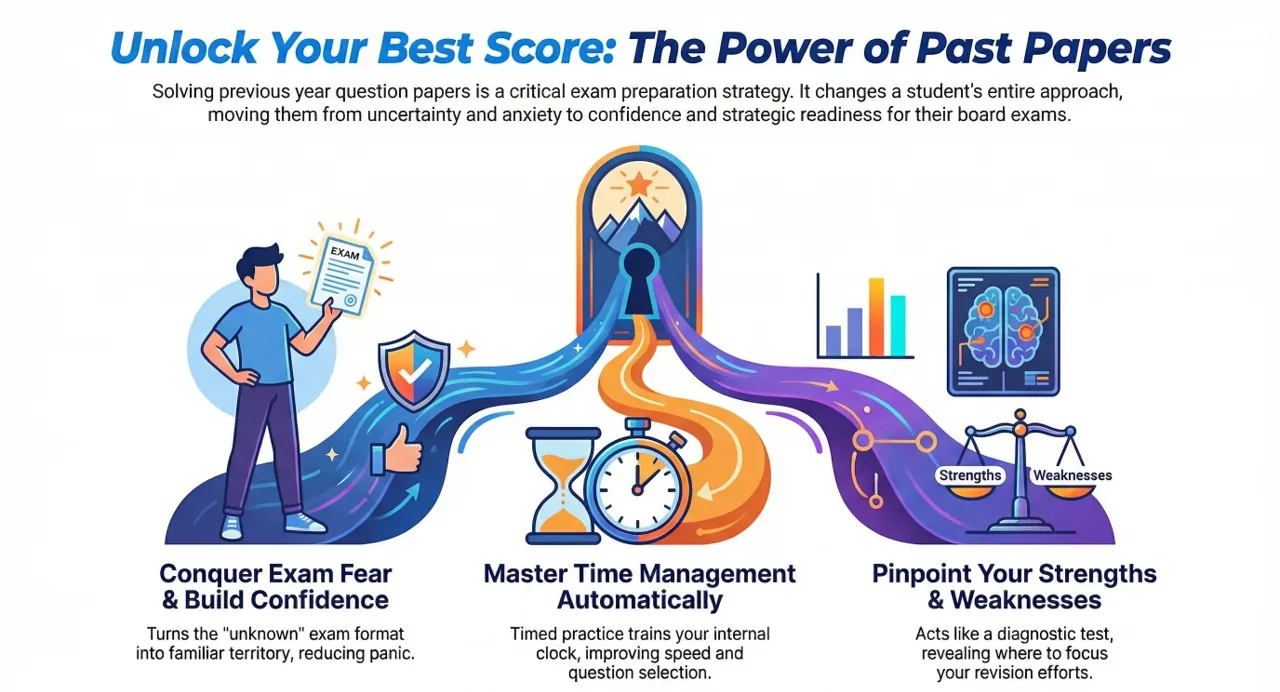
Here's exactly what these papers do for you:
1. Kills Exam Fear + Builds Unshakeable Confidence
Board exam fear isn't about lack of knowledge. It's about fear of the unknown.
When you solve previous year question papers Class 10 repeatedly, the "unknown" becomes familiar territory. Your brain stops panicking because it recognizes patterns. You've already faced similar questions dozens of times during practice.
The mental shift is dramatic:
· Before: "What if they ask something I've never seen?"
· After: "I've solved this type of question before. I know exactly what to do."
This confidence isn't fake motivation. It's earned confidence built through systematic practice. Students who solve 5-6 papers per subject report feeling genuinely prepared rather than just hopeful.
2. Creates Perfect Time Management Automatically
Time management isn't something you learn from videos or tips. You develop it through repeated practice under real conditions.
Every previous year question paper you solve under timed conditions trains your brain's internal clock. Your speed improves naturally. Your question selection becomes smarter. You stop wasting time on impossible questions.
After 10-15 timed papers, students typically:
· Finish papers with 15-20 minutes to spare
· Automatically know which questions to attempt first
· Never panic when seeing difficult questions
· Complete revision rounds smoothly within time limits
3. Shows You Exactly Where You Stand
CBSE previous year question papers Class 10 work like diagnostic tests. They reveal your true preparation level — not what you think you know, but what you can actually execute under exam pressure.
After each paper analysis, you discover:
· Which chapters consistently trip you up
· Where your silly mistakes happen most
· Which question types you handle confidently
· Exactly how much improvement you need
This self-awareness becomes your strategic advantage. Instead of random studying, you focus laser-sharp attention on actual weak points. Your revision becomes targeted, not scattered.
Most importantly: you track your progress visibly. Watching your scores improve from paper to paper builds genuine momentum that keeps you motivated through the final weeks.
Bottom line: Students who solve PYQs systematically don't just score better — they handle board exams with a calmness that makes the difference between good performance and exceptional results.
Score 90+ Using PYQs: The 3-Step Strategy
The difference between scoring 70% and 90% isn't talent. It's strategy.
Most students solve PYQs randomly. Smart students follow a system. Here's the exact 3-step approach used by 90+ scorers to extract maximum marks from cbse previous year question papers class 10.
Step 1: Hunt the High-Frequency Questions
To save time, you can directly practice chapter-wise important questions for Class 10 which are based on recurring PYQ patterns.
The 5-7 Year Rule: Collect and solve at least 5-7 years of previous year question papers for each subject. Your target? Spot the repeaters.
Questions don't repeat by accident. They repeat because:
· Those topics are exam favorites
· The format tests core concepts perfectly
· CBSE considers them essential for your grade
The 85% Formula: Master all concepts that appear in PYQs, and you're looking at 85%+ in boards. Focus especially on the last five years — they show you exactly where the exam is heading.
Pro tip: Create a simple tally chart. Every time you see the same concept or question type, mark it. After solving 5-6 papers, the patterns become crystal clear.
Step 2: Master the Presentation Game
Visual wins marks. Period.
For Science and Social Science:
· Clean, labeled diagrams = instant extra marks
· Flowcharts and tables break the text wall
· Keywords, formulas, dates in bold catch examiner eyes instantly
The Examiner Psychology: Examiners check hundreds of papers. Visual elements like neat diagrams and highlighted key terms make their job easier — and they reward you for it.
What works:
· Box your final answers in Maths
· Underline key terms in definitions
· Use bullet points for multiple effects/causes
· Draw margins and write neatly
Remember: presentation isn't decoration. It's communication.
Step 3: Turn Mistakes Into Marks
Every wrong answer is a treasure map to more marks.
After each PYQ practice:
· Spot the pattern: Are your mistakes conceptual, careless, or time-related?
· Target the weak zones: Grammar killing your Hindi score? Map work confusing you in Social Science?
· Create a fix-list: 15 minutes per weak area beats 2 hours of random revision
The Smart Revision Formula: Instead of "Let me revise everything again," ask "What specifically cost me marks in that last paper?"
This targeted approach fixes your unique problem areas instead of wasting time on concepts you've already mastered.
Your PYQ practice isn't about quantity. It's about extracting intelligence from every paper you solve.
Refer to Esaral for more relevant resources to maximize your score using previous year question papers.
Your Board Exam Victory Starts Now
You now have everything you need to dominate CBSE Class 10 boards.
This isn't just another blog post you read and forget.
This is your complete battle plan. Every strategy, every pattern, every secret that toppers use — it's all here. Science diagrams that guarantee marks. Maths theorems that appear every year. Social Science map work that never changes. English formats that examiners love.
The difference between students who score 60% and those who score 95%?
It's not intelligence. It's strategy.
The 95% scorers know exactly which questions will come. They practice with real exam conditions. They analyze their mistakes like detectives. They focus their energy on high-probability topics instead of wasting time on random chapters.
You now know these secrets too.
But knowing and doing are different things.
Your success depends on what you do in the next 30 days. Will you keep studying randomly, hoping for the best? Or will you follow this systematic approach that has helped thousands of students achieve their dream scores?
Remember: every topper was once a beginner who refused to give up.
Your Class 10 boards aren't just exams. They're your first real opportunity to prove what you're made of. To show yourself, your family, your teachers that you can rise to any challenge when you have the right strategy.
Beta, your time to shine is here.
Take these PYQ strategies. Use them religiously. Watch your confidence build with every paper you solve. Feel your speed improve with every practice session. See your marks jump with every strategic revision session.
Your future self will thank you for the effort you put in today.
All the best. Go make those boards your stepping stone to greatness. 💪🔥
Key Takeaways
Master your CBSE Class 10 board exams by strategically using previous year question papers to identify patterns, practice effectively, and boost your confidence for exam success.
• Practice with purpose: Solve 5-7 years of previous papers under timed conditions to identify recurring question patterns and build exam stamina.
• Focus on high-probability topics: Target frequently repeated questions like Science diagrams, Math theorems, and Social Science map work for maximum score impact.
• Master the review process: Always analyze your answers against official marking schemes to understand mark allocation and improve presentation quality.
• Build confidence systematically: Start with your strongest subjects to create momentum, then tackle challenging areas with targeted revision based on your weak points.
• Perfect your presentation: Use clear diagrams, highlight keywords, and follow proper formatting to make it easier for examiners to award full marks.
The strategic use of previous year question papers transforms exam preparation from random studying into focused, efficient practice that directly translates to better board exam performance and reduced anxiety.
FAQs
Q1. How many previous year question papers should I solve for effective CBSE Class 10 exam preparation?
It's recommended to solve at least 5-7 years of previous question papers for each subject. This helps you identify recurring patterns and familiarize yourself with the exam format.
Q2. What are some common mistakes students make when using previous year question papers?
Common mistakes include skipping instructions, poor time management, and neglecting presentation quality. It's crucial to read all instructions carefully, practice time management, and focus on neat, well-structured answers.
Q3. How can solving previous year question papers improve my exam performance?
Regular practice with previous papers boosts confidence, improves time management skills, and helps in self-assessment. It also familiarizes you with the exam pattern and frequently asked questions, leading to better overall performance.
Q4. Which subjects in CBSE Class 10 tend to have the most consistent question patterns?
Subjects like Science (diagrams and experiments), Mathematics (theorems and case-based problems), and Social Science (map work) tend to have consistent question patterns across years. However, all subjects have certain recurring themes that can be identified through practice.
Q5. How should I review my answers after solving a previous year question paper?
After solving a paper, compare your answers with the official CBSE marking schemes. This helps you understand how marks are allocated, identify common mistakes, and learn the expected structure and presentation of answers. Use this analysis to focus your revision on weak areas.