Organic Chemistry Some Basic Principles and Techniques Class 11 | GOC Notes | IIT JEE & NEET
Master Organic Chemistry Class 11 with complete GOC concepts, IUPAC nomenclature, electronic effects, isomerism, purification techniques, and reaction intermediates explained for JEE & NEET preparation.
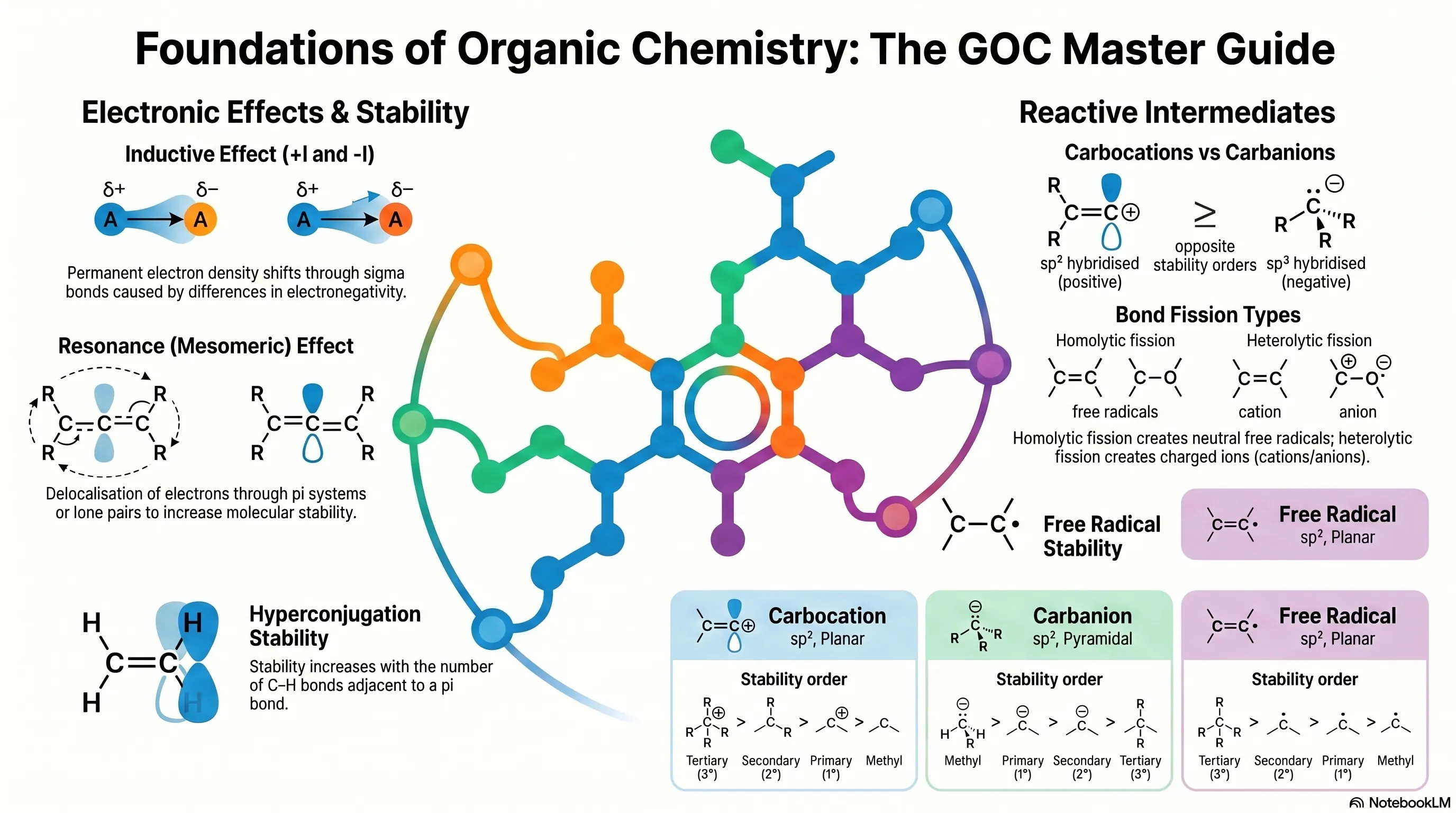
Table of Contents
- Why This Chapter Is the Most Important in Class 11 Chemistry
- Classification of Organic Compounds
- IUPAC Nomenclature: Rules and Examples
- Purification Techniques for Organic Compounds
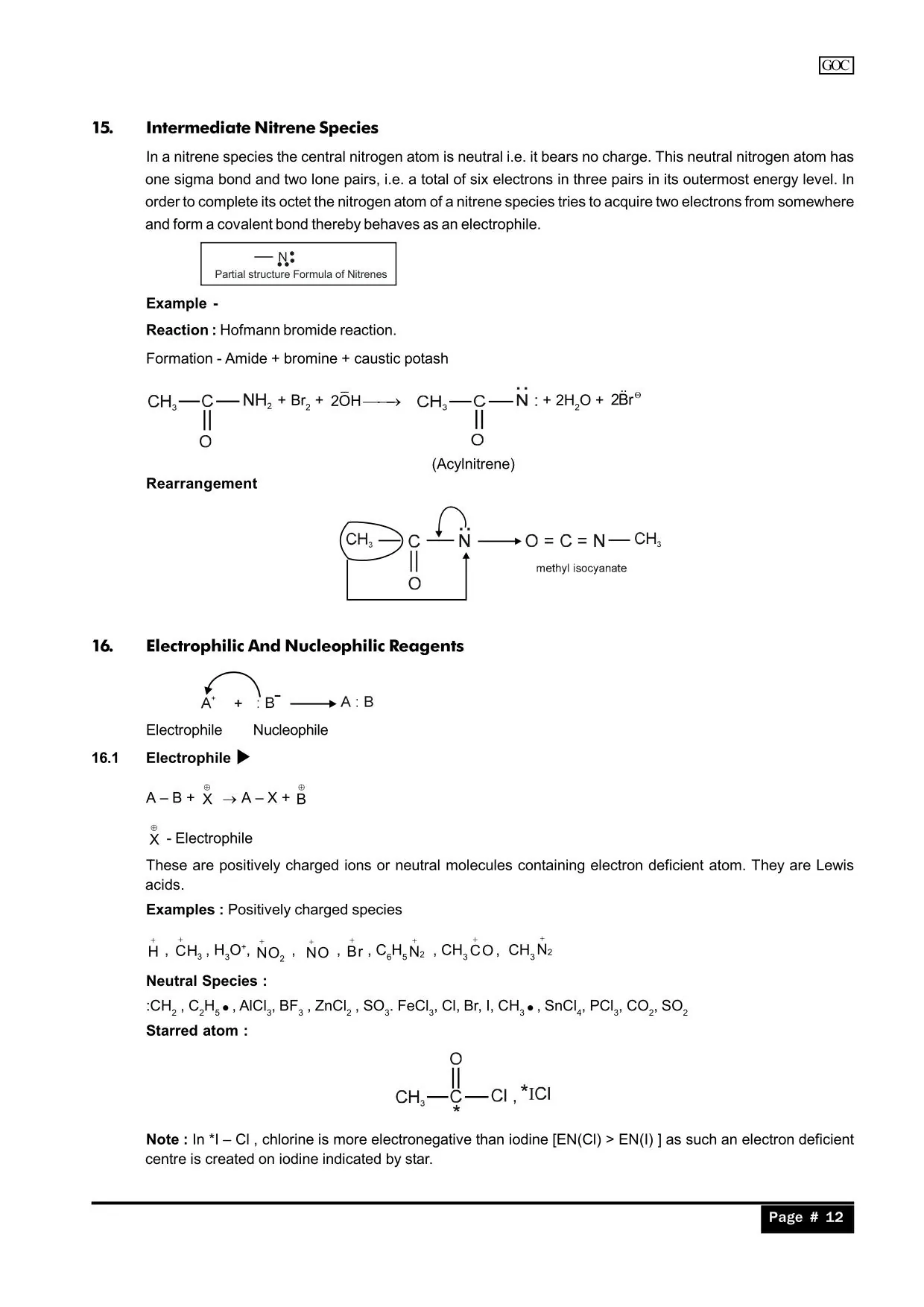
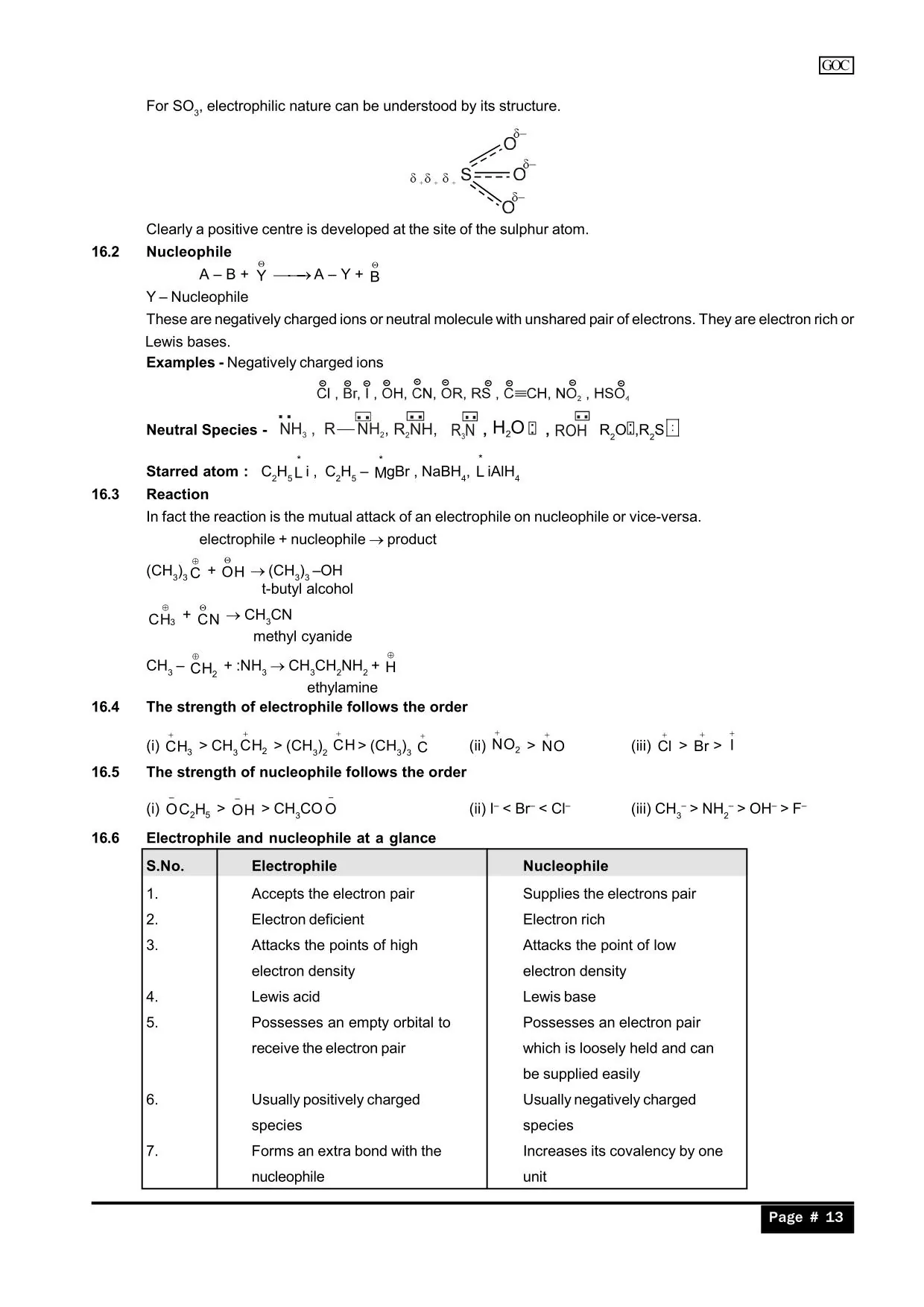
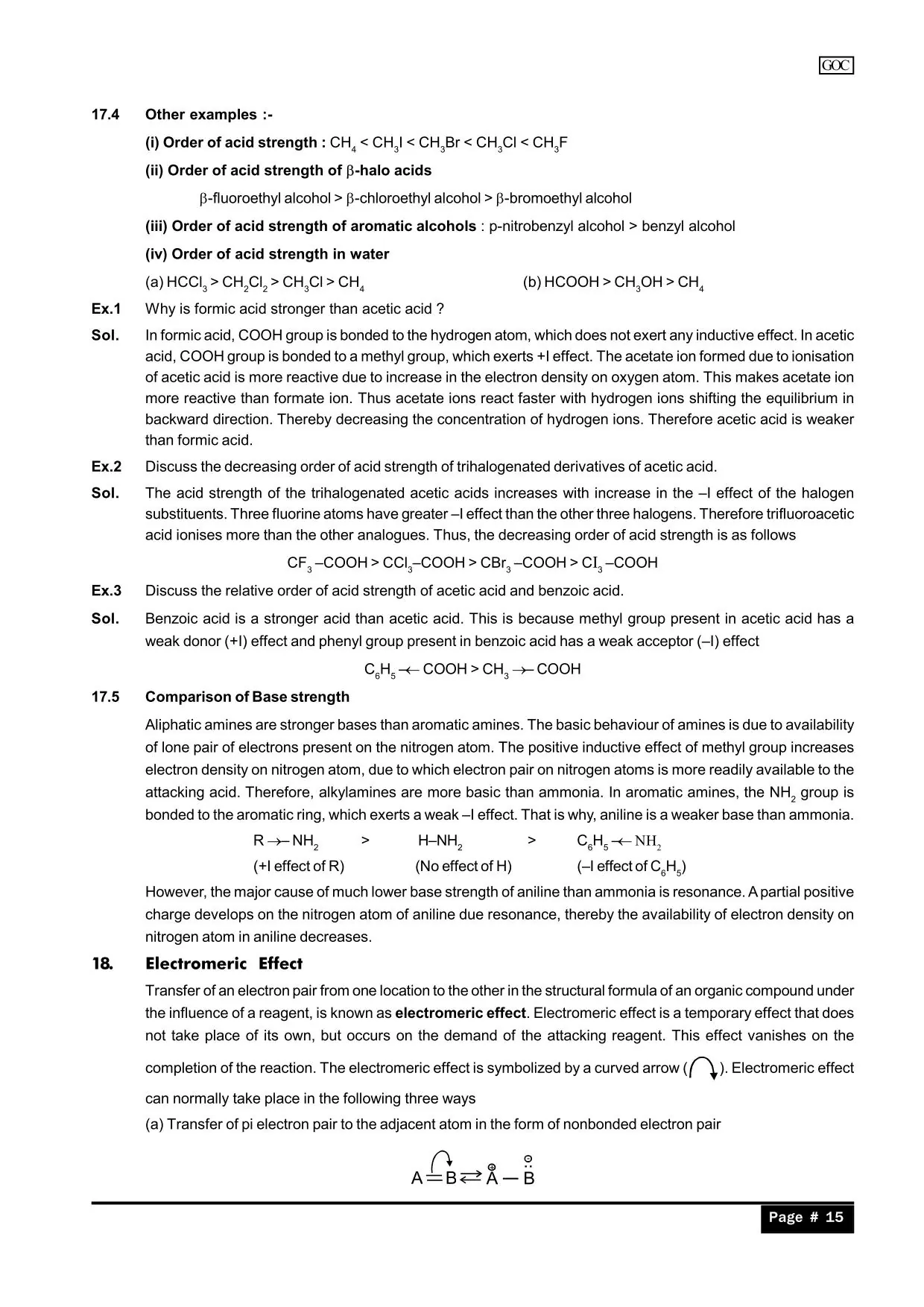
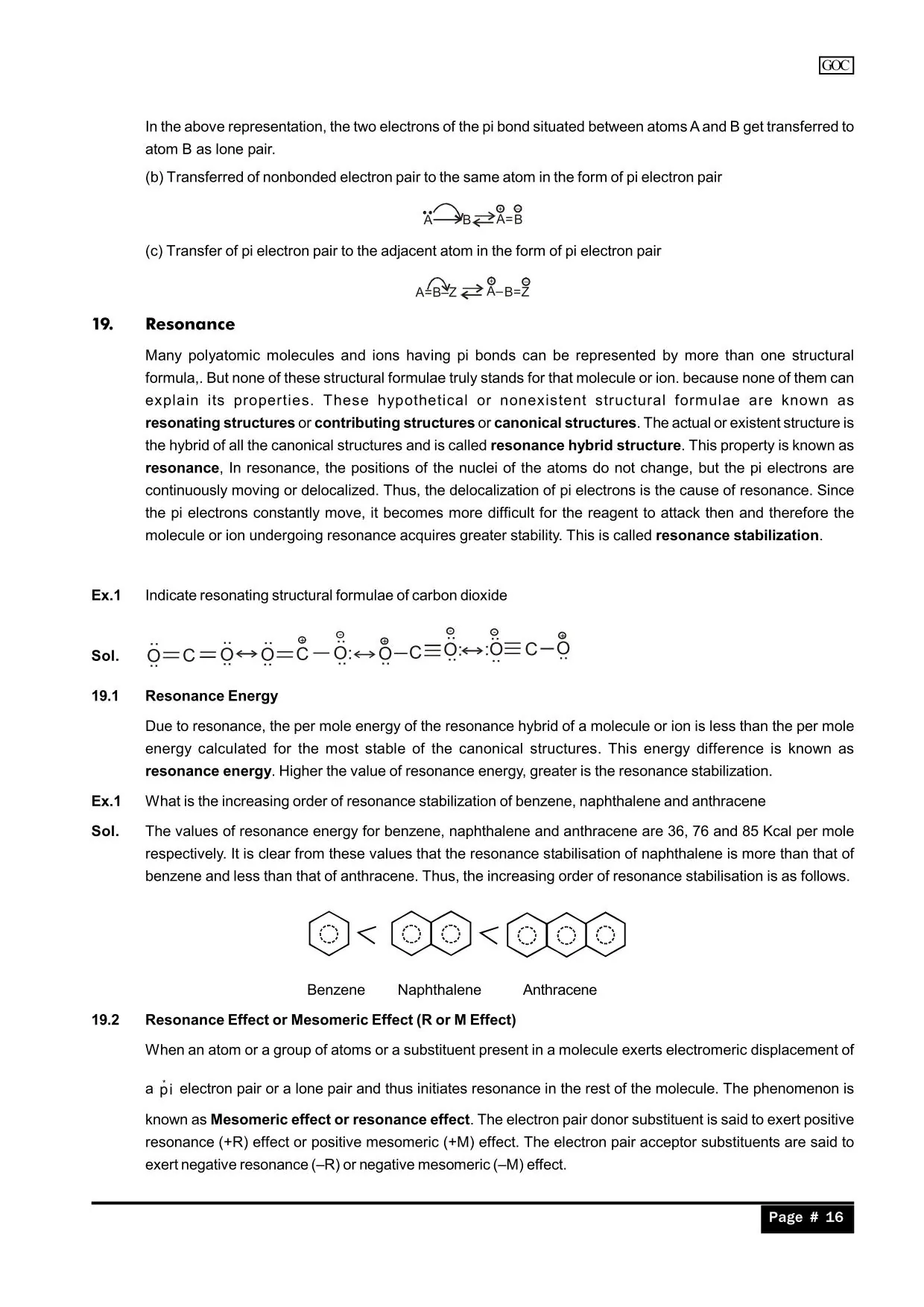
- Electronic Effects: Inductive, Resonance, Hyperconjugation
- Isomerism: Structural and Stereoisomerism
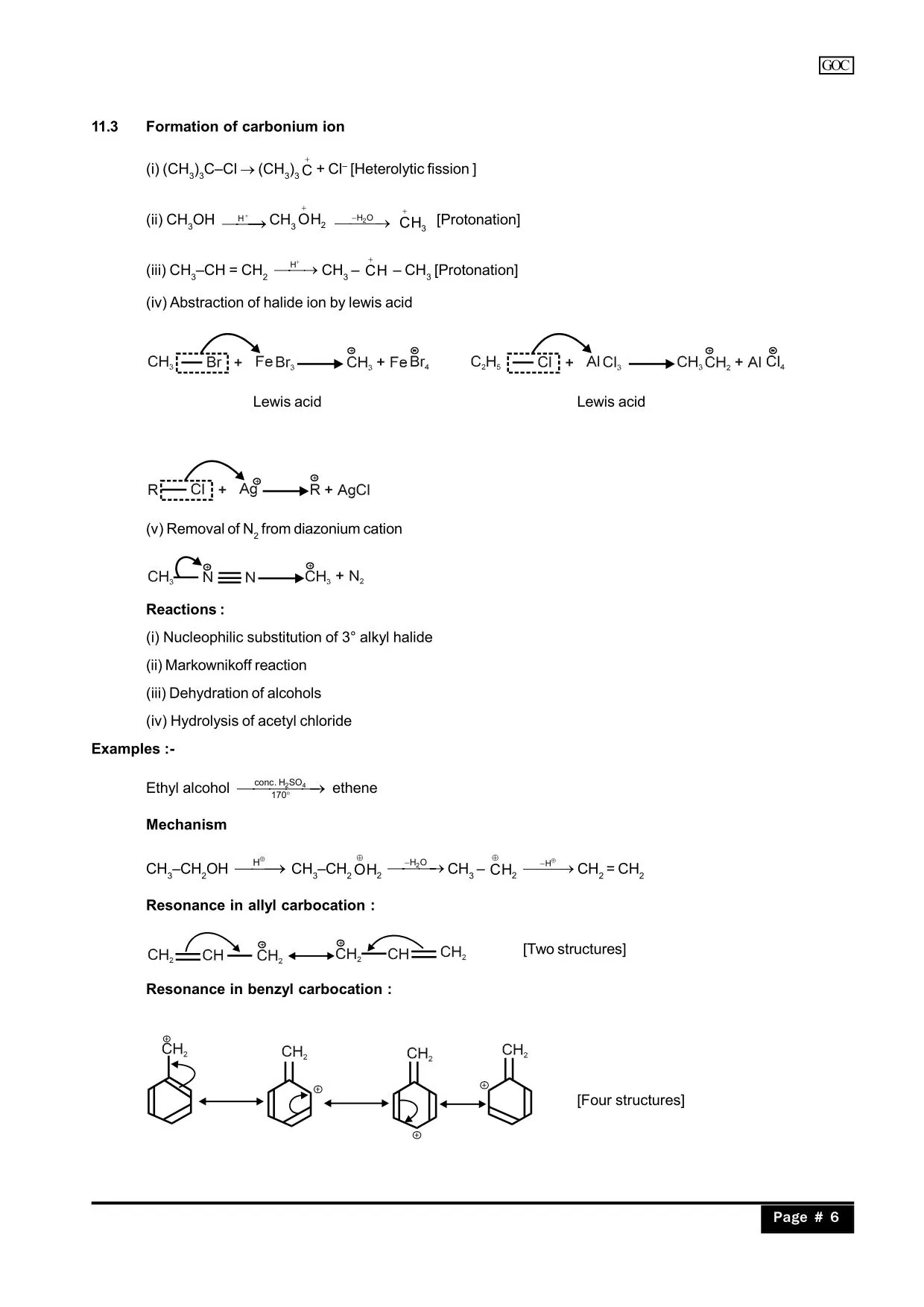
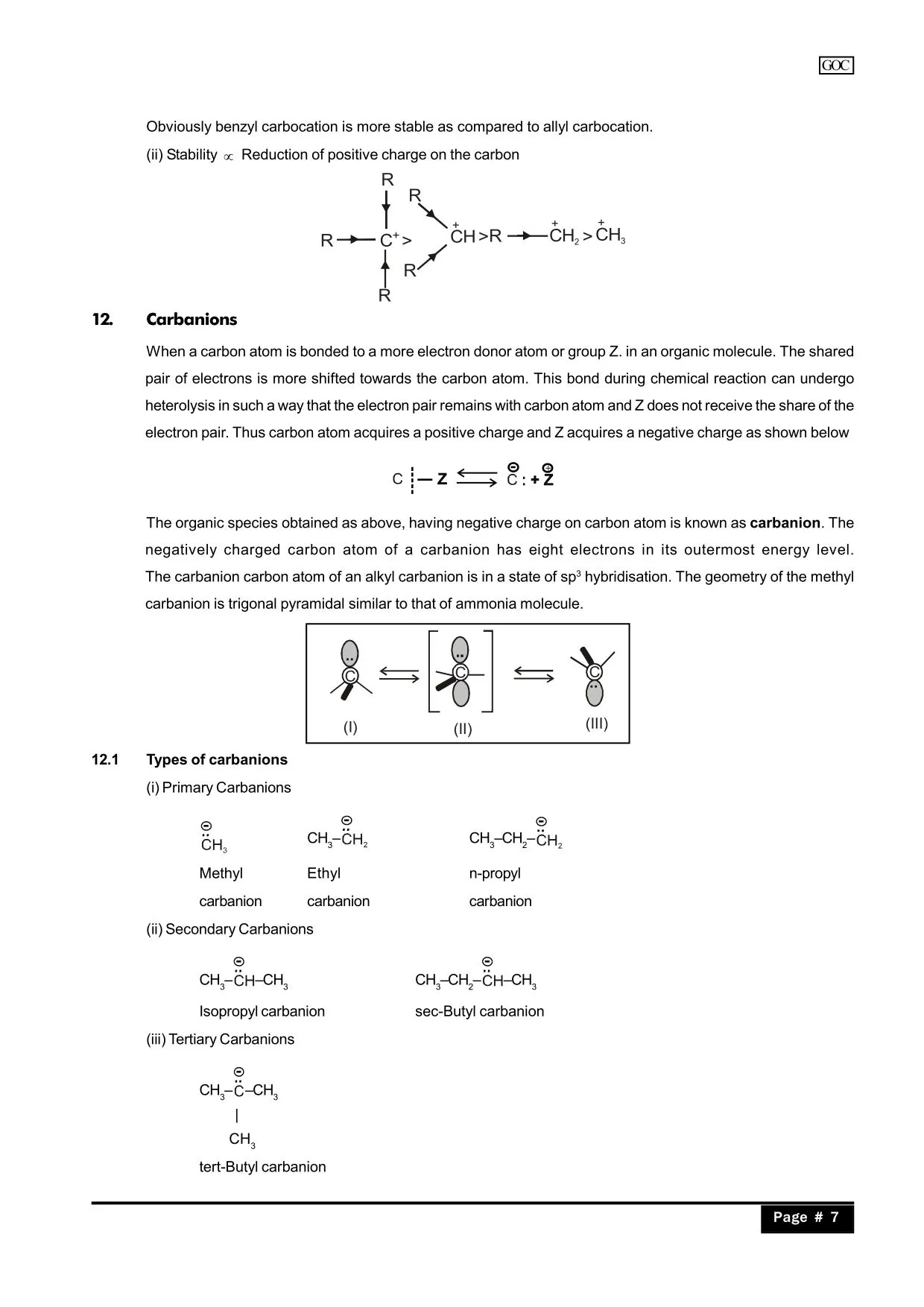
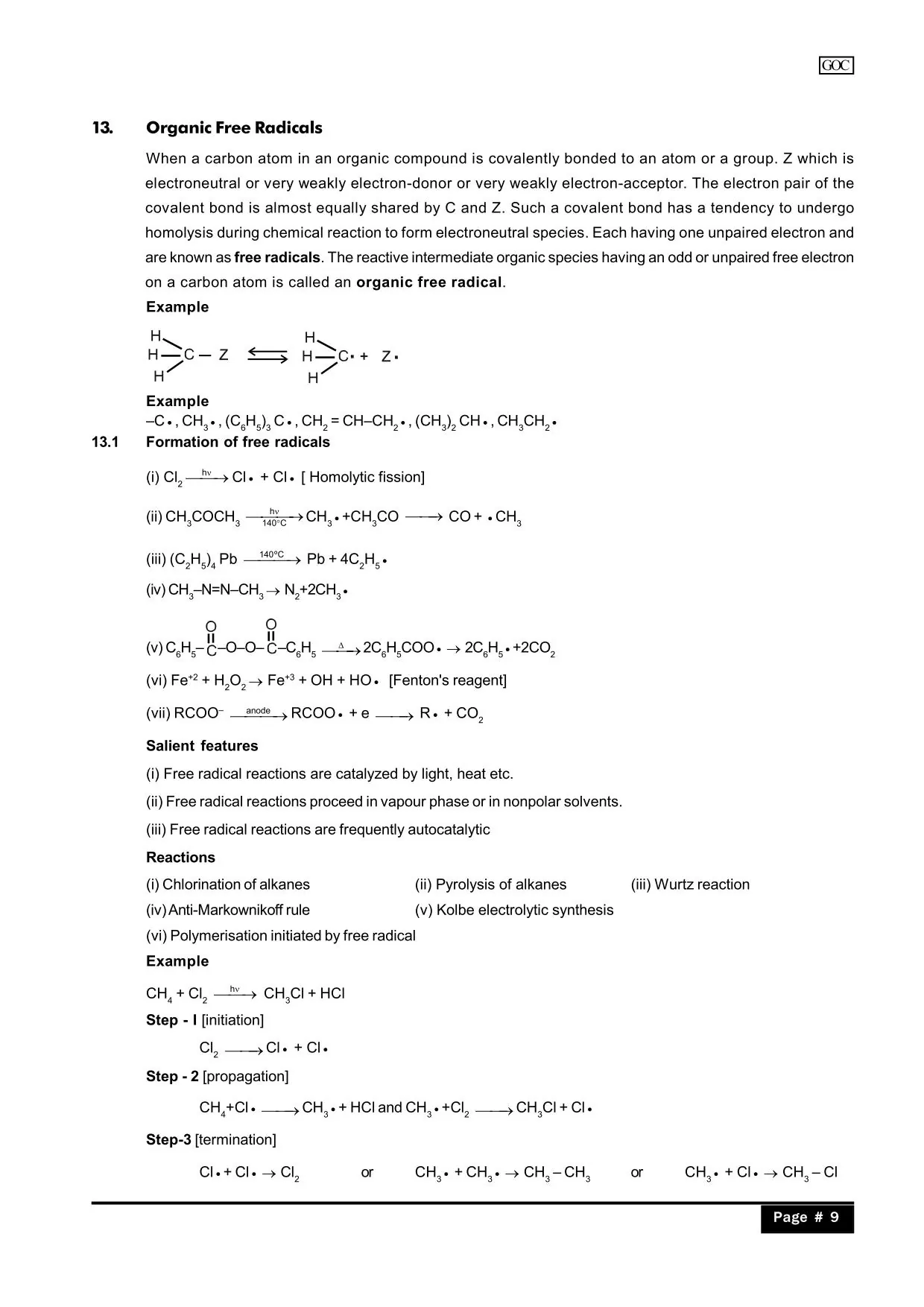
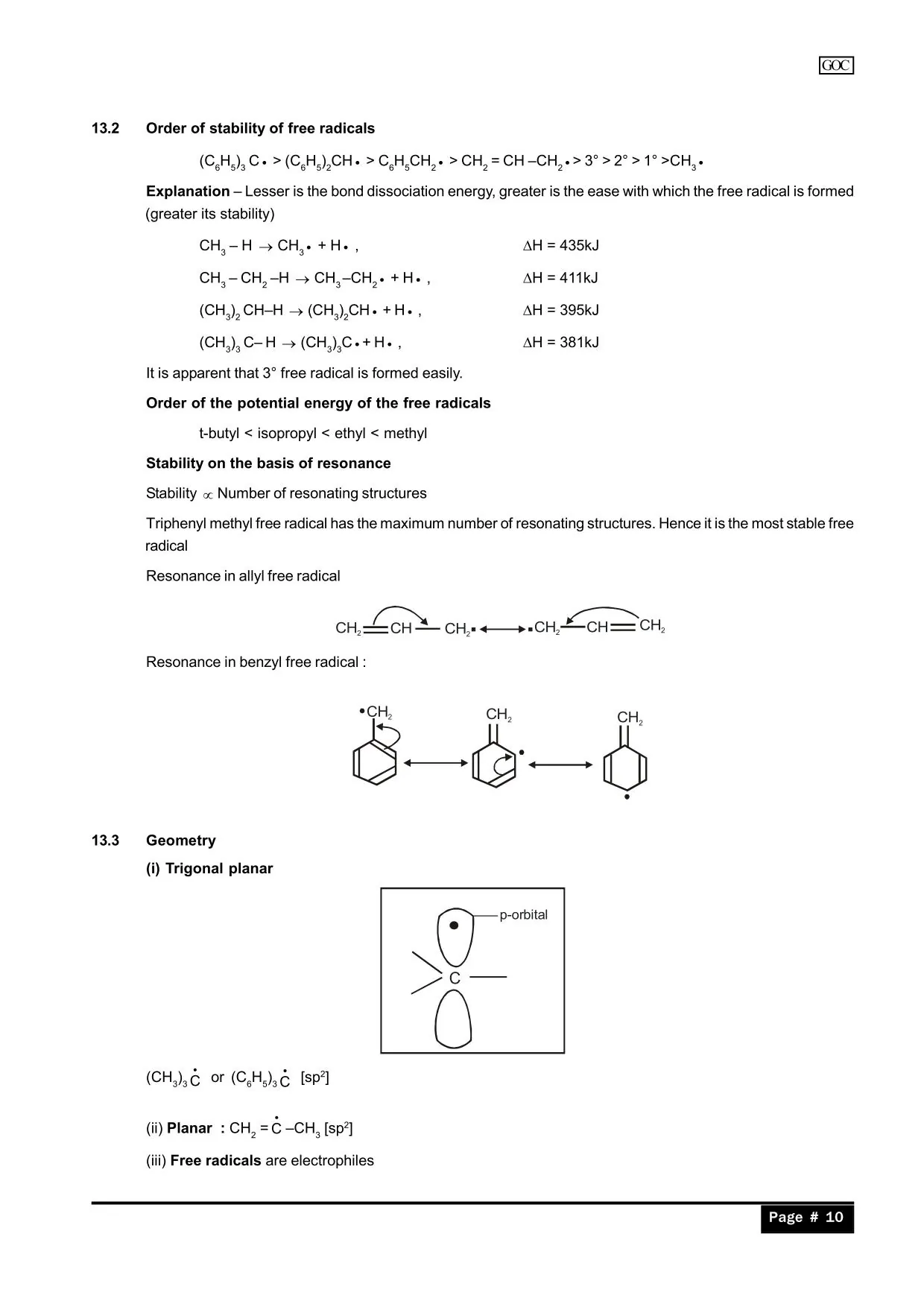
- Reactive Intermediates: Carbocations, Carbanions, Free Radicals
- Key Points Summary for Quick Revision

eSaral ›Class 11›Organic Chemistry Some Basic Principles and Techniques Class 11

Why This Chapter Is the Most Important in Class 11 Chemistry
| Concept from This Chapter | Where It Reappears |
|---|---|
| IUPAC Nomenclature | Every organic chapter in Class 11 & 12 |
| Hybridization (sp, sp², sp³) | Alkenes, Alkynes, Benzene, Carbonyl compounds |
| Inductive + Resonance effects | Acidity/basicity, carbocation stability, reactivity |
| Nucleophile vs Electrophile | Haloalkanes, Alcohols, Aldehyde mechanisms |
| Carbocation stability | Markovnikov's rule, SN1 reactions, rearrangements |
| Reactive Intermediates | Every named reaction mechanism in Class 12 |
| Isomerism (structural, geometrical) | Alkenes, Cyclic compounds, Coordination chemistry |
| Purification techniques | Practical chemistry, NEET practical-based questions |
💡 Expert Tip by eSaral Academic Team, IIT Bombay Faculty: "Spend at least 10 days on this chapter — not 2 or 3. Every hour you invest here saves you 3 hours in every organic chapter that follows. Students who rush through GOC (General Organic Chemistry) consistently struggle with Class 12 organic mechanisms."
India's Best Exam Preparation for Class 11th - Download Now
Also read Class 11 Chemistry Chapter 2 Notes
India's Best Exam Preparation for Class 11th - Download Now
India's Best Exam Preparation for Class 11th - Download Now
India's Best Exam Preparation for Class 11th - Download Now
India's Best Exam Preparation for Class 11th - Download Now
India's Best Exam Preparation for Class 11th - Download Now
India's Best Exam Preparation for Class 11th - Download Now
India's Best Exam Preparation for Class 11th - Download Now
India's Best Exam Preparation for Class 11th - Download Now
India's Best Exam Preparation for Class 11th - Download Now
India's Best Exam Preparation for Class 11th - Download Now
India's Best Exam Preparation for Class 11th - Download Now
India's Best Exam Preparation for Class 11th - Download Now
India's Best Exam Preparation for Class 11th - Download Now
Classification of Organic Compounds
Organic compounds are classified based on their carbon skeleton and functional groups.
Based on Carbon Skeleton
Acyclic (open chain) compounds: Carbon atoms are arranged in straight or branched chains. Also called aliphatic compounds.
- Examples: CH₄ (methane), CH₃CH₂OH (ethanol), (CH₃)₂CHCH₃ (isobutane)
Cyclic (closed chain) compounds: Carbon atoms form one or more rings.
- Homocyclic: Ring contains only carbon atoms
- Alicyclic: Non-aromatic ring (cyclohexane, cyclopentane)
- Aromatic: Benzene ring system
- Heterocyclic: Ring contains at least one atom other than carbon (N, O, S)
- Examples: Pyridine (N), Furan (O), Thiophene (S)
Based on Functional Groups
| Functional Group | Class | Example |
|---|---|---|
| –OH | Alcohol | CH₃OH |
| –CHO | Aldehyde | HCHO |
| –CO– | Ketone | CH₃COCH₃ |
| –COOH | Carboxylic acid | CH₃COOH |
| –NH₂ | Amine | CH₃NH₂ |
| –X (halogen) | Haloalkane | CH₃Cl |
| –NO₂ | Nitro compound | C₆H₅NO₂ |
| –CN | Nitrile | CH₃CN |
IUPAC Nomenclature: Rules and Examples
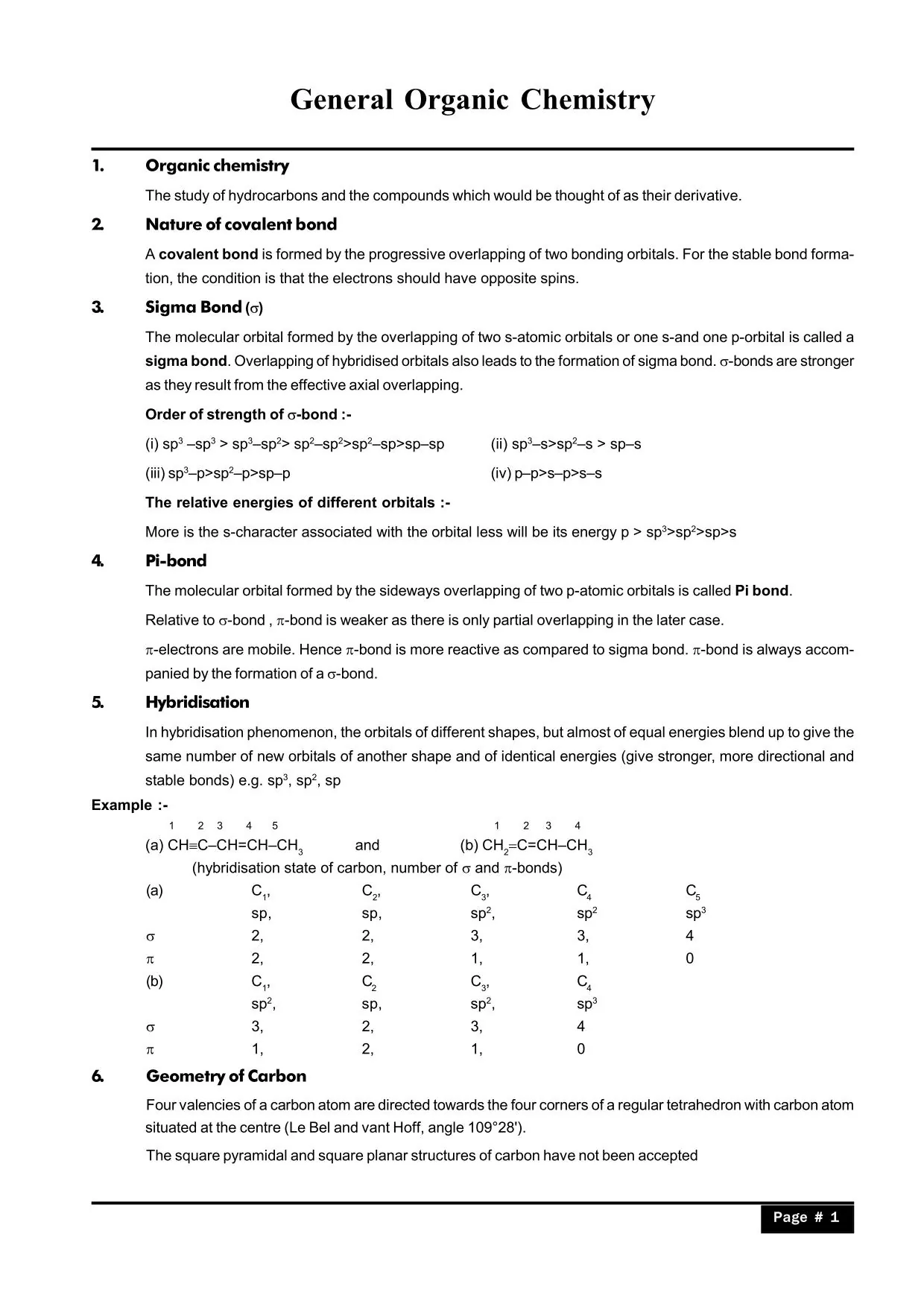
IUPAC (International Union of Pure and Applied Chemistry) nomenclature gives every organic compound a unique, systematic name. Board exams test this directly; JEE Main and NEET test its application to complex structures.
Steps for IUPAC Naming
- Identify the longest carbon chain containing the principal functional group → this is the parent chain
- Number the chain from the end closer to the principal functional group (lowest locant rule)
- Name substituents as prefixes (alkyl groups, halogens) with their position numbers
- Name the principal functional group as a suffix
- If two numbering directions give the same locant for the principal group, choose the direction that gives substituents the lower numbers
Suffix for Principal Functional Groups
| Functional Group | Suffix |
|---|---|
| Alkane | -ane |
| Alkene | -ene |
| Alkyne | -yne |
| Alcohol (–OH) | -ol |
| Aldehyde (–CHO) | -al |
| Ketone (–CO–) | -one |
| Carboxylic acid (–COOH) | -oic acid |
| Amine (–NH₂) | -amine |
Common Naming Mistakes to Avoid
- Longest chain must pass through the principal functional group carbon
- Substituents on branched chains: number from the point of attachment
- When two substituents are at equal distances from both ends, give the lower number to the one that comes first alphabetically
- Do not use "di", "tri" prefixes when naming substituents alphabetically — use "bis", "tris" for complex substituents
Purification Techniques for Organic Compounds
Purification is tested in both CBSE practical exams and NEET theory questions. Know which technique applies to which situation.
| Technique | Principle | When to Use |
|---|---|---|
| Crystallisation | Difference in solubility at different temperatures | Solid organic compounds with temperature-dependent solubility |
| Distillation | Difference in boiling points | Miscible liquid mixtures |
| Fractional distillation | Close but different boiling points | Liquids with boiling points within 25°C of each other |
| Steam distillation | Volatile + steam = lower boiling point | High-boiling, steam-volatile organic compounds (e.g., aniline) |
| Differential extraction | Difference in solubility in two immiscible solvents | Separating organic compound from aqueous mixture |
| Chromatography | Differential adsorption or solubility | Separating complex mixtures; very small quantities |
| Sublimation | Direct solid → vapour conversion | Compounds that sublime (naphthalene, camphor, iodine) |
💡 Expert Tip by eSaral Academic Team, IIT Bombay Faculty: "For NEET and board exams, remember these three specific examples: naphthalene from kerosene → sublimation; o-nitrophenol from p-nitrophenol → steam distillation; benzoic acid from nitrobenzene → differential extraction with NaHCO₃. These exact examples appear repeatedly."
Electronic Effects: Inductive, Resonance, Hyperconjugation
Electronic effects explain why some organic compounds are more reactive, more acidic, or more stable than others. This is the conceptual heart of General Organic Chemistry.
Inductive Effect (+I and −I)
The inductive effect is the permanent shift of electron density along a chain of sigma bonds due to electronegativity differences.
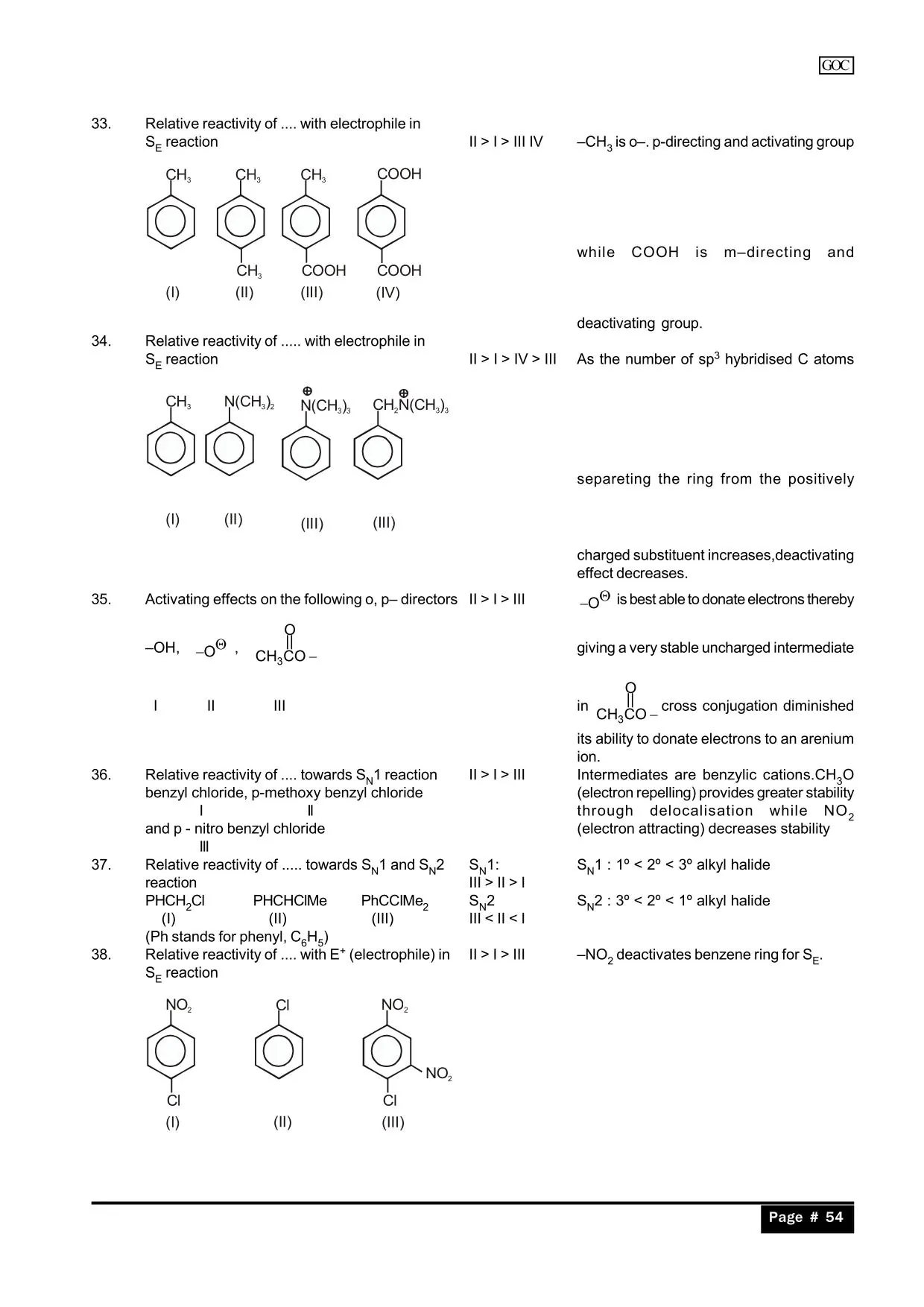
+I (electron-donating) groups: Push electrons toward the functional group. Increase electron density. Examples: –CH₃, –C₂H₅, –(CH₃)₃C (alkyl groups in general)
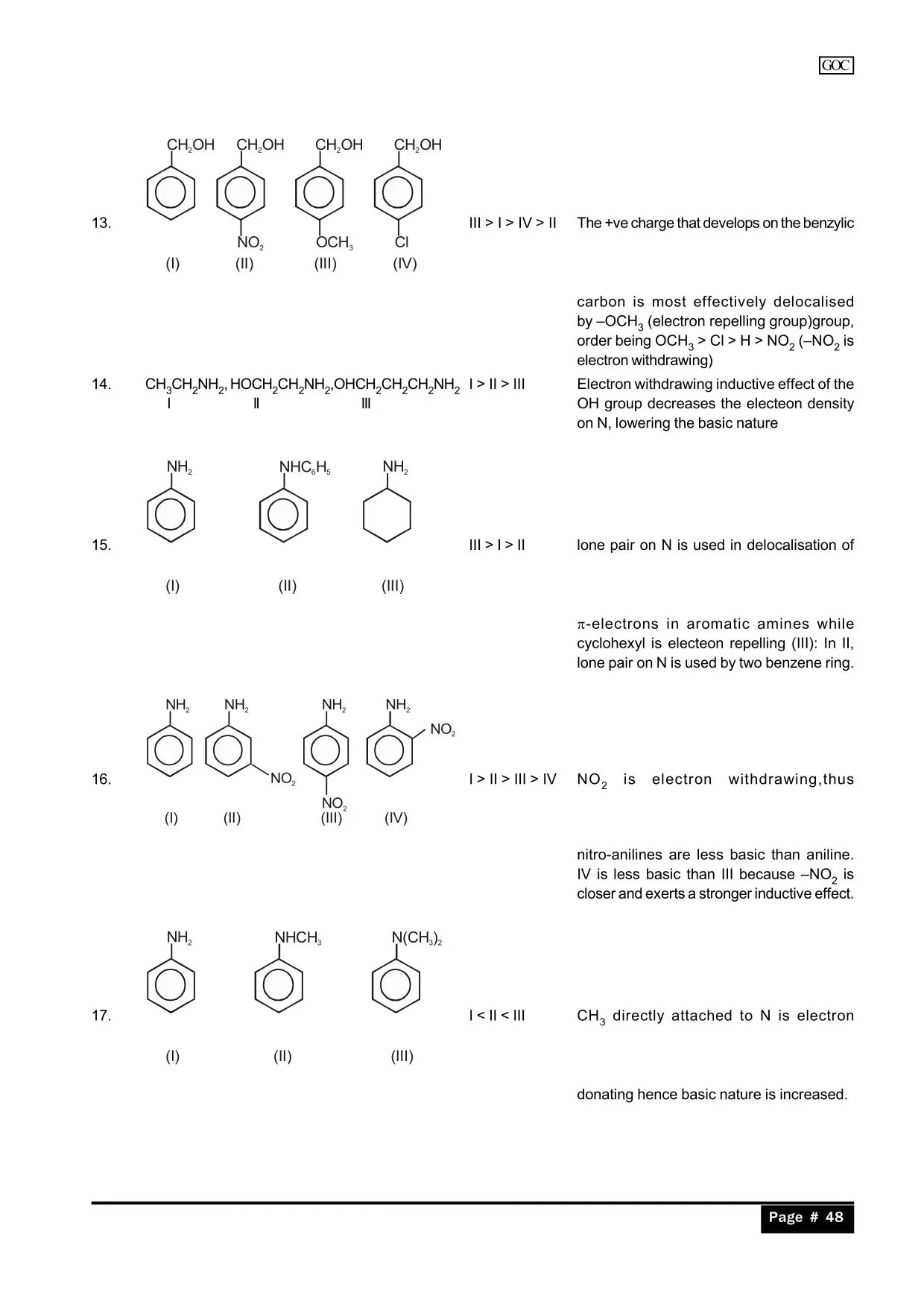
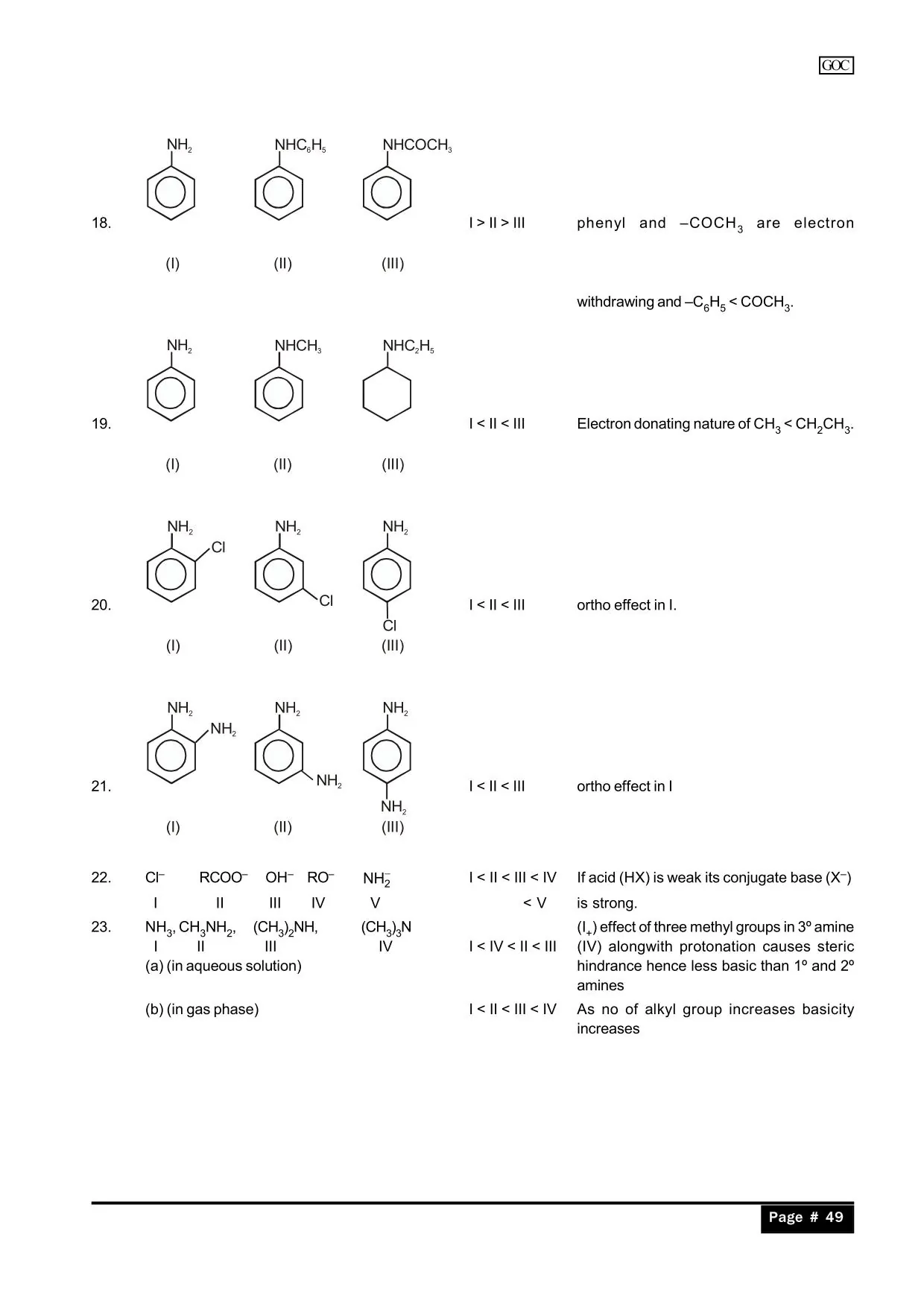
−I (electron-withdrawing) groups: Pull electrons away. Decrease electron density. Examples: –F, –Cl, –Br, –OH, –NO₂, –COOH, –CN
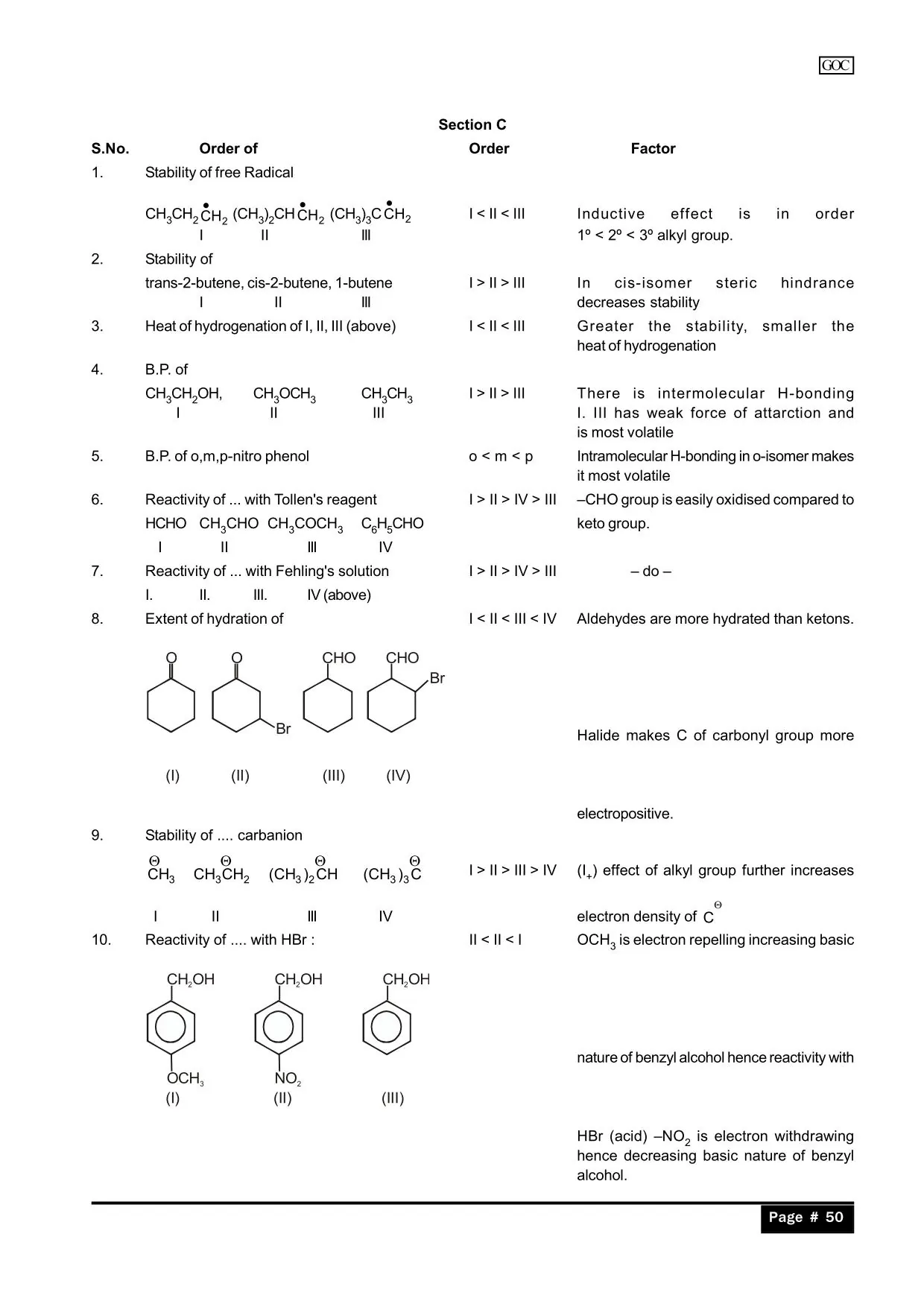
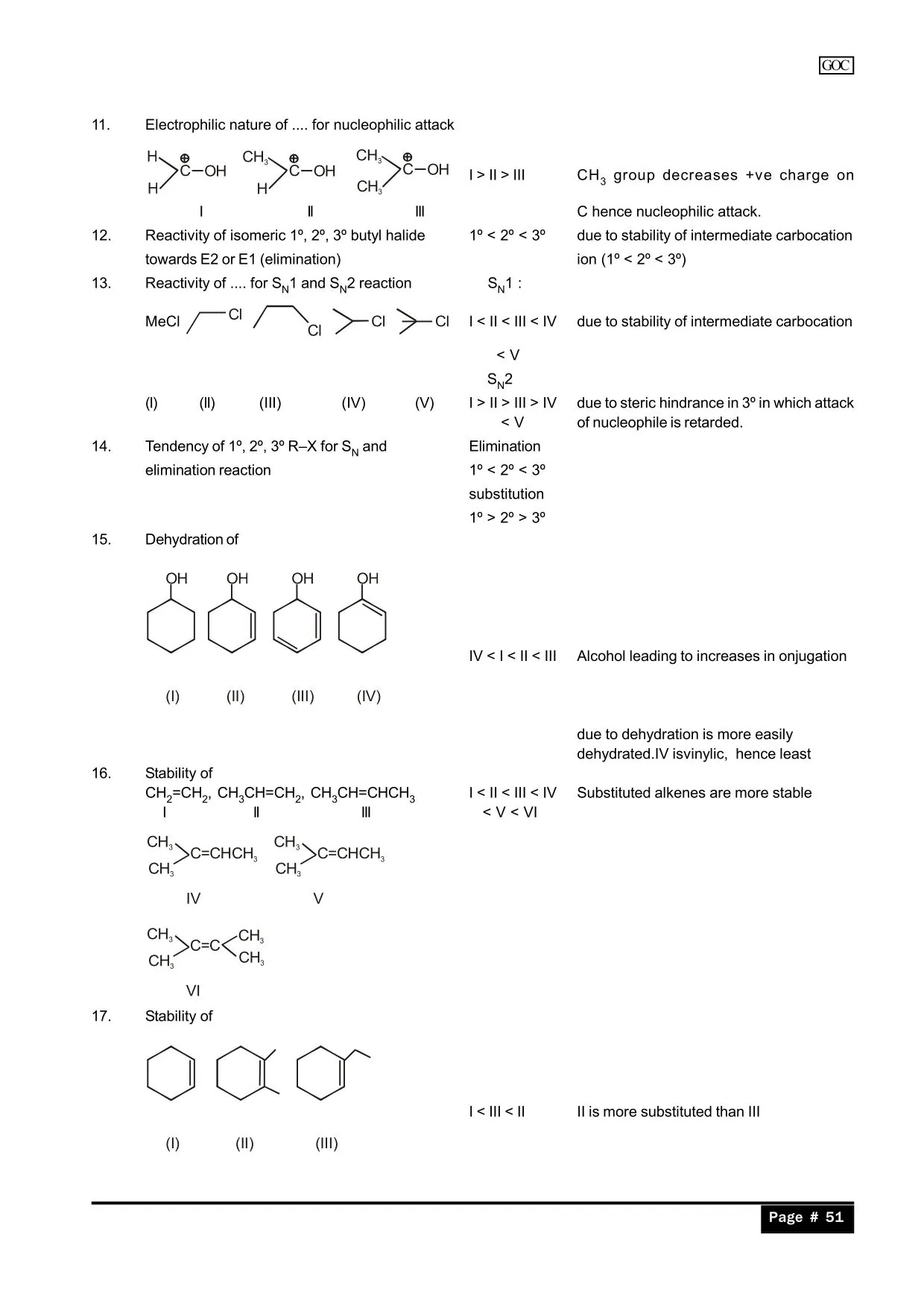
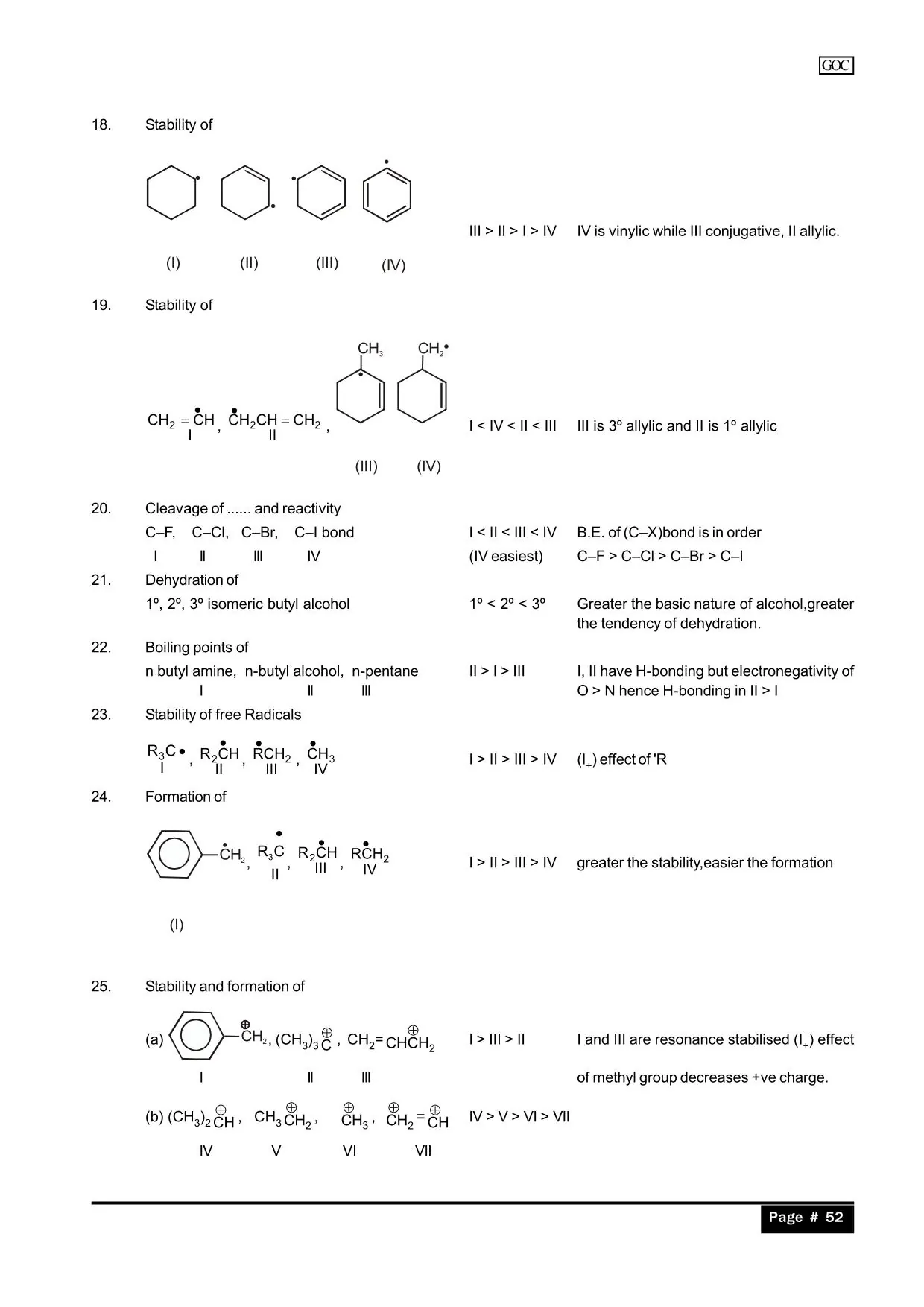
Effect on carbocation stability: Alkyl groups (+I effect) stabilise carbocations by increasing electron density on the positive carbon. Stability: (CH₃)₃C⁺ > (CH₃)₂CH⁺ > CH₃CH₂⁺ > CH₃⁺
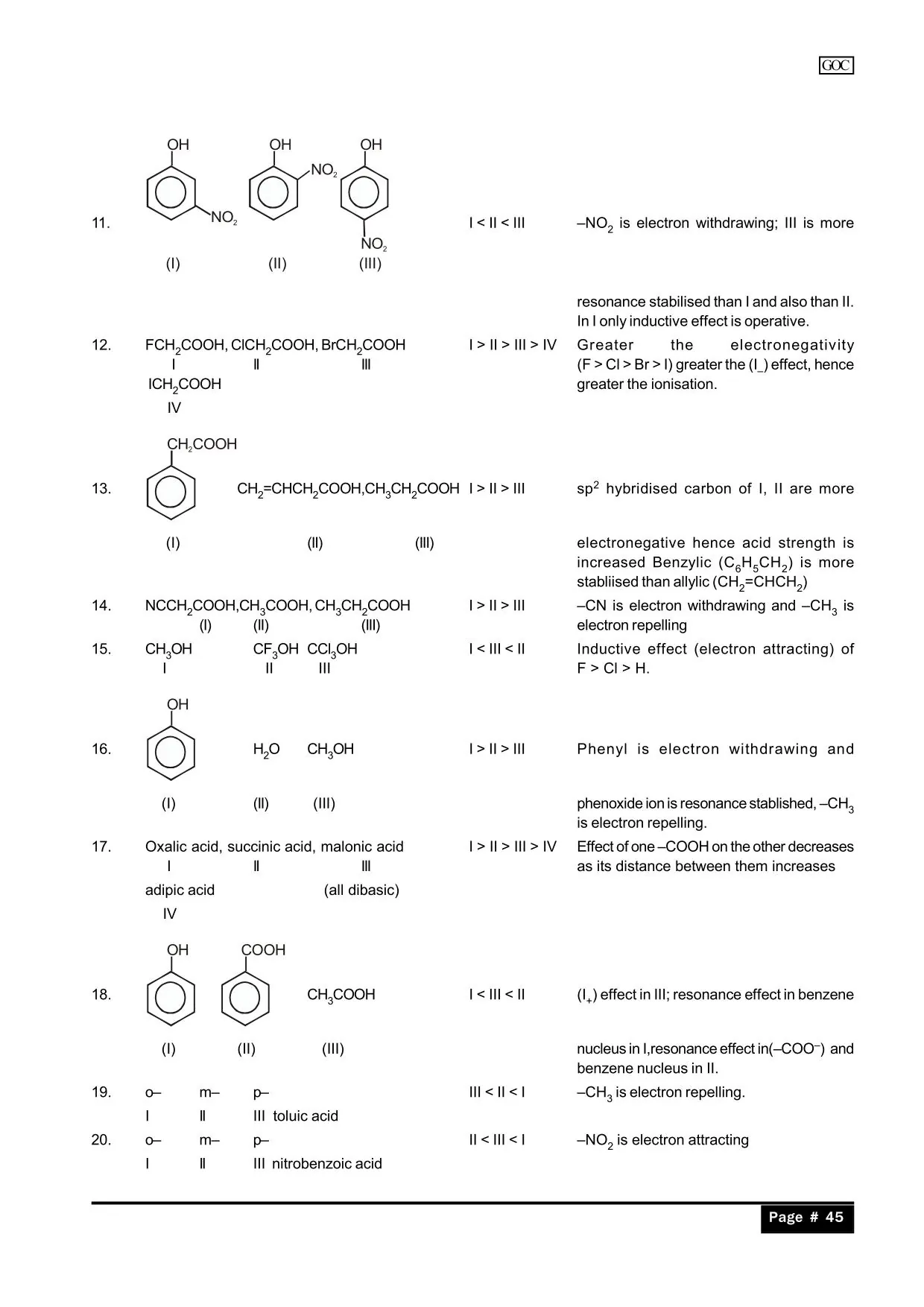
Effect on acidity: −I groups increase acidity by stabilising the conjugate base (carboxylate anion). Example: CHCl₂COOH > CH₂ClCOOH > CH₃COOH (increasing −I effect increases acidity)
Resonance Effect (+R and −R)
Resonance (mesomeric effect) involves delocalisation of electrons through a π system or between a lone pair and a π bond.
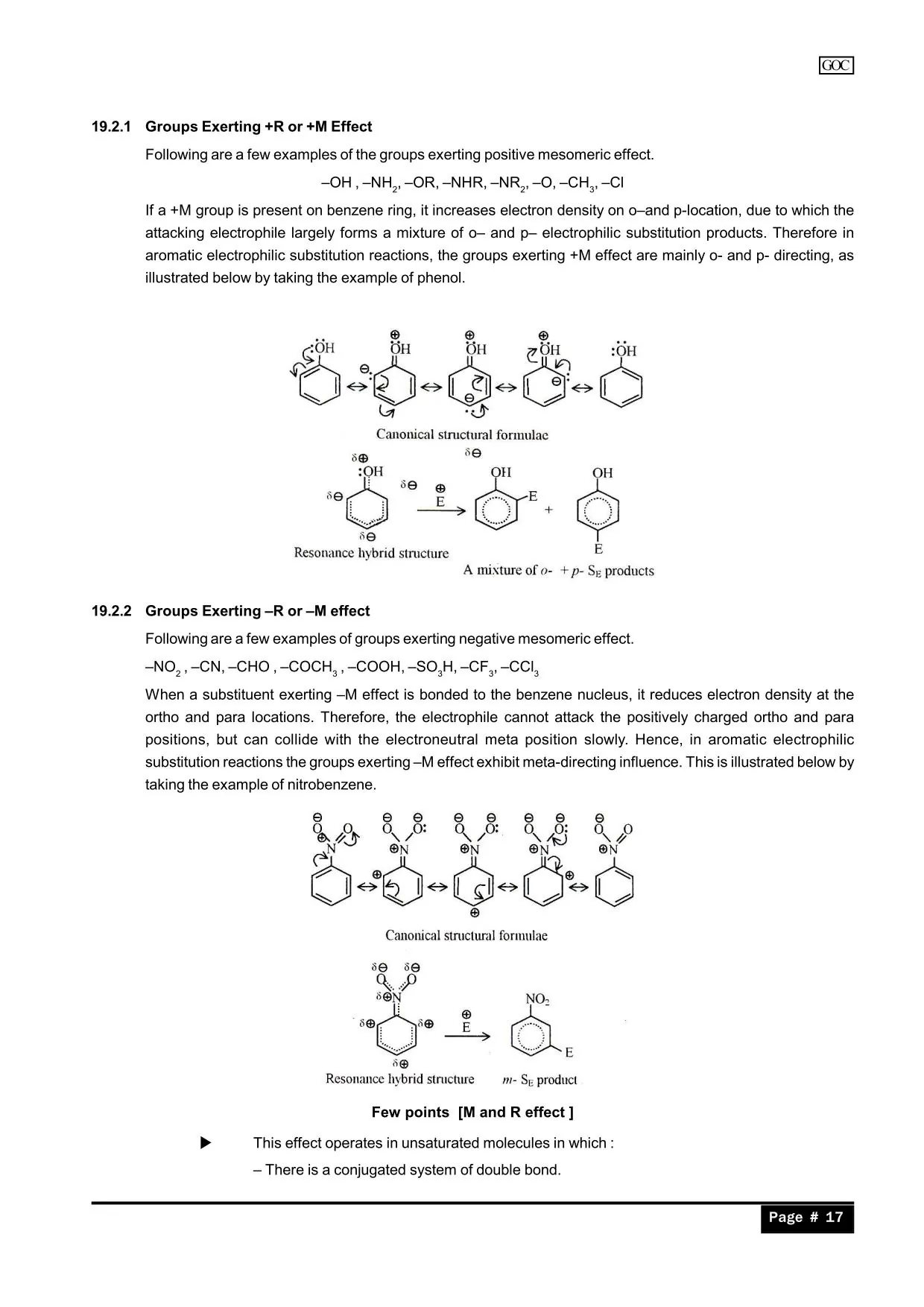
+R groups: Donate electrons into the π system. Increase electron density on the ring/system. Examples: –OH, –OR, –NH₂, –NR₂, halogens (in some contexts)
−R groups: Withdraw electrons from the π system. Examples: –NO₂, –CHO, –COR, –COOH, –CN, –SO₃H
Rules for resonance structures:
- All atoms remain in the same position — only electrons move
- Number of unpaired electrons must remain the same
- Resonance structures with more covalent bonds and complete octets are more stable
- Resonance structures with charge separation are less stable than uncharged ones
Hyperconjugation
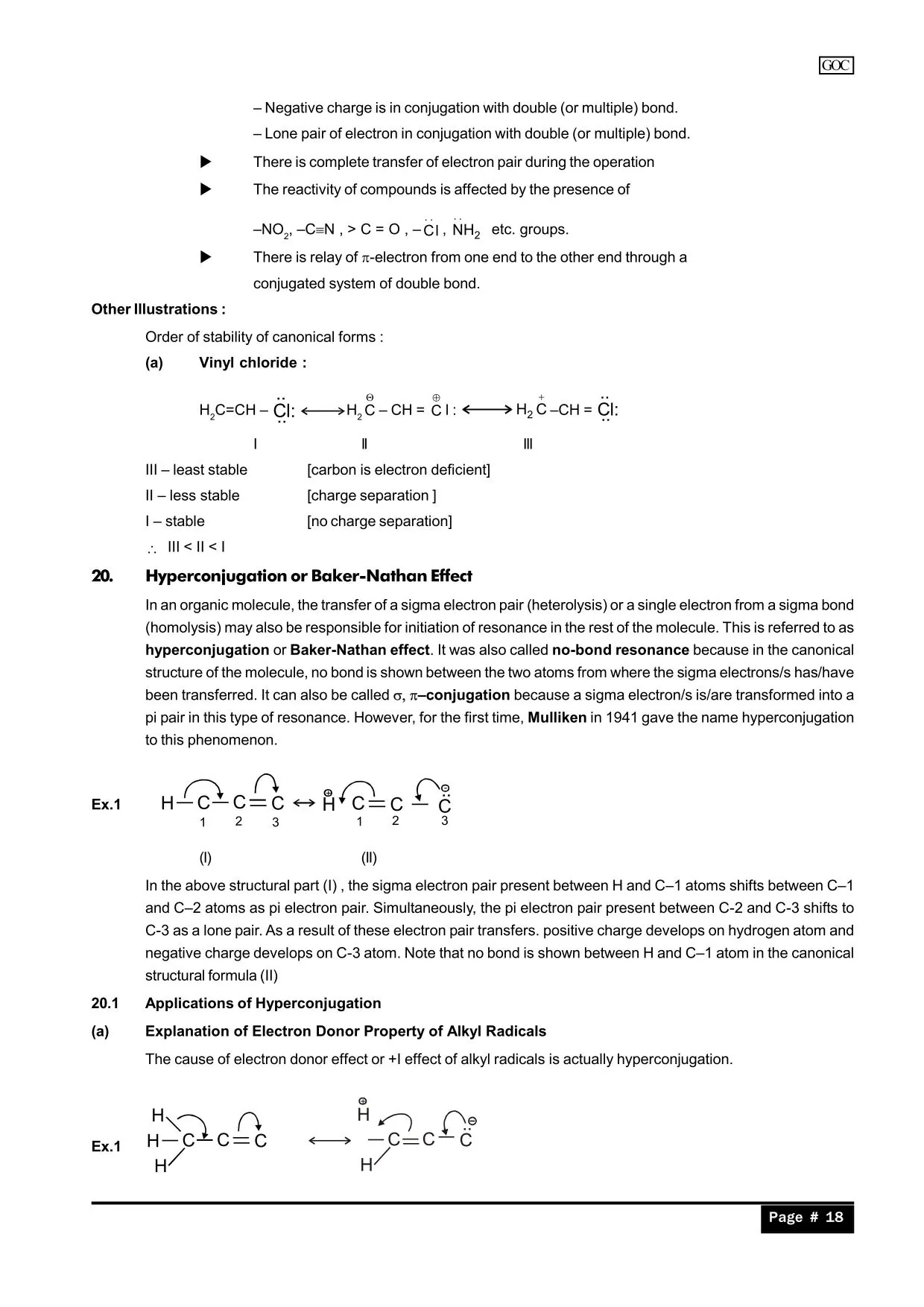
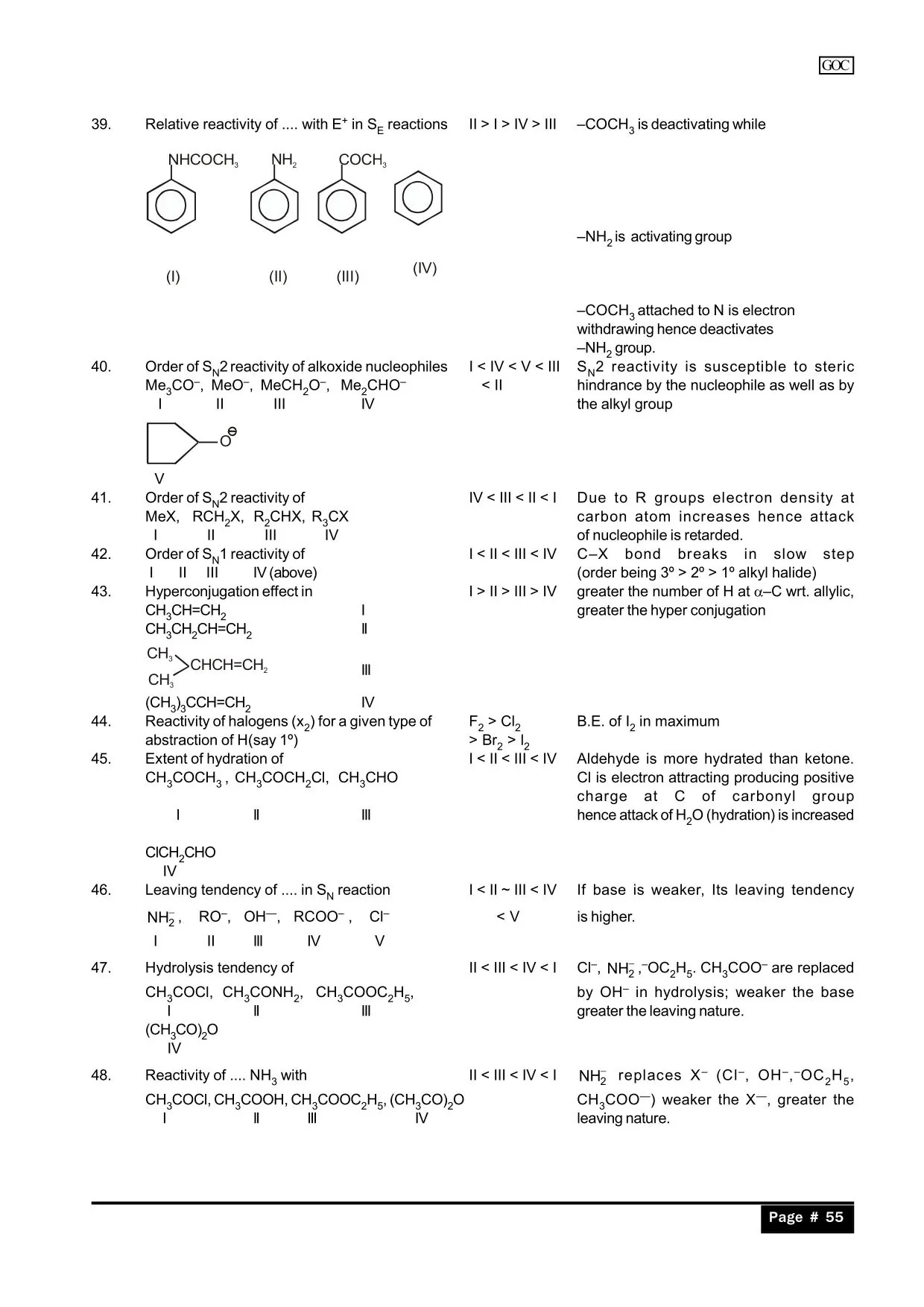
Hyperconjugation is the delocalisation of electrons from a C–H σ bond adjacent to a π bond or carbocation into the π system. It requires no lone pairs — only C–H bonds adjacent to sp² carbon.
The more C–H bonds available for hyperconjugation, the more stable the carbocation or alkene.
Stability of carbocations by hyperconjugation:
- (CH₃)₃C⁺: 9 C–H bonds available → most stable
- (CH₃)₂CH⁺: 6 C–H bonds available
- CH₃CH₂⁺: 3 C–H bonds available
- CH₃⁺: 0 C–H bonds available → least stable
Isomerism: Structural and Stereoisomerism
Isomers have the same molecular formula but different arrangements of atoms.
Structural Isomerism
Atoms are connected differently.
| Type | Basis of Difference | Example |
|---|---|---|
| Chain isomerism | Different carbon skeletons | n-butane vs isobutane (C₄H₁₀) |
| Position isomerism | Different position of substituent/functional group | Propan-1-ol vs propan-2-ol |
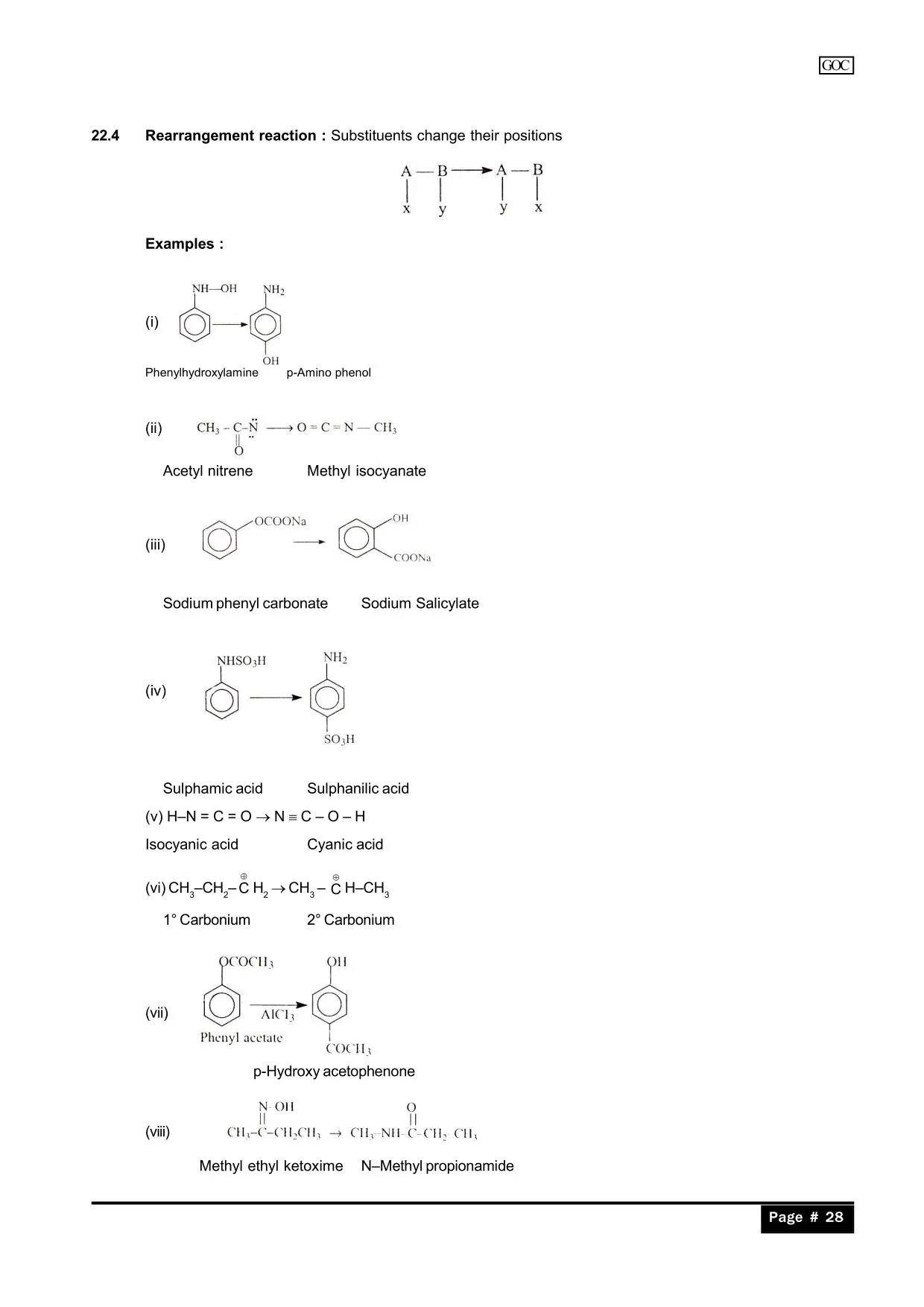
| Functional group isomerism | Different functional groups | Diethyl ether vs butan-1-ol (C₄H₁₀O) |
| Metamerism | Different alkyl groups on same functional group | Methyl propyl ether vs diethyl ether |
| Tautomerism | Dynamic equilibrium between two structural isomers | Keto ⇌ enol form |
Stereoisomerism
Same connectivity, different spatial arrangement.
Geometrical (cis-trans) isomerism:
- Arises due to restricted rotation around C=C double bond or in cyclic compounds
- Condition: Each carbon of the double bond must carry two different groups
- cis: Same groups on same side; trans: same groups on opposite sides
Optical isomerism:
- Arises when a molecule has a chiral centre (carbon with four different groups)
- Enantiomers are non-superimposable mirror images
- Rotate plane-polarised light in opposite directions
Reactive Intermediates: Carbocations, Carbanions, Free Radicals
Reactive intermediates are short-lived species formed during bond breaking. Understanding them is essential for predicting reaction mechanisms.
Bond Fission Types
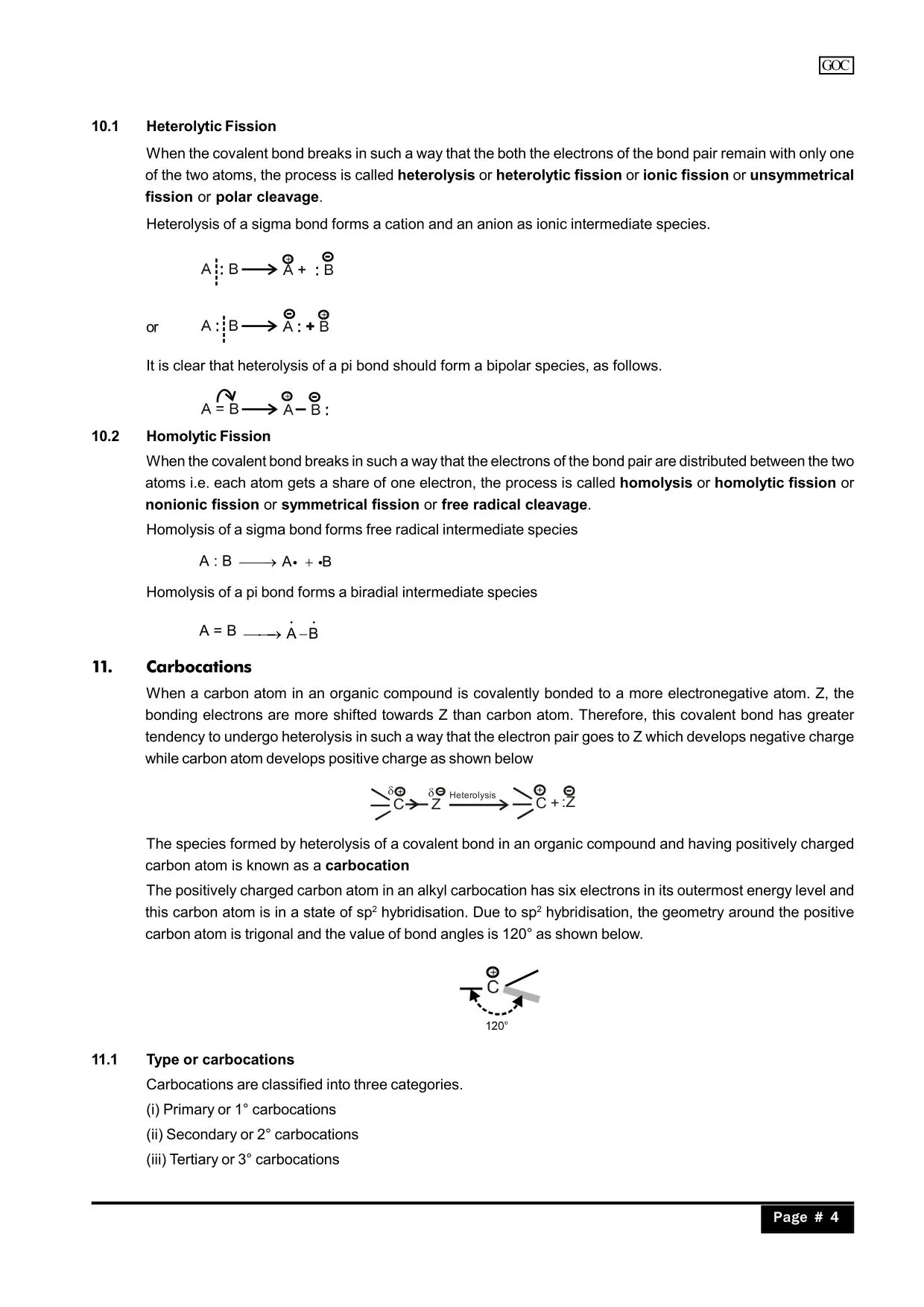
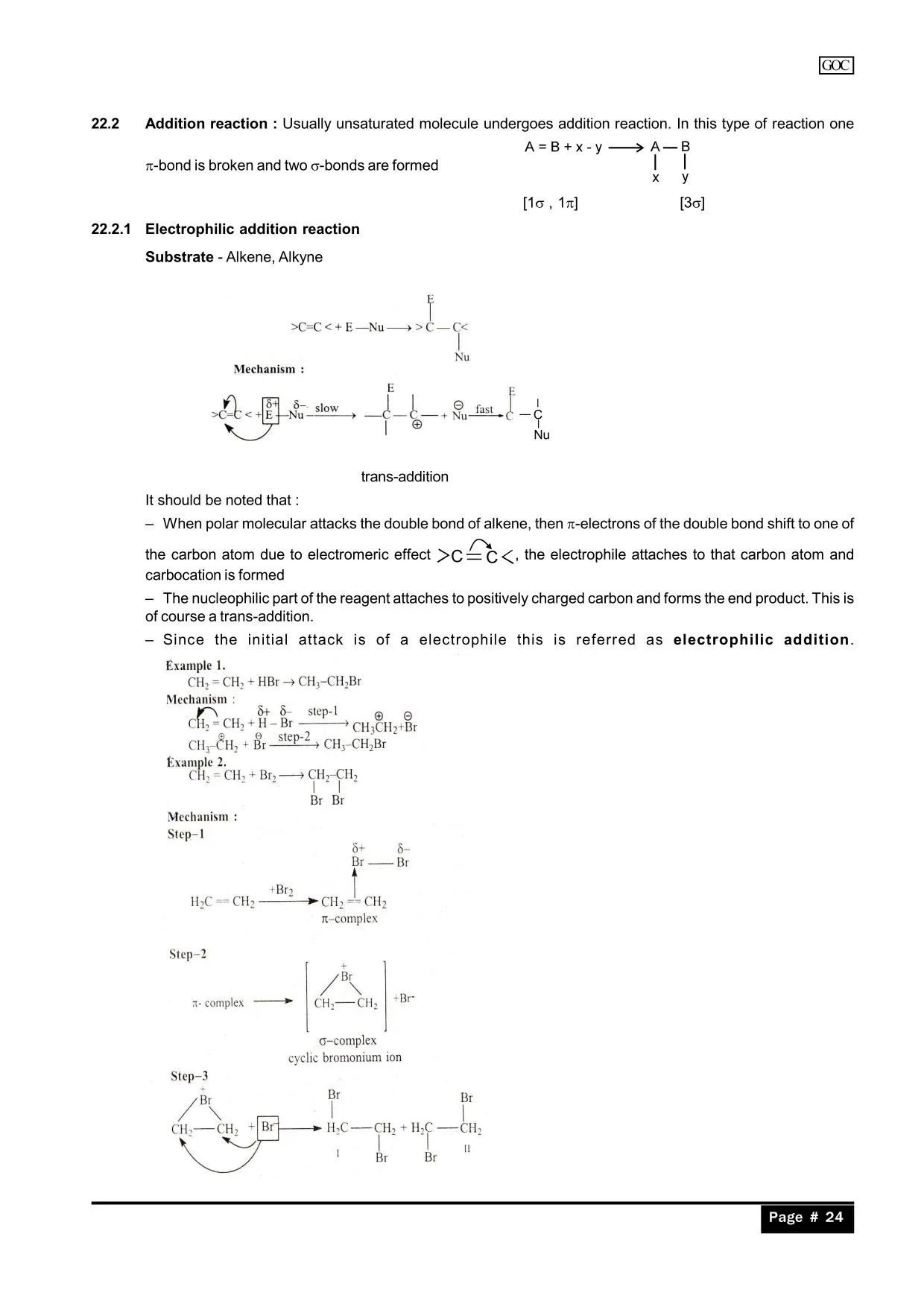
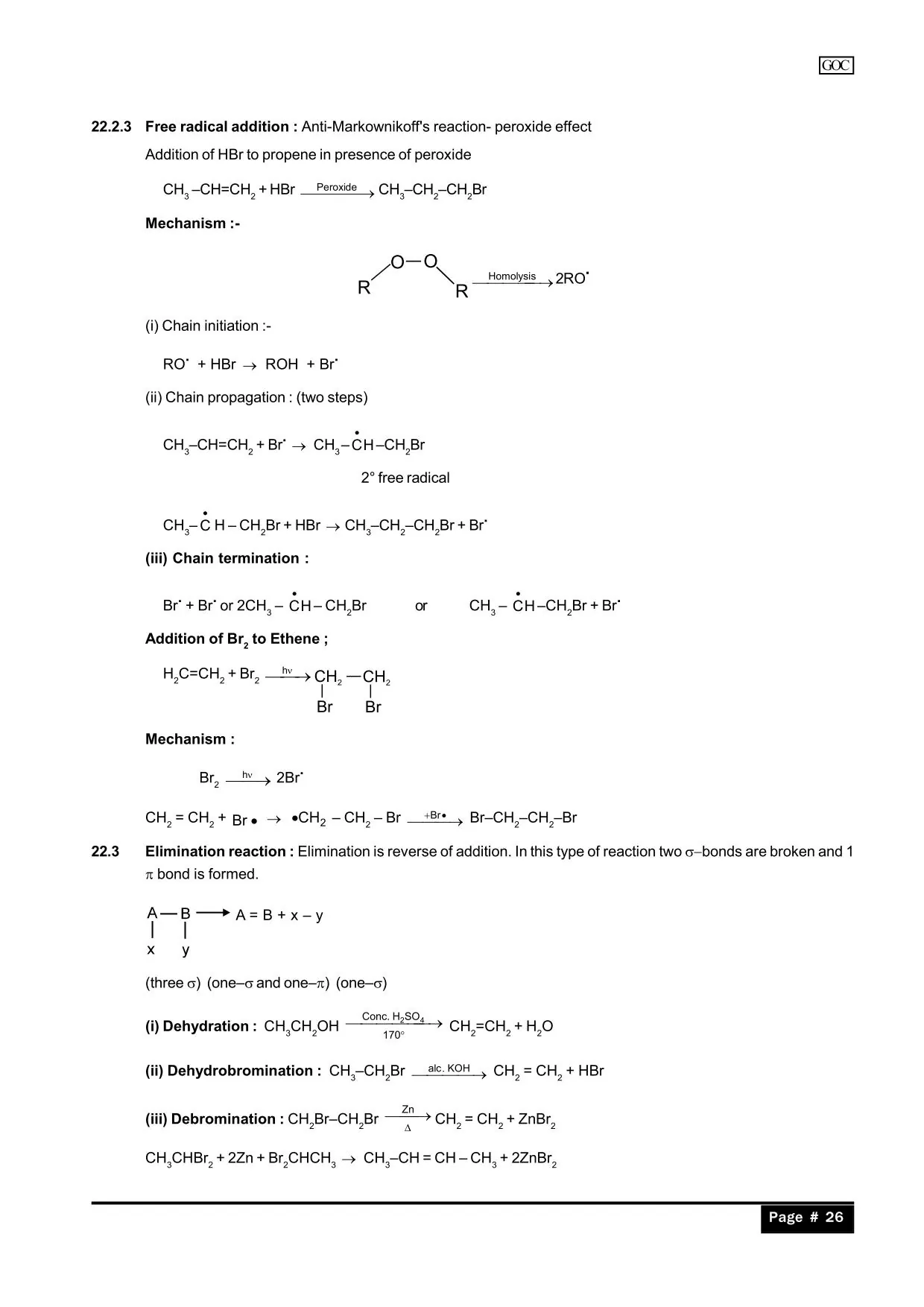
Homolytic fission: Each fragment gets one electron from the broken bond → forms free radicals (neutral, one unpaired electron)
- Favoured by: non-polar bonds, UV light, high temperature
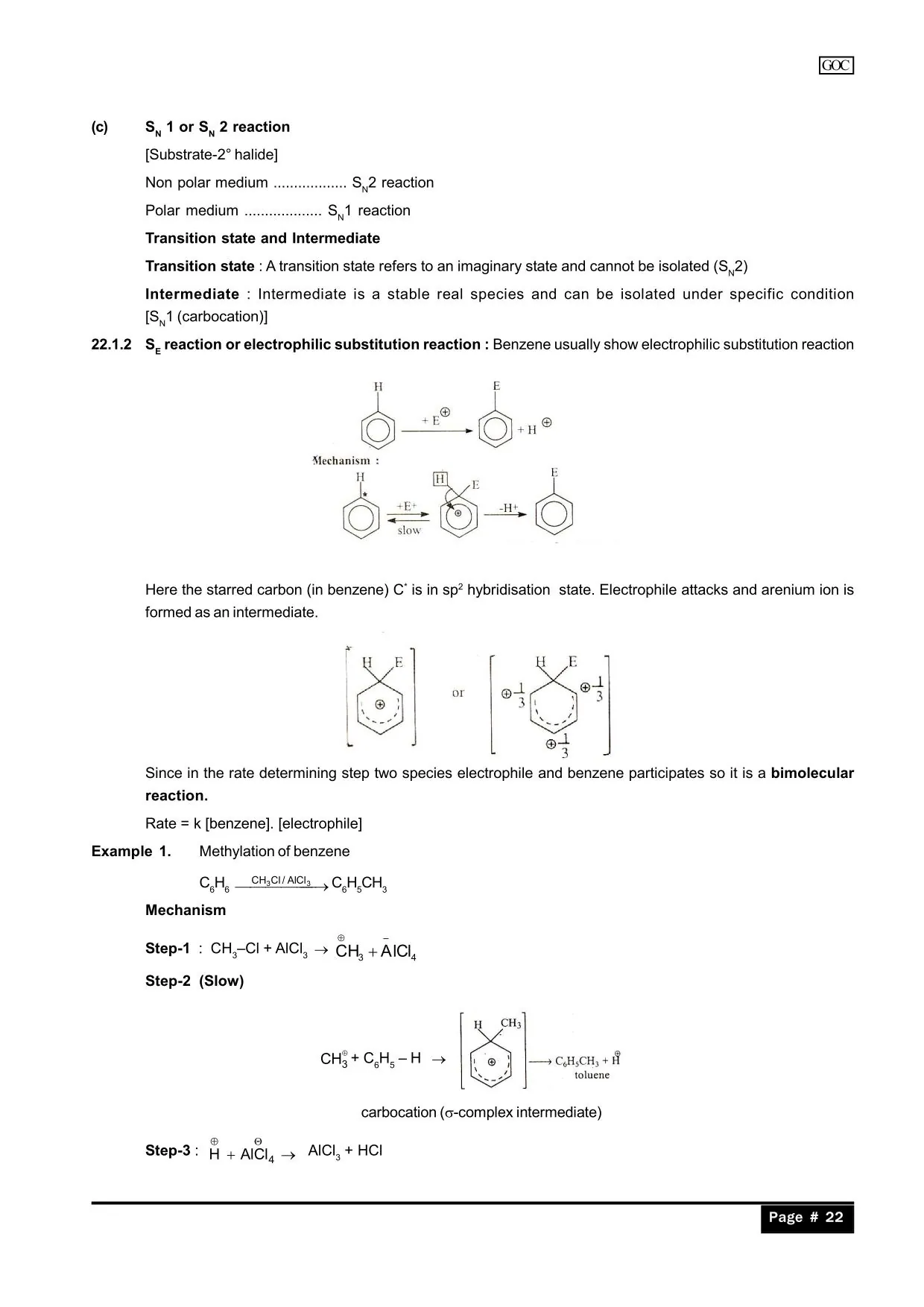
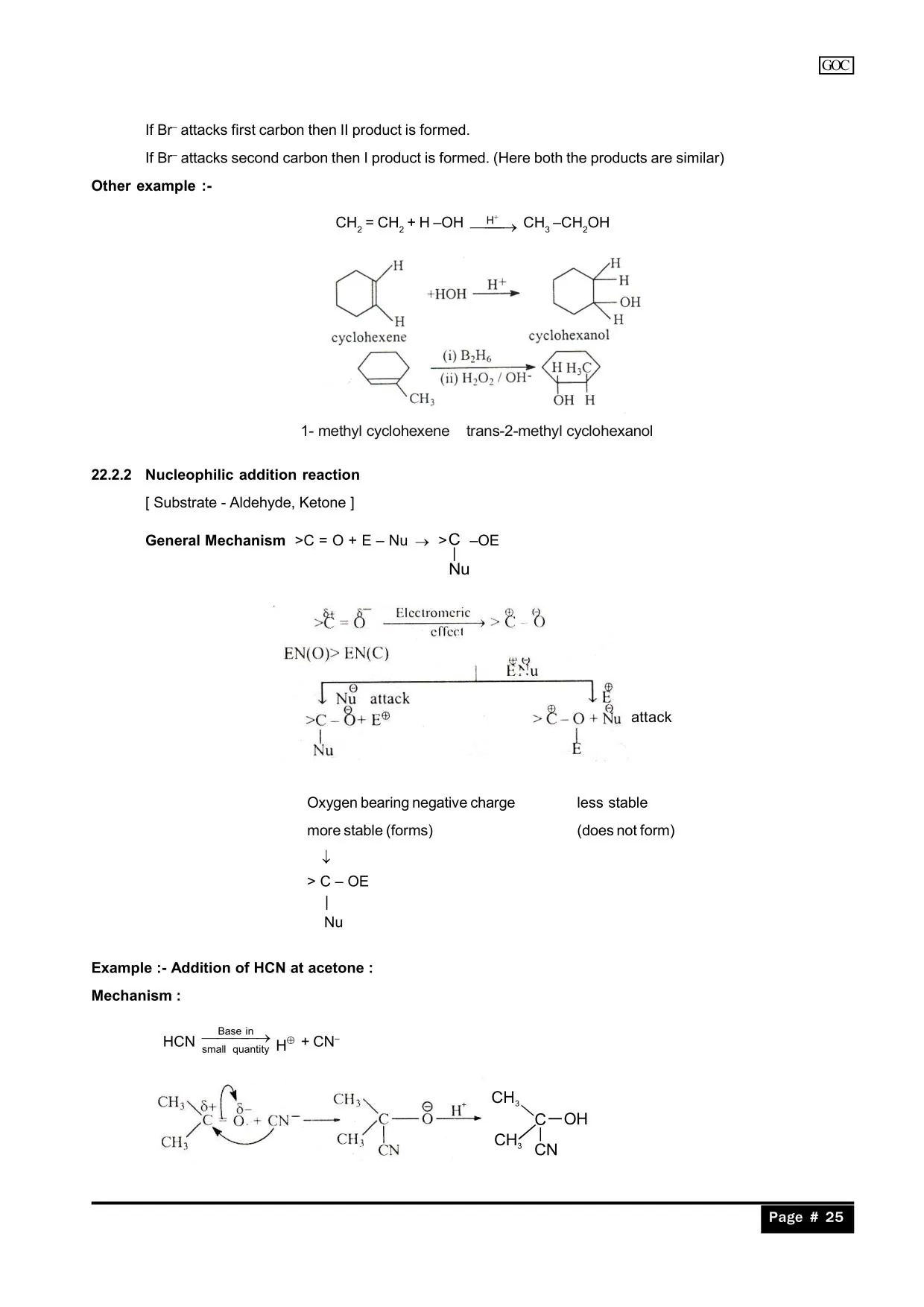
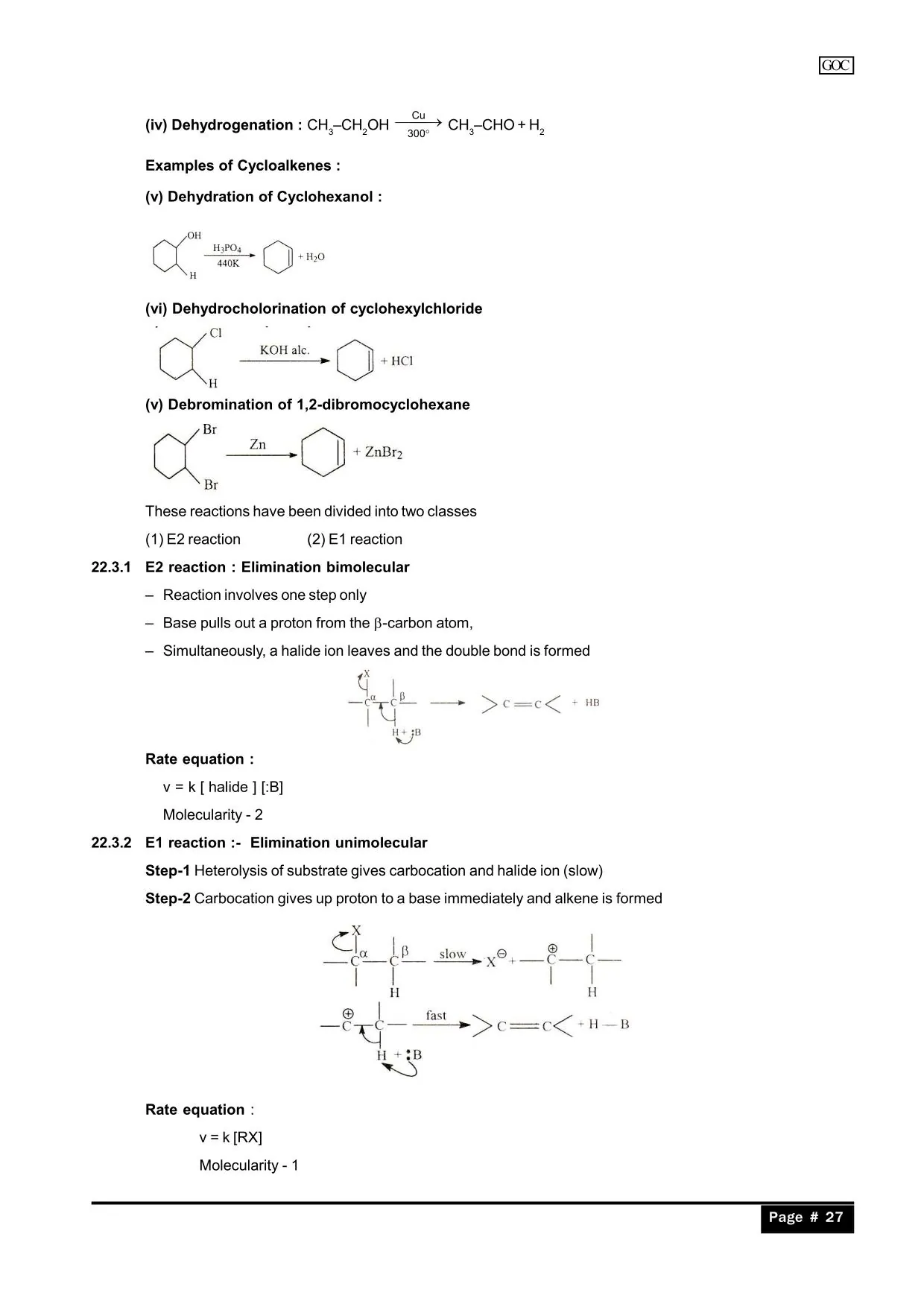
Heterolytic fission: One fragment gets both electrons → forms carbocation (carbon loses both electrons) or carbanion (carbon gains both electrons)
- Favoured by: polar bonds, polar solvents, ionic conditions
Summary of Reactive Intermediates
| Intermediate | Formation | Structure | Stability Order |
|---|---|---|---|
| Carbocation | Heterolytic (C loses e⁻) | sp², empty p orbital, positive charge | 3° > 2° > 1° > methyl |
| Carbanion | Heterolytic (C gains e⁻) | sp³, lone pair, negative charge | methyl > 1° > 2° > 3° |
| Free radical | Homolytic | sp², one unpaired electron, neutral | 3° > 2° > 1° > methyl |
| Carbene | Photolysis/thermolysis | sp², neutral, lone pair on carbon | Very unstable |
Key Points Summary for Quick Revision
IUPAC Naming:
- Lowest locant rule applies to principal functional group first, then substituents
- Alphabetical order for substituents when numbering is equal from both sides
- Cyclic compounds: carbon bearing the principal group is C-1
Electronic Effects:
- +I stabilises carbocations; −I destabilises them
- +R groups activate benzene ring; −R groups deactivate it
- Hyperconjugation: more C–H bonds adjacent to sp² carbon = more stable carbocation
- Resonance: structures with charge separation are less stable
Purification:
- Sublimation for camphor, naphthalene, iodine
- Steam distillation for high-boiling volatile compounds
- Fractional distillation for close boiling points
Reactive Intermediates:
- Carbocation: sp², planar, positive charge; stability 3° > 2° > 1°
- Carbanion: sp³, pyramidal, negative charge; stability opposite to carbocation
- Free radical: sp², one unpaired electron; stability 3° > 2° > 1°
- T_L − T_H = 6mg (from circular motion — do not confuse with chemistry notes!)
For complete chapter-wise notes for all Class 11 Chemistry topics, including Structure of Atom, Chemical Bonding, and all other chapters, see Class 11 Chemistry Chapter 2 Notes — Structure of Atom and the complete Class 11 Chemistry Notes collection on eSaral.
Download the eSaral App for video lectures by Kota's top IITian faculty on every concept in this chapter — with solved examples and quick revision sessions.
Frequently Asked Questions
Find answers to common questions.
What are the main topics in Organic Chemistry Some Basic Principles and Techniques Class 11?
The main topics in Class 11 Organic Chemistry Chapter 12 are: classification of organic compounds, IUPAC nomenclature, methods of purification (crystallisation, distillation, chromatography), qualitative elemental analysis, quantitative analysis, electronic effects (inductive, resonance, hyperconjugation), isomerism (structural and stereoisomerism), and reactive intermediates (carbocations, carbanions, free radicals).
How many marks does this chapter carry in CBSE Class 11 Chemistry?
Organic Chemistry Some Basic Principles and Techniques typically carries 6–8 marks in CBSE Class 11 Chemistry theory exams. Questions appear as 1-mark IUPAC naming questions, 2–3 mark electronic effects questions, and 3–5 mark questions on purification techniques or isomerism. In JEE Main and NEET, 2–3 questions per paper test concepts from this chapter.
What is the inductive effect in Class 11 organic chemistry?
The inductive effect is the permanent shift of electron density along a sigma bond chain due to electronegativity differences between bonded atoms. Electron-donating groups (+I effect) like alkyl groups increase electron density and stabilise carbocations. Electron-withdrawing groups (−I effect) like halogens and nitro groups decrease electron density and increase acidity of carboxylic acids.
Which electronic effect is most important for JEE and NEET — inductive or resonance?
Both are important, but resonance effect is generally more powerful than inductive effect when both operate simultaneously. For JEE Main and NEET, students must know: when +R and −I effects conflict (as in halogens attached to benzene), which dominates for a given reaction type. Resonance dominates for directing effects on the benzene ring; inductive effect determines the overall reactivity (activation or deactivation).
How is hyperconjugation different from resonance in Class 11 Chemistry?
Resonance involves delocalisation of π electrons or lone pairs into an adjacent π system. Hyperconjugation involves delocalisation of σ bond electrons (C–H bonds) adjacent to a π bond or carbocation. Resonance requires a π bond or lone pair in the delocalising group; hyperconjugation requires only C–H bonds next to an sp² carbon. Both increase stability of the species.