Animal Kingdom - NEET Previous Year Questions with Complete Solutions
Table of Contents

eSaral › NEET Biology › Animal Kingdom Previous Year Questions with Complete Solutions
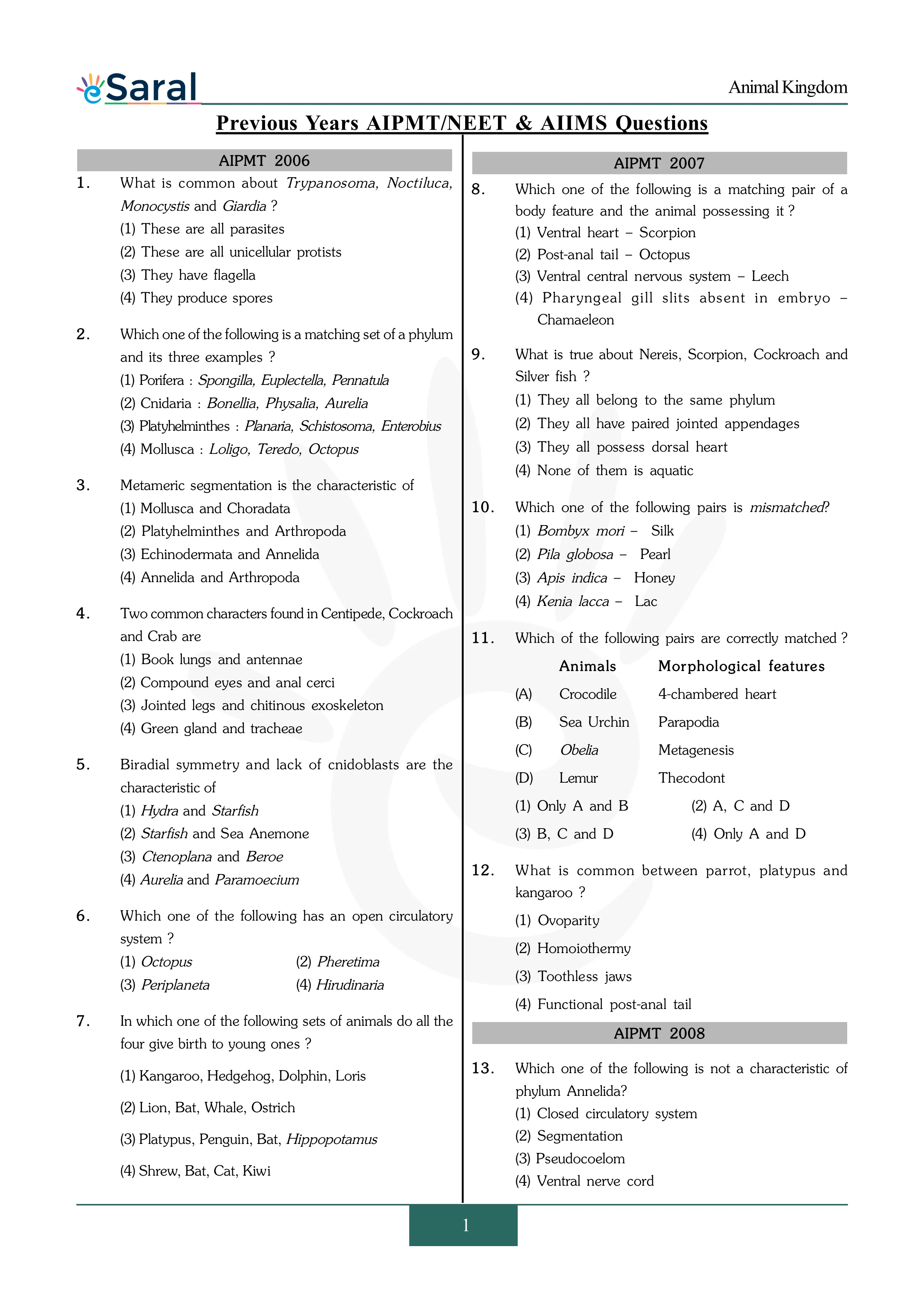
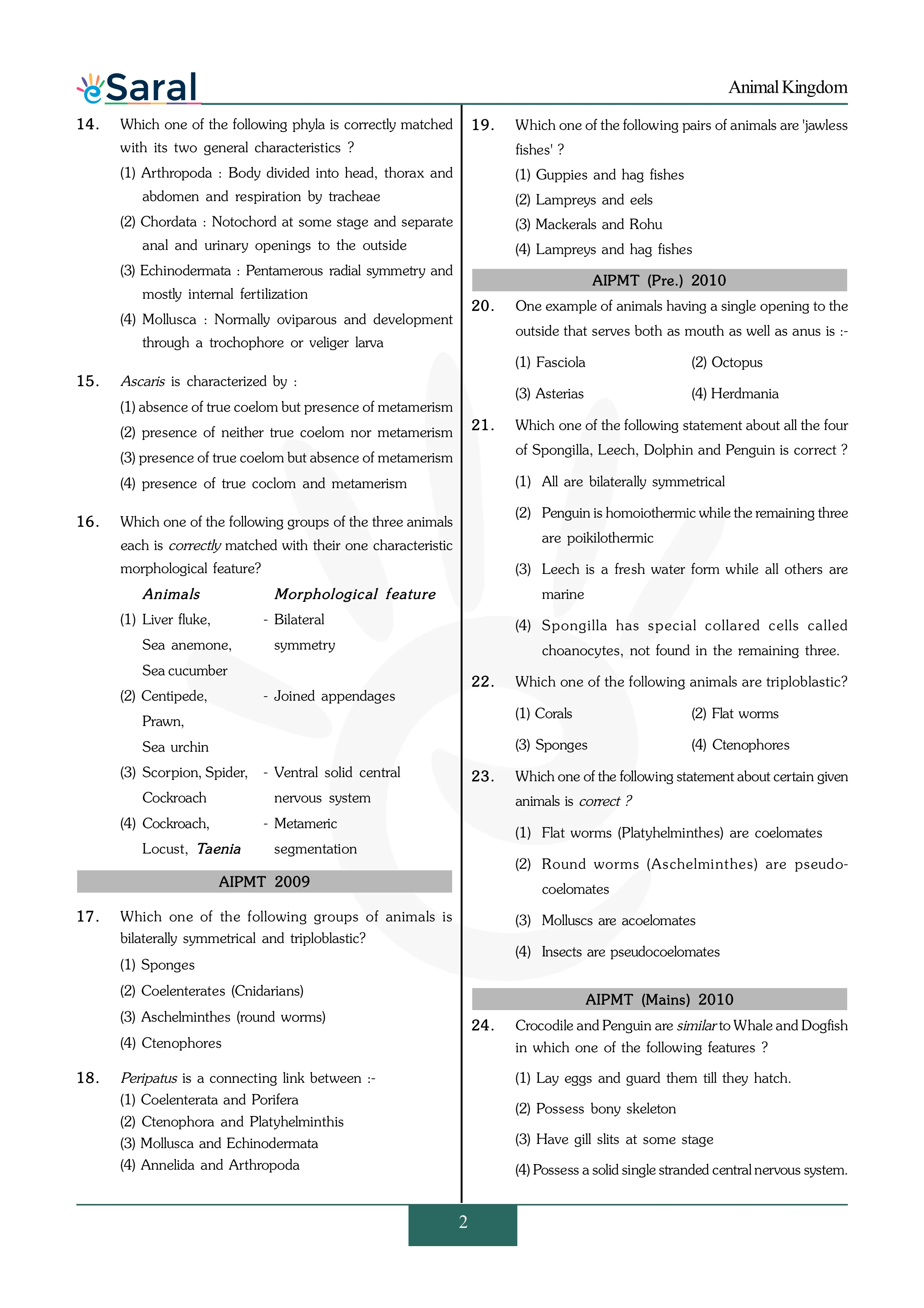
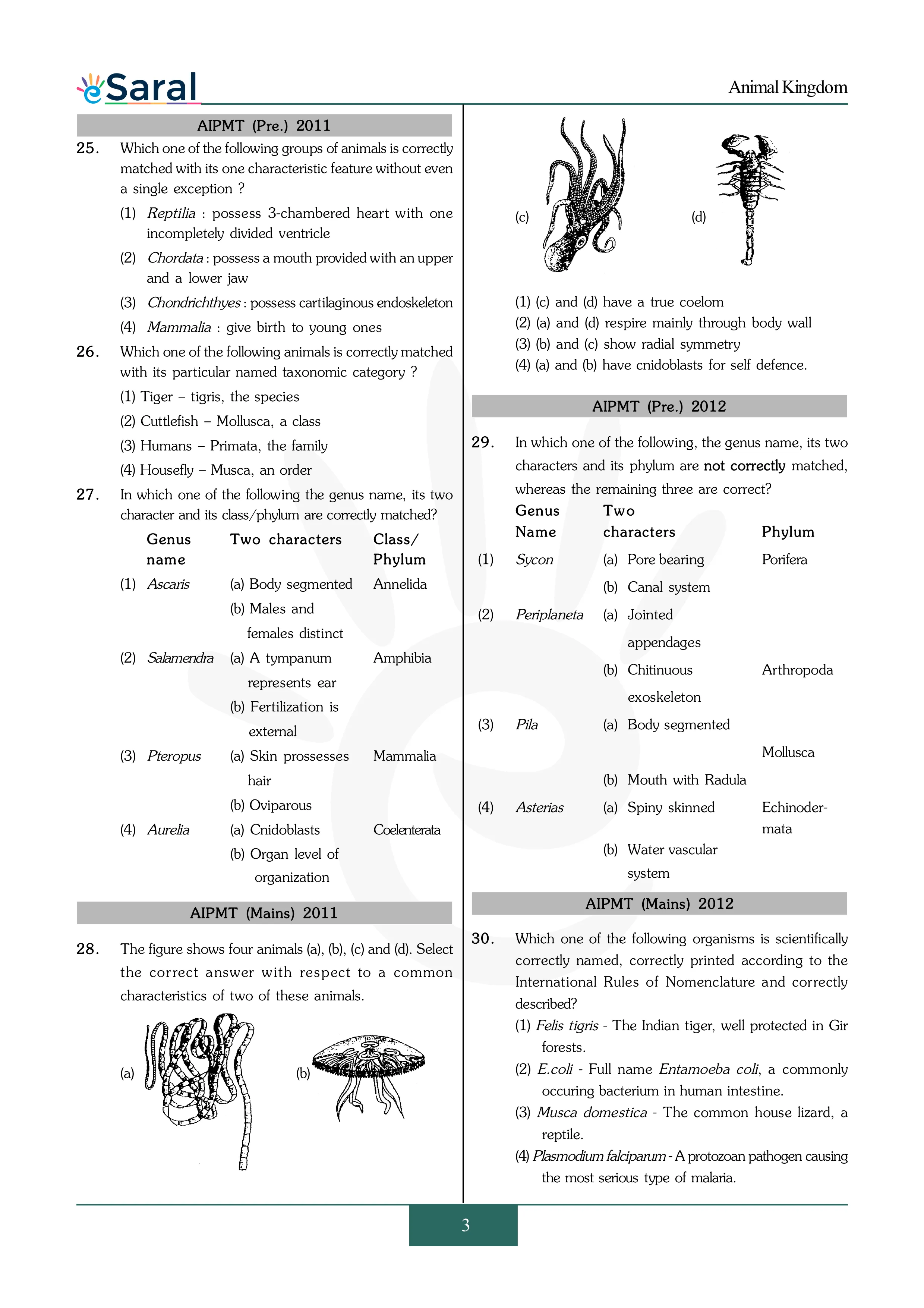
Here you will get Complete Animal Kingdom NEET Previous Year Questions with complete and detailed solutions.
Get complete NEET previous year questions for Physics, Chemistry, and Biology.
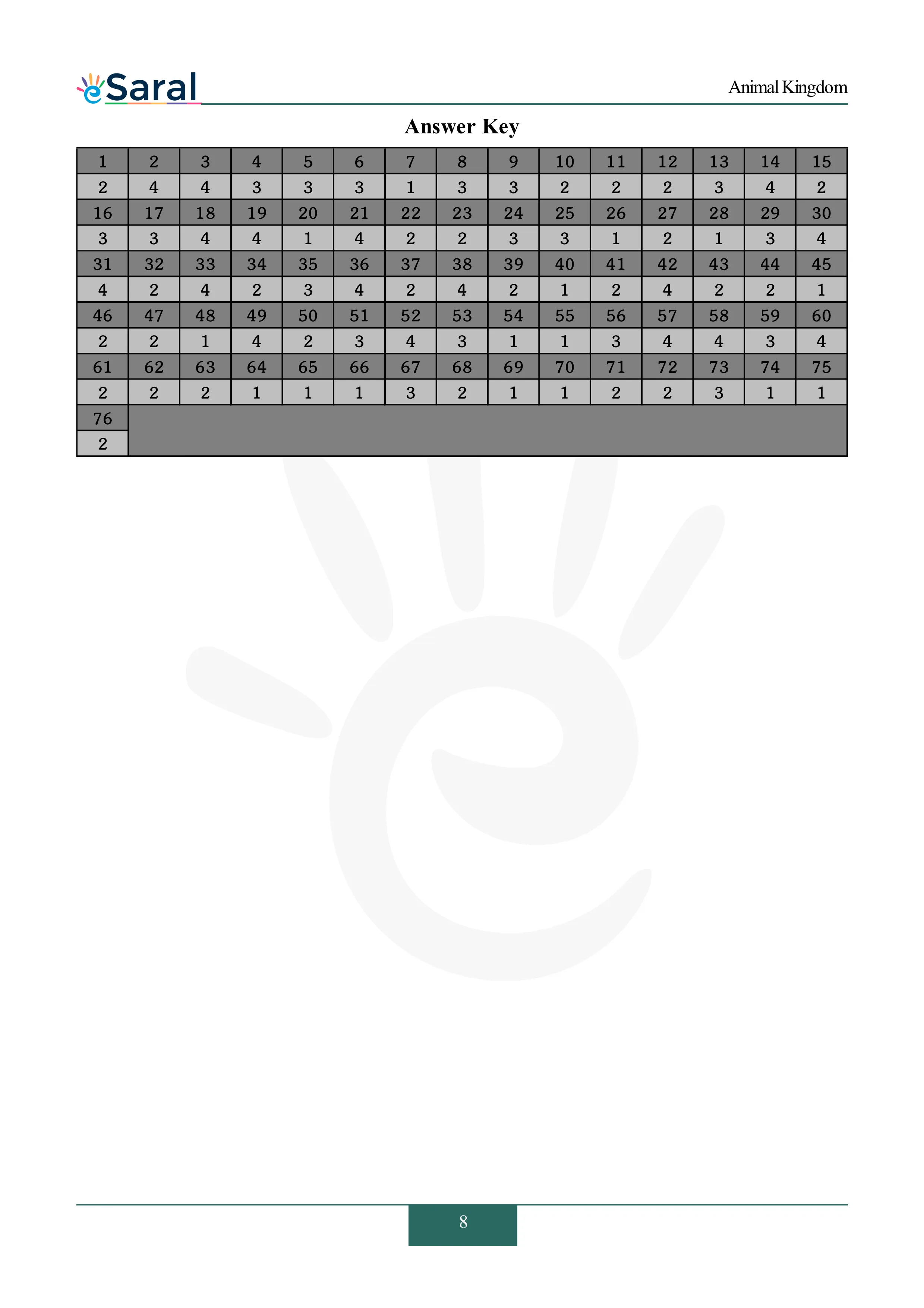
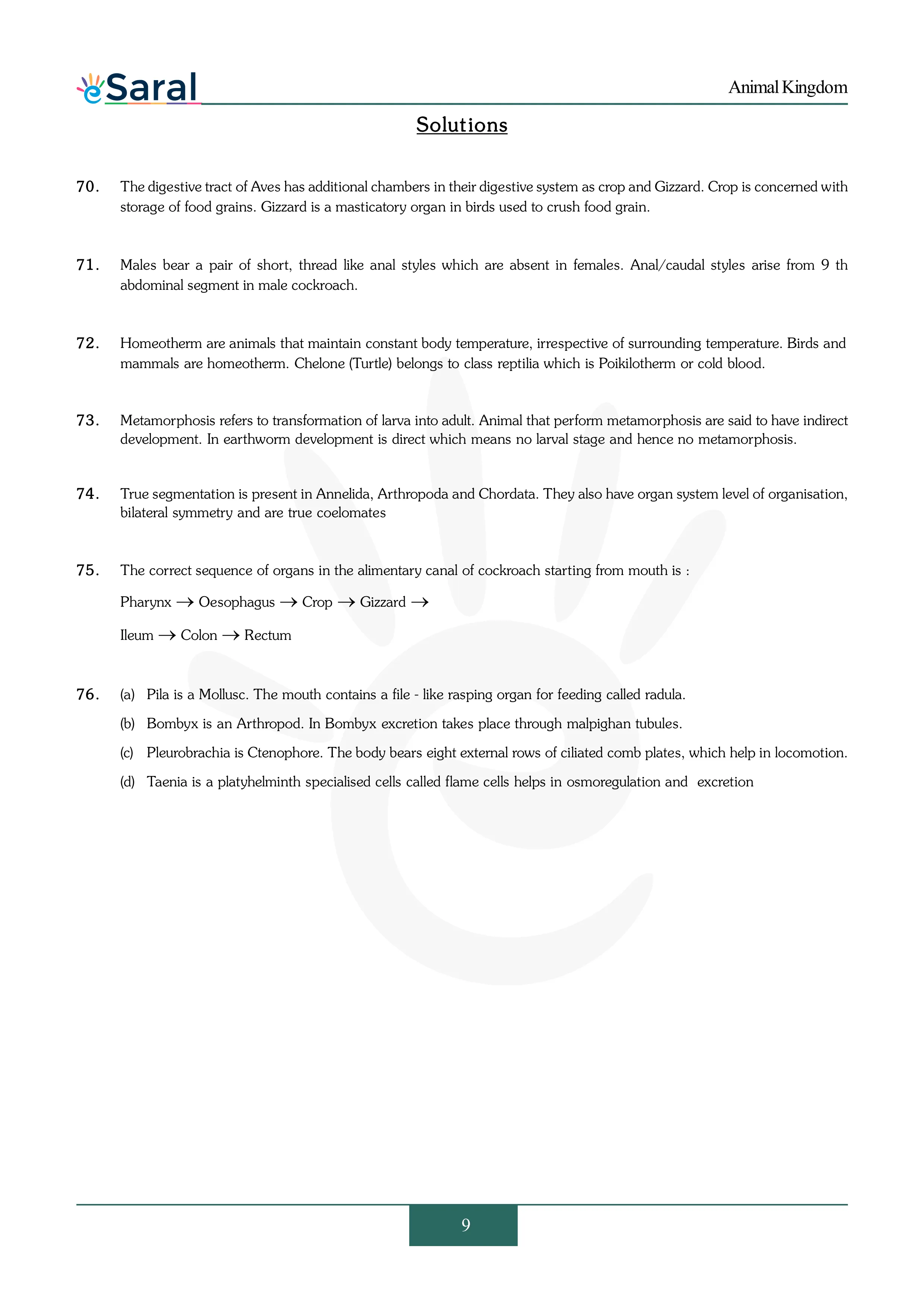
You will find all the solutions at the end of this page:
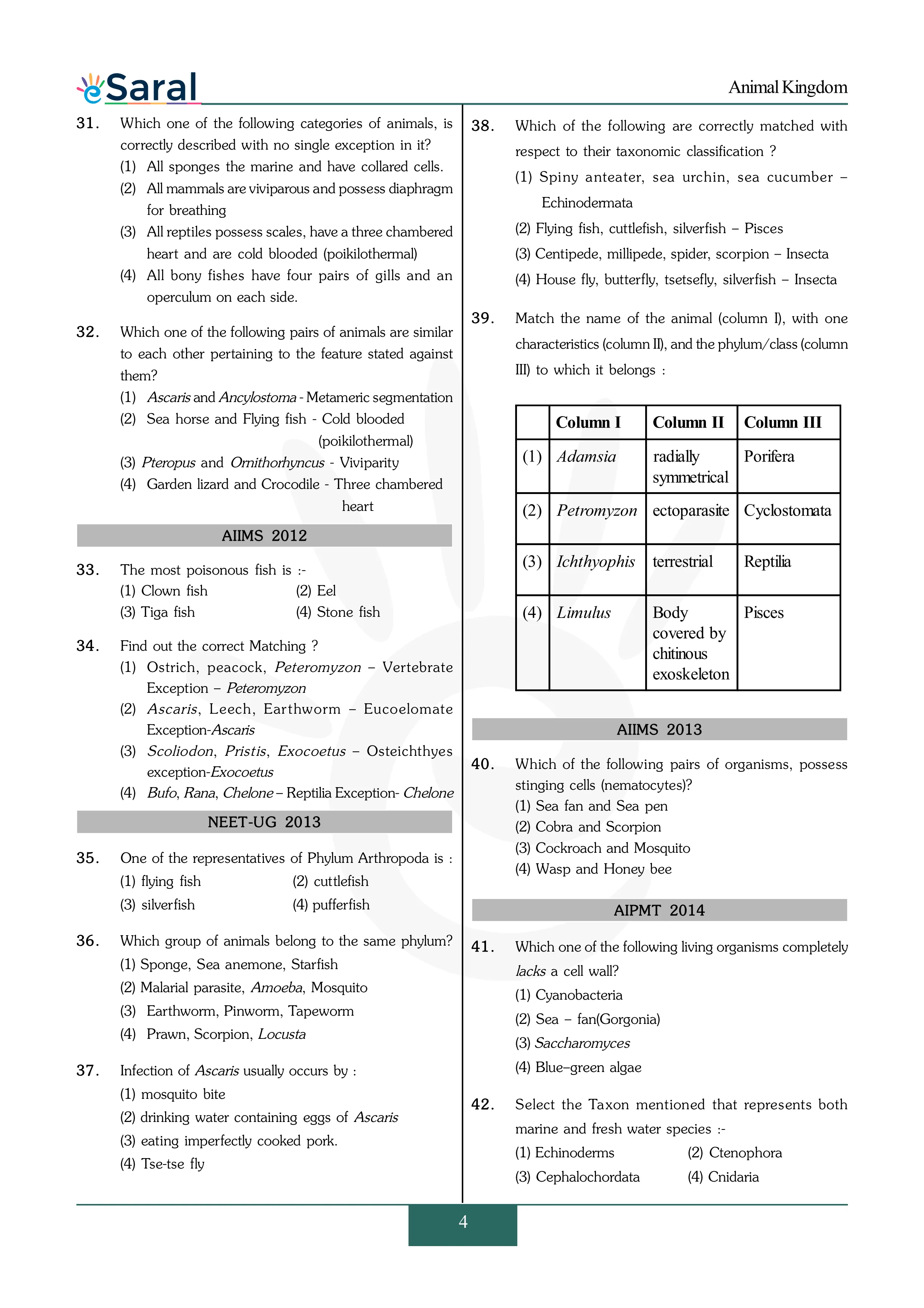
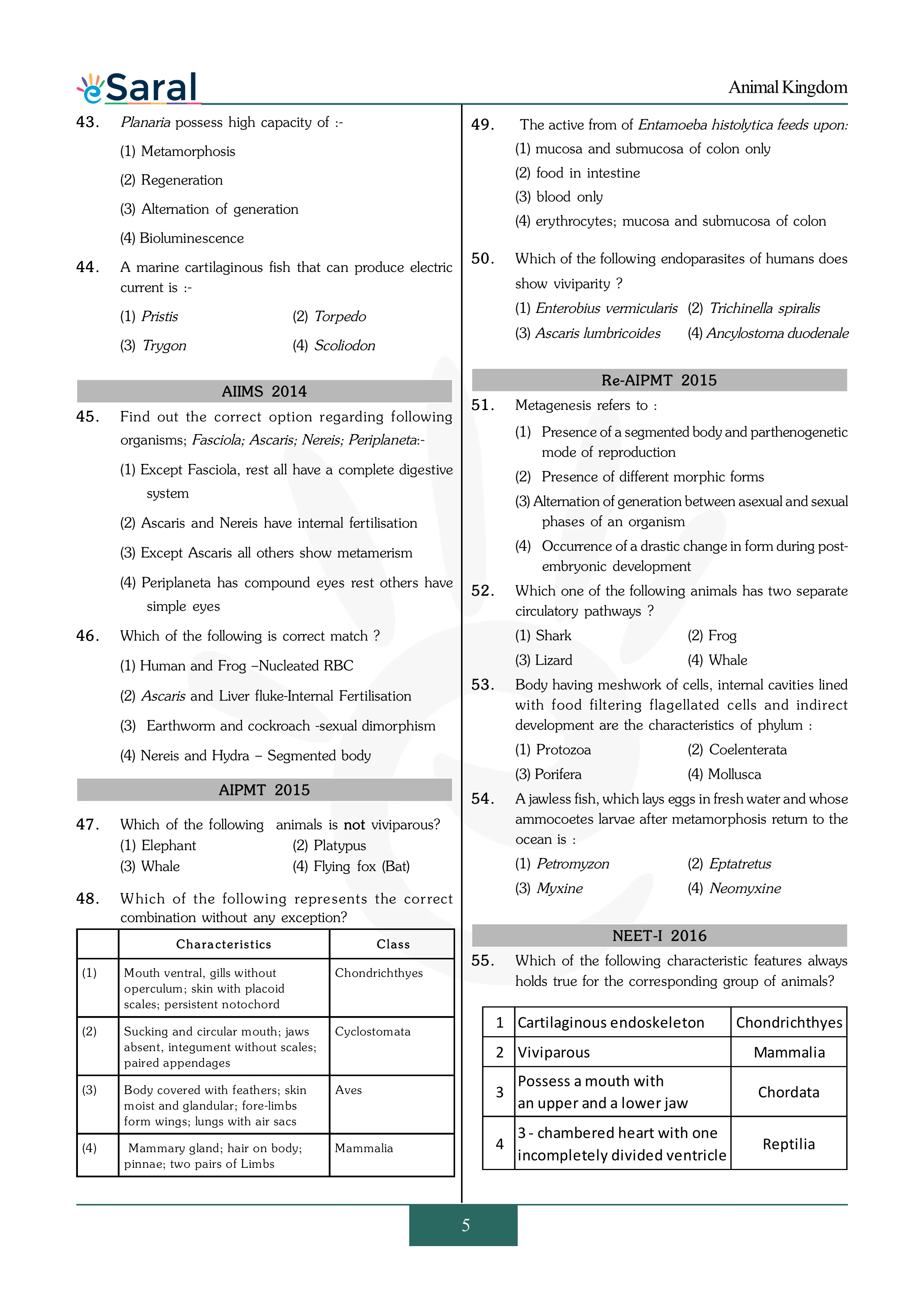
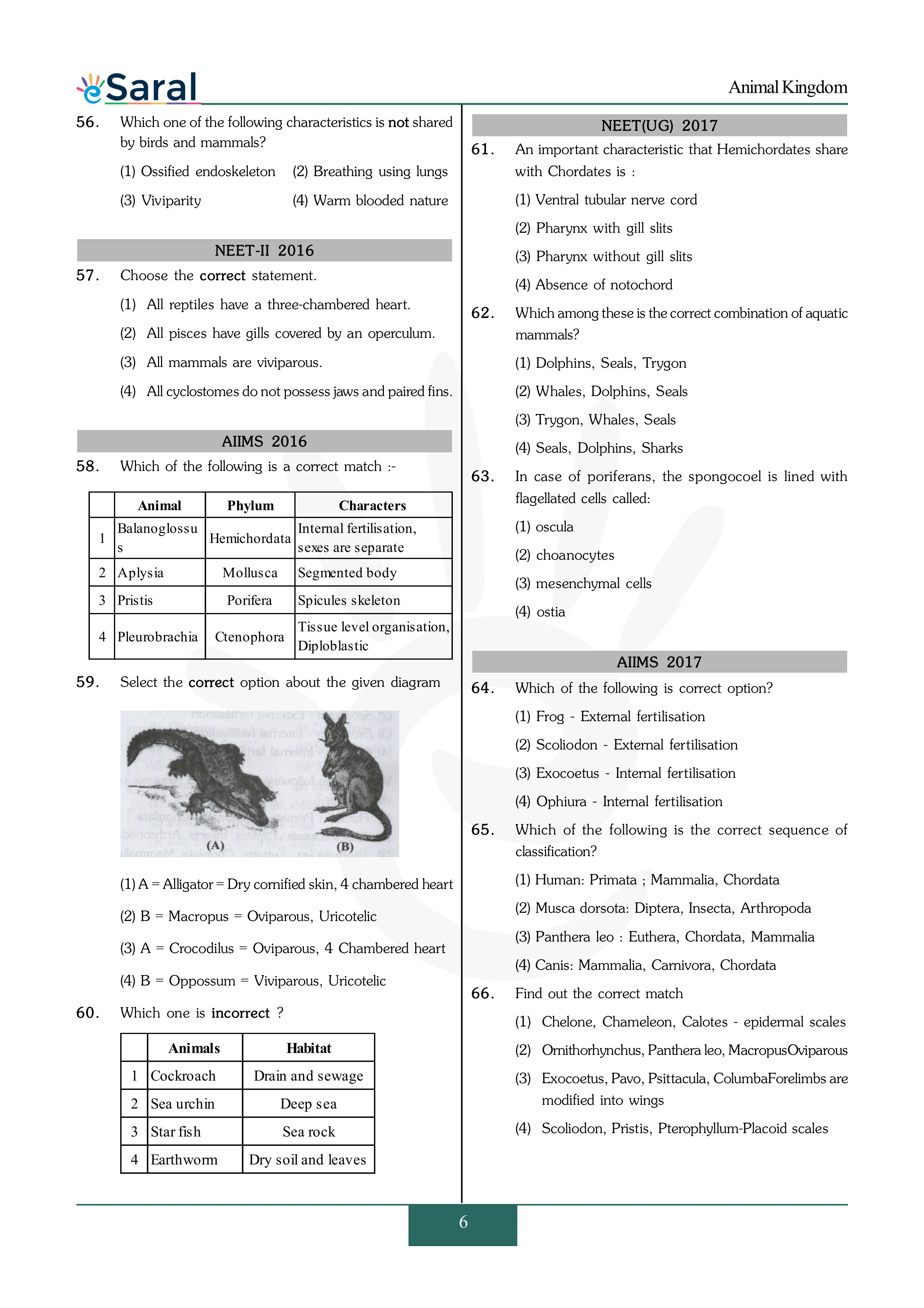
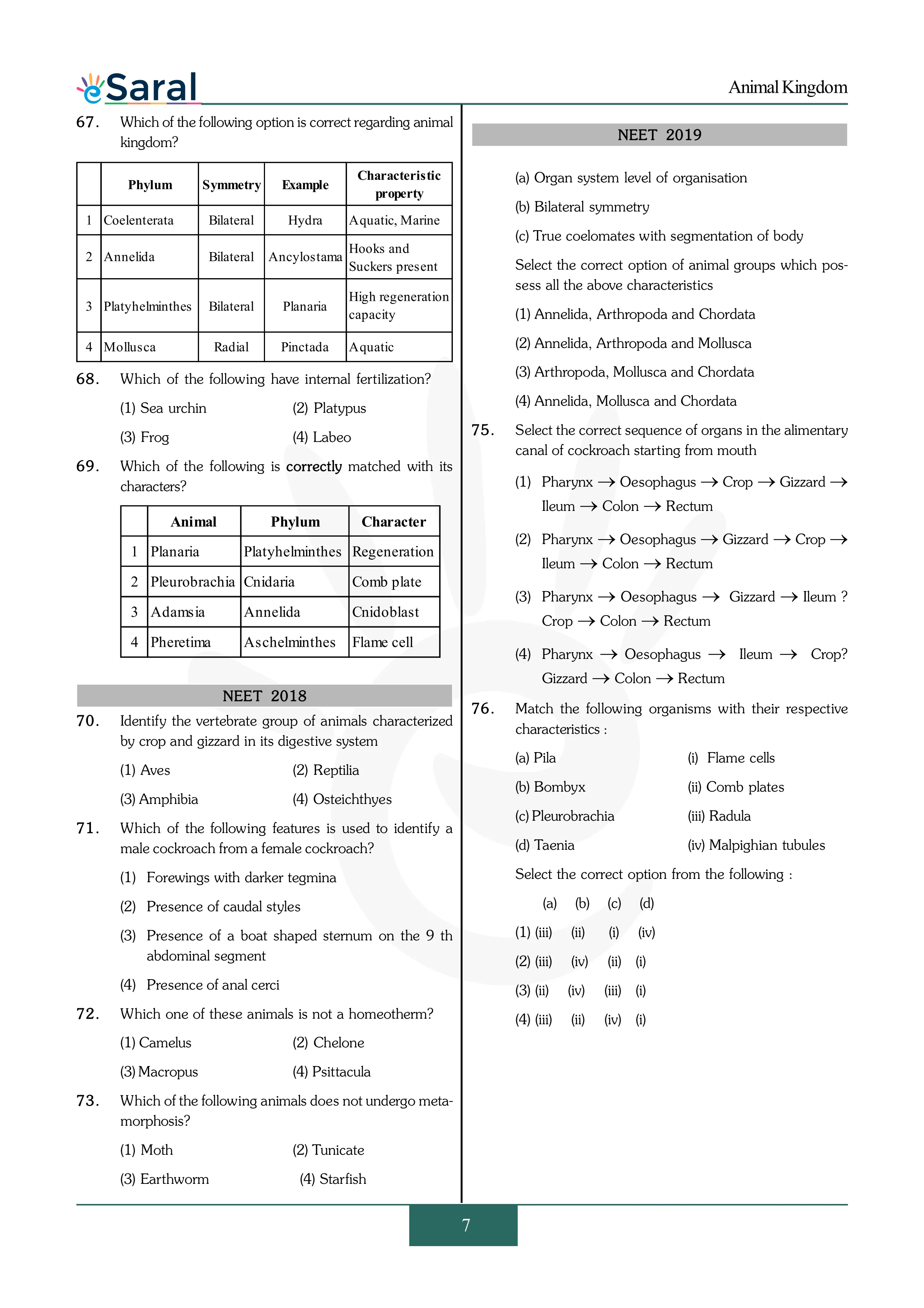
NEET Weightage and Year-Wise Question Distribution
How many questions come from the Animal Kingdom in the NEET each year?
Animal Kingdom contributes 3–5 questions in almost every NEET paper. Over the last eight years, it has never appeared with fewer than 2 questions, making it one of the most reliable scoring chapters in Class 11 Biology.
| NEET Year | Questions from Animal Kingdom | Key Topics Tested |
|---|---|---|
| 2024 | 4 | Coelom types, Platyhelminthes, and Chordata features |
| 2023 | 3 | Symmetry, Porifera, Reptilia |
| 2022 | 4 | Notochord, Annelida, Echinodermata |
| 2021 | 3 | Arthropoda, open/closed circulation, Aves |
| 2020 | 5 | Phylum examples: coelom, Mammalia |
| 2019 | 4 | Nematoda, Mollusca, flame cells |
| 2018 | 3 | Chordates vs non-chordates, Amphibia |
| 2017 | 4 | Porifera canal system, body symmetry, Aschelminthes |
Source: NTA official answer keys, compiled by eSaral Biology faculty.
"Do not skip the 'basis of classification' section at the start of the chapter. At least one question every year tests whether you know the difference between acoelomate, pseudocoelomate, and coelomate — or between radial and bilateral symmetry. These are quick marks if you revise the definitions carefully."
Topic-Wise Breakdown: What Gets Asked Most
Which topics within the Animal Kingdom carry the highest NEET weightage?
Based on PYQ analysis from 2017 to 2026, the following sub-topics appear most frequently:
High-Priority Topics (appear in 5+ years out of 8)
- Basis of Classification — coelom types (acoelomate, pseudocoelomate, eucoelomate), symmetry (radial, bilateral, asymmetry), germinal layers
- Phylum Chordata — notochord, dorsal nerve cord, pharyngeal gill slits; differences between Urochordata, Cephalochordata, Vertebrata
- Phylum Arthropoda — largest phylum, jointed appendages, open circulatory system, examples (Apis, Locusta, Limulus)
- Phylum Annelida — metamerism, closed circulatory system, nephridia, examples
- Class Mammalia and Aves — warm-blooded animals, four-chambered heart, defining features
Medium-Priority Topics (appear in 3–4 years out of 8)
- Phylum Porifera — canal system (asconoid, syconoid, leuconoid), choanocytes
- Phylum Platyhelminthes — flame cells, parasite adaptations, examples (Taenia, Fasciola)
- Phylum Mollusca — radula, mantle, open circulatory system (except Cephalopoda)
- Phylum Echinodermata — water vascular system, spiny skin, deuterostomes
Lower-Priority but Do-Not-Skip Topics
- Phylum Coelenterata/Cnidaria — cnidoblasts, polymorphism
- Phylum Nematoda/Aschelminthes — pseudocoelom, complete alimentary canal
Quick-Reference Classification Table for All Major Phyla
Use this table during revision to quickly cross-check features before attempting PYQs.
| Phylum | Coelom | Symmetry | Circulatory System | NEET Example |
|---|---|---|---|---|
| Porifera | Absent | Asymmetry | Absent | Sycon, Spongilla |
| Coelenterata | Absent | Radial | Absent | Hydra, Obelia |
| Platyhelminthes | Acoelomate | Bilateral | Absent | Taenia, Fasciola |
| Aschelminthes | Pseudocoelomate | Bilateral | Absent | Ascaris, Wuchereria |
| Annelida | Eucoelomate | Bilateral | Closed | Nereis, Earthworm |
| Arthropoda | Eucoelomate | Bilateral | Open | Prawn, Butterfly |
| Mollusca | Eucoelomate | Bilateral | Open (mostly) | Pila, Octopus |
| Echinodermata | Eucoelomate | Radial (adult) | Absent | Starfish, Sea urchin |
| Chordata | Eucoelomate | Bilateral | Closed | Frog, Pigeon, Human |
How to Solve Animal Kingdom PYQs Effectively
What is the best strategy for practising Animal Kingdom NEET questions?
Many students attempt PYQs randomly and lose track of which concepts they are actually weak in. A structured 3-step approach works significantly better:
Step 1 — Classify Before You Practise
Before solving any question, make sure you can recall the defining feature of each phylum from memory. The classification table above is a starting point. Create a one-page handwritten summary and keep it visible during revision.
Step 2 — Solve by Topic, Not by Year
Group questions by topic (e.g., all coelom-related questions together, all Arthropoda questions together). This helps you notice patterns and traps that NEET setters repeat across years. You will also find gaps in your knowledge faster.
Step 3 — Analyse Wrong Answers Conceptually
For every wrong answer, write down why you got it wrong — was it a factual gap, a confusion between two phyla, or a misread question? This log becomes your personal revision checklist in the final week before the exam.
For additional Biology theory support, the NCERT Solutions on eSaral are structured chapter by chapter and help you trace exactly which NCERT paragraph a NEET question is based on.
"NEET setters often test one 'exception' per phylum — for example, Cephalopoda (squids, octopus) has a closed circulatory system unlike the rest of Mollusca. Similarly, Leech (Annelida) has no nephridia in some segments. Make a dedicated list of these exceptions and revise them 48 hours before the exam. This alone can save 2–3 marks."
Animal Kingdom NEET PYQ — Practice Questions with Solutions
The complete set of Animal Kingdom NEET previous year questions with step-by-step solutions is available below in the embedded PDF viewer and in the eSaral app. Solutions are written by Biology faculty trained at IIT Bombay — the same faculty whose students have cracked NEET with scores above 680.
What the solutions cover:
- Official NTA answer with the correct option highlighted
- Conceptual explanation of why the correct option is right
- Common distractor analysis — why the wrong options look tempting
- NCERT page reference for quick follow-up reading
If you are also revising Physics and Chemistry, check out the NCERT Books for Class 11 and NCERT Books for Class 12 — all chapters are available free on eSaral.
Frequently Asked Questions
Find answers to common questions.
Is Animal Kingdom enough to score full marks in the Diversity unit of NEET?
No. Animal Kingdom is one part of the Diversity unit (Unit 1). You also need to cover The Living World, Biological Classification, and Plant Kingdom. Together, these chapters contribute 14–18 marks in a typical NEET paper. Animal Kingdom alone accounts for roughly 3–5 of those marks.
Which is the most important phylum for NEET from Animal Kingdom?
Arthropoda and Chordata are the most frequently tested phyla. Arthropoda appears almost every year due to questions on open circulatory systems, jointed appendages, and examples like Limulus (living fossil). Chordata questions focus on notochord, nerve cord, and differences between vertebrate classes like Reptilia, Aves, and Mammalia.
How many questions come from Animal Kingdom in NEET?
NEET typically includes 3–5 questions from Animal Kingdom every year. Based on NTA data from 2017–2024, this chapter has never contributed fewer than 2 questions, making it one of the most reliable chapters in the Class 11 Biology section for scoring marks
How should I revise Animal Kingdom one week before NEET?
Focus on three things in your final week: (1) the quick-reference classification table covering all phyla, (2) your personal list of exceptions and tricky examples, and (3) solving 2–3 full sets of Animal Kingdom PYQs timed at roughly 90 seconds per question. Avoid reading new material — consolidate what you already know.
What is the difference between acoelomate, pseudocoelomate, and coelomate animals?
Acoelomates have no body cavity between the gut and body wall (e.g., Platyhelminthes). Pseudocoelomates have a false coelom not lined by mesoderm (e.g., Aschelminthes). Coelomates (eucoelomates) have a true coelom fully lined by mesodermal epithelium — this includes Annelida, Arthropoda, Mollusca, Echinodermata, and Chordata.
Are NCERT examples enough for Animal Kingdom NEET questions?
Yes — for the vast majority of questions. NEET Biology is almost entirely NCERT-based. All examples, definitions, and classification criteria in Animal Kingdom questions are drawn directly from NCERT Class 11 Biology, Chapter 4. Focus on understanding the text deeply rather than sourcing extra reference material