Mechanical Properties of Solids Class 11 Notes - IIT JEE | NEET

eSaral › Class 11 › Physics Notes › Mechanical Properties of Solids Notes

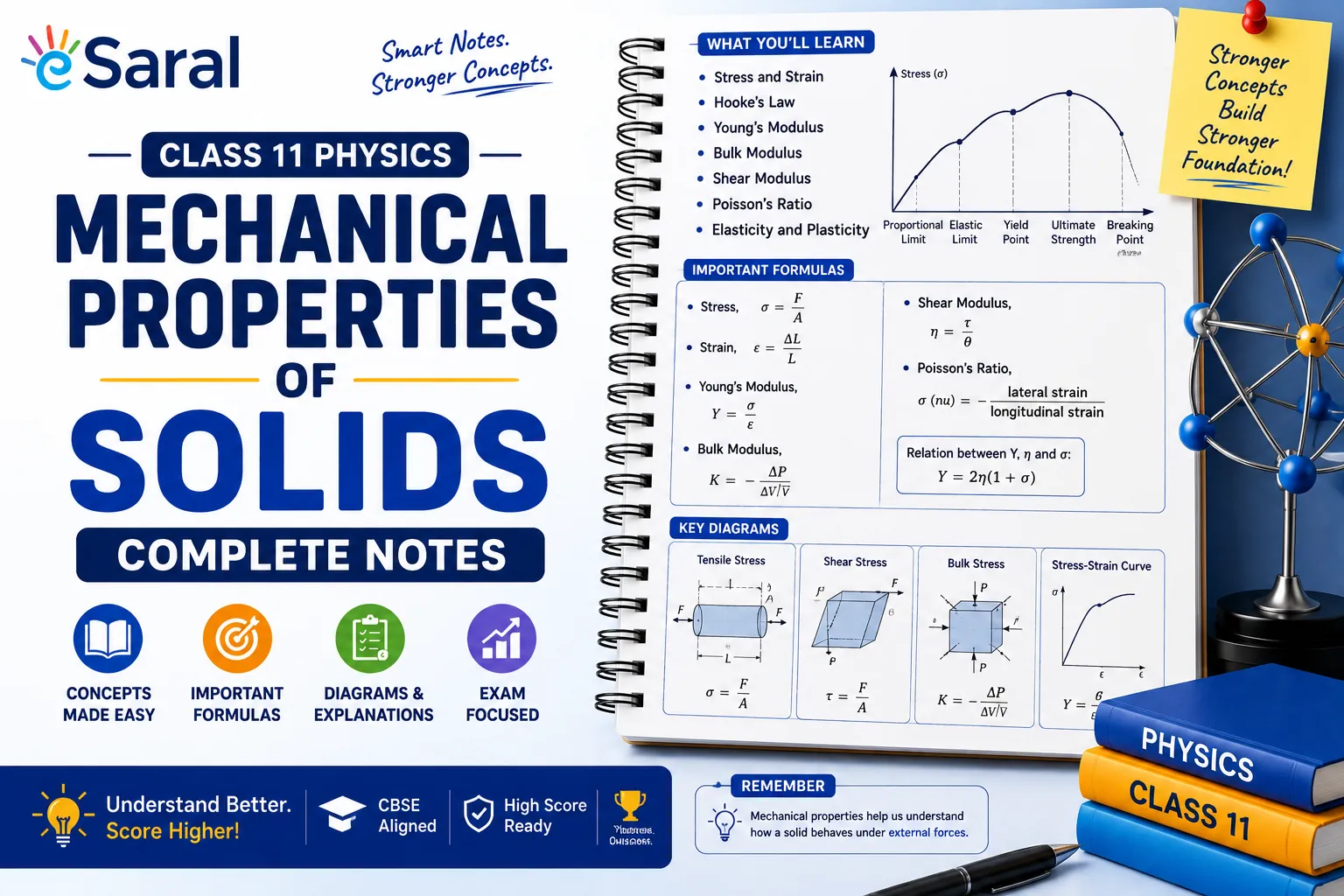
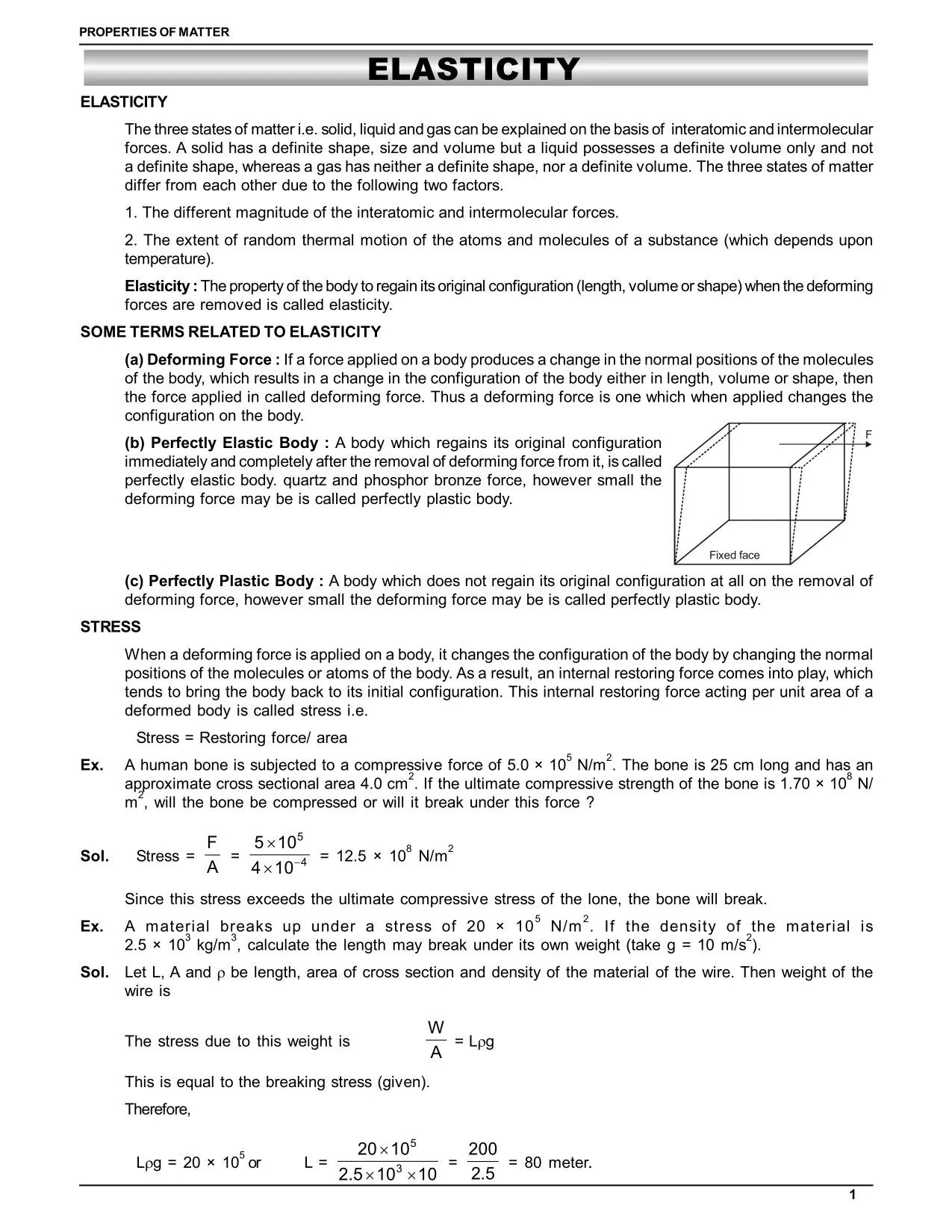
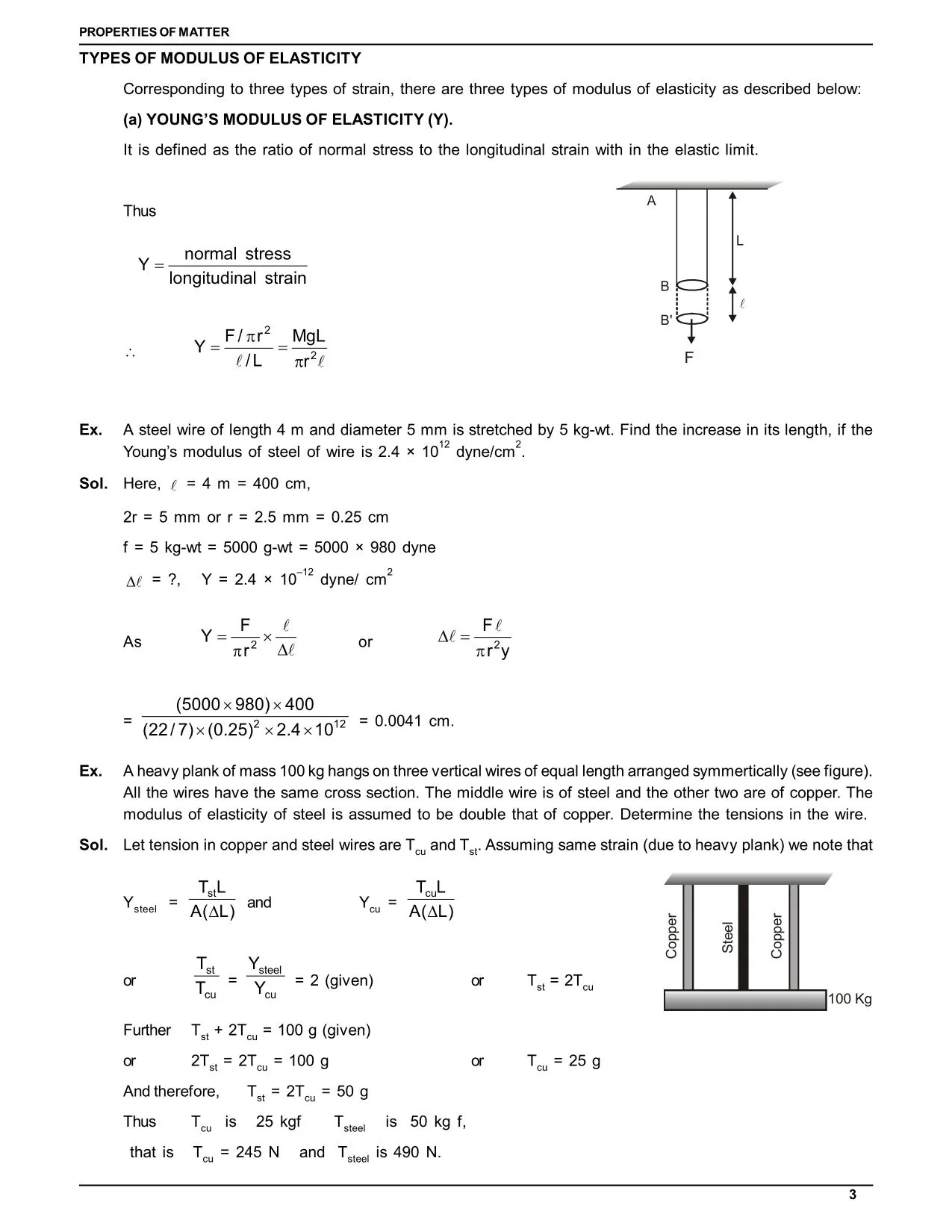
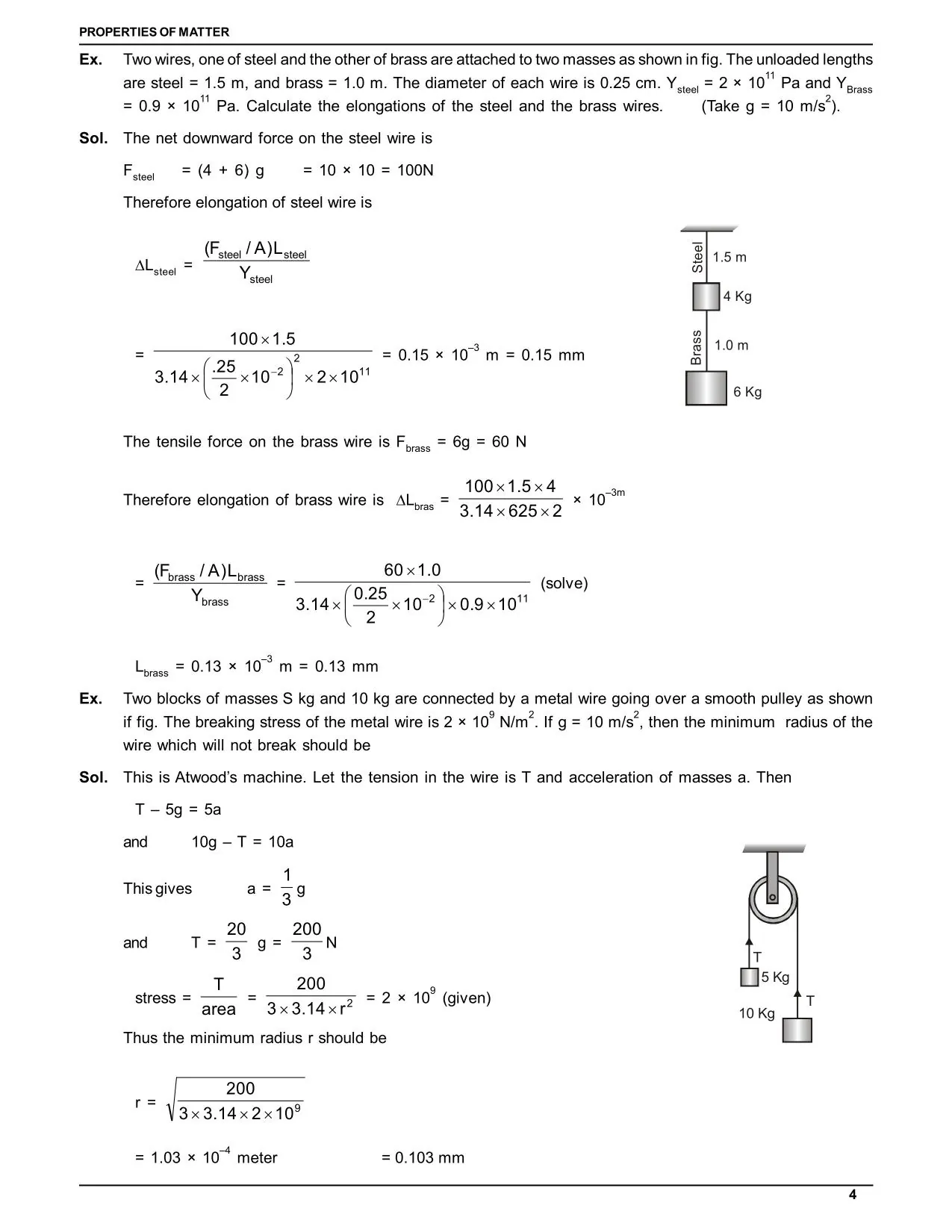
Mechanical Properties of Solids Class 11 Notes for JEE and NEET preparation are provided here. Get to know all the important concepts related to this chapter. Students will find the definition of all the important topics in the Mechanical Properties of Solids Class 11 Notes, such as stress, plasticity, elasticity, strain, etc. They will get to understand the stress- strain curve and Young’s modulus, and along with that, they will also see the definition of Poisson’s ratio, shear modulus, and bulk modulus. Practicing from these notes will give a deep understanding of this topic.
India's Best Exam Preparation for Class 11th - Download Now
India's Best Exam Preparation for Class 11th - Download Now
India's Best Exam Preparation for Class 11th - Download Now
India's Best Exam Preparation for Class 11th - Download Now
eSaral have already come up with an amazing revision series of Physics where you can easily revise your chapter within minutes with all the important formulae and key points. This revision series is free for all. Click Here for Complete Physics Revision Series by Saransh Gupta Sir (AIR-41) About Saransh Gupta Sir: Computer Science Graduate from IIT Bombay. Cracked IIT-JEE with AIR-41 and AIEEE (JM) with AIR-71 in 2006. He is the author of the JEE Mentorship Book “StrateJEE”. He taught Physics for 5 years at Allen and was loved immensely by all the students. Many of his students bagged success with flying colours in JEE & NEET Exams. eSaral brings you detailed Class 11th Physics study material. eSaral provides a series of detailed chapter-wise notes for all the Subjects of class 11th and 12th. These notes will also help you in your IIT JEE & NEET preparations. We hope these Physics Notes for Class 11 will help you understand the important topics and remember the key points from an exam point of view. Get Complete Physics Notes for Physics Class 11 for easy learning and understanding. For free video lectures and complete study material, download the eSaral APP. About eSaral: At eSaral, we are offering a complete platform for IIT-JEE & NEET preparation. The main mission behind eSaral is to provide education to every student in India by eliminating the Geographic and Economic factors, as a nation’s progress and development depend on the availability of quality education to everyone. With the blend of education & technology, the eSaral team made the learning personalized & adaptive for everyone.
Frequently Asked Questions
Find answers to common questions.
What is Hooke's Law in simple words?
Hooke's Law states that within the elastic limit, the stress developed in a body is directly proportional to the strain produced. In simple terms: the more you stretch a spring or wire (within limits), the more force it pulls back with — and that force is proportional to how far it is stretched.
What is Young's modulus and what are its units?
Young's modulus (Y) is the ratio of longitudinal stress to longitudinal strain. Its SI unit is Pascal (Pa) or N/m². For steel, Y ≈ 2 × 10¹¹ Pa. A higher Young's modulus means the material is stiffer and resists elongation more strongly under the same applied force.
What is the difference between stress and strain?
Stress is the internal restoring force per unit area (unit: Pascal), while strain is the ratio of change in dimension to original dimension (dimensionless). Stress is the cause; strain is the effect. Both are related by the modulus of elasticity through Hooke's Law within the elastic limit.
Is Mechanical Properties of Solids important for NEET?
Yes. NEET typically includes 1–2 MCQs from this chapter each year, based on NTA's official NEET syllabus (Unit VII: Properties of Bulk Matter). Questions focus on conceptual definitions of stress, strain, types of moduli, Hooke's Law, and the stress-strain curve. Understanding the curve and memorising key formulas is sufficient to score full marks in this chapter.
What is the difference between Young's modulus, Shear modulus, and Bulk modulus?
Young's modulus (Y) applies to longitudinal stress/strain (stretching or compression along one axis). Shear modulus (G) applies when equal and opposite tangential forces cause angular deformation. Bulk modulus (B) applies when uniform pressure is applied from all sides, causing a volume change. All three have the same SI unit (Pa) but describe different deformation geometries.
How many marks does Mechanical Properties of Solids carry in JEE Main?
Based on previous years' NTA-released JEE Main papers, this chapter typically contributes 1–2 questions (4–8 marks) per session. Questions often involve numerical application of Young's modulus, the stress-strain curve interpretation, or elastic potential energy calculations. Consistent practice of NCERT examples and past JEE questions is enough to score full marks here.