Chemical Equilibrium Class 11 Notes for IIT JEE & NEET

eSaral › Class 11 › Chemistry Notes › Chemical Equilibrium Notes for IIT JEE & NEET

Get detailed study material for Class 11 Chemistry to prepare for Boards as well as competitive exams like IIT JEE, NEET, etc. eSaral offers you complete Chemical Equilibrium Notes for Class 11th. eSaral helps the students in clearing and understanding each topic in a better way. eSaral is providing complete chapter notes for Class 11th and 12th, both Physics, Chemistry & Mathematics. Besides this, eSaral also offers NCERT Solutions, Previous year questions for JEE Main and Advanced, Practice questions, Test Series for JEE Main, JEE Advanced, and NEET, Important questions of Physics, Chemistry, Math, Biology, and many more. Download the eSaral app for free study material and video tutorials..
India's Best Exam Preparation for Class 11th - Download Now
India's Best Exam Preparation for Class 11th - Download Now
India's Best Exam Preparation for Class 11th - Download Now
India's Best Exam Preparation for Class 11th - Download Now
India's Best Exam Preparation for Class 11th - Download Now
India's Best Exam Preparation for Class 11th - Download Now
eSaral helps the students by providing you with an easy way to understand concepts and attractive study material for IIT JEE which includes the chemistry video lectures by top expert IITian Faculties of KOTA. We are also providing a quick revision for Chemistry to help the students in revising the chapter quickly. eSaral brings complete notes for Class 11 Chemistry. eSaral provides a series of detailed chapter-wise notes for all the Subjects of classes 11th and 12th. These notes will also help you in your IIT JEE & NEET preparations.
India's Best Exam Preparation for Class 11th - Download Now
We hope these Chemistry Notes for Class 11 will help you understand the important topics and help in remembering the key points from an exam point of view. Get Complete Class 11 Chemistry Notes for easy learning and understanding. For free video lectures and complete study material, download the eSaral APP. About eSaral: At eSaral, we are offering a complete platform for IIT-JEE & NEET preparation. The main mission behind eSaral is to provide education to every student in India by eliminating the Geographic and Economic factors, as a nation’s progress and development depend on the availability of quality education to everyone. With the blend of education & technology, the eSaral team made the learning personalized & adaptive for everyone.
Frequently Asked Questions
Find answers to common questions.
How do you calculate the degree of dissociation from Kc?
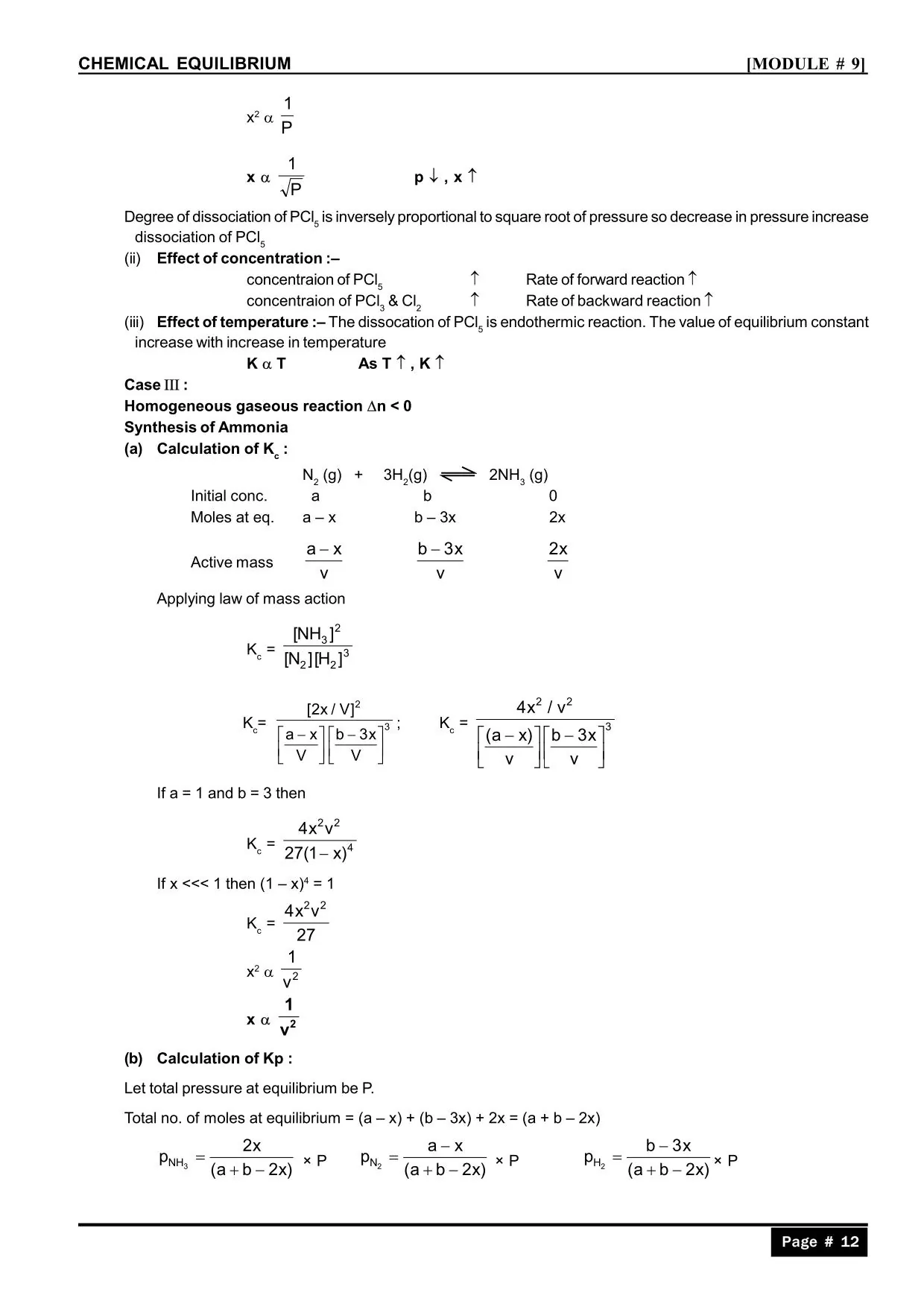
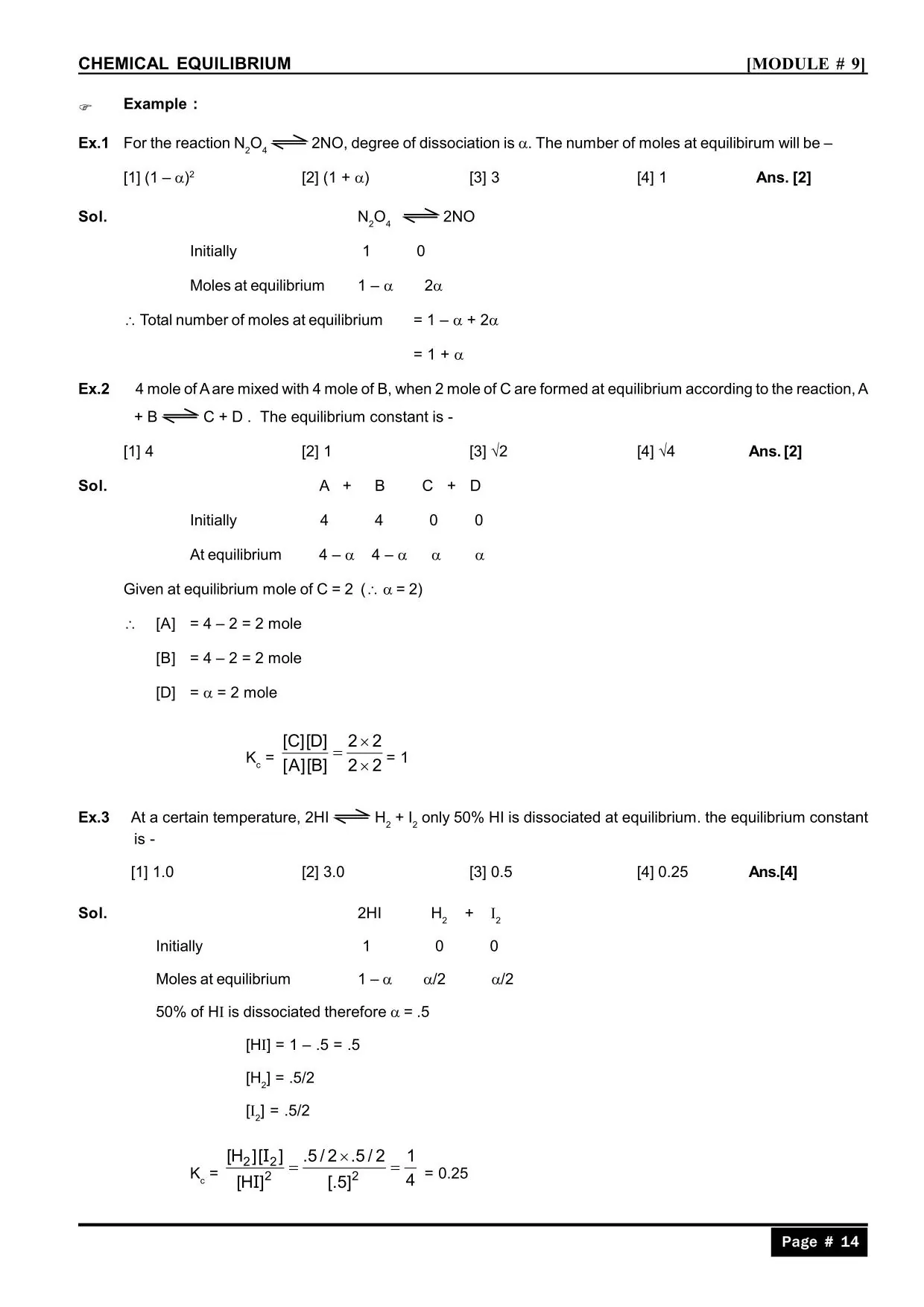
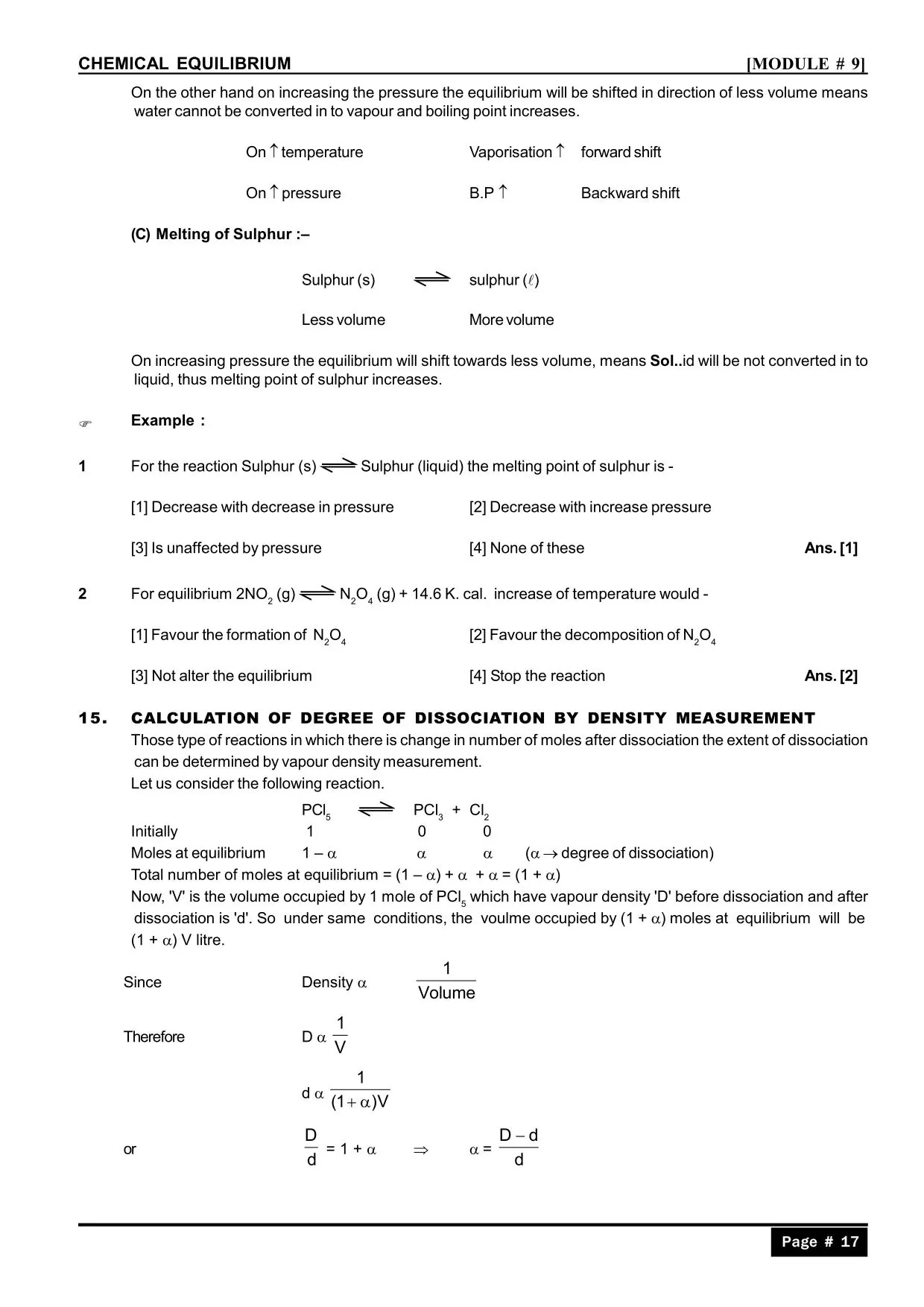
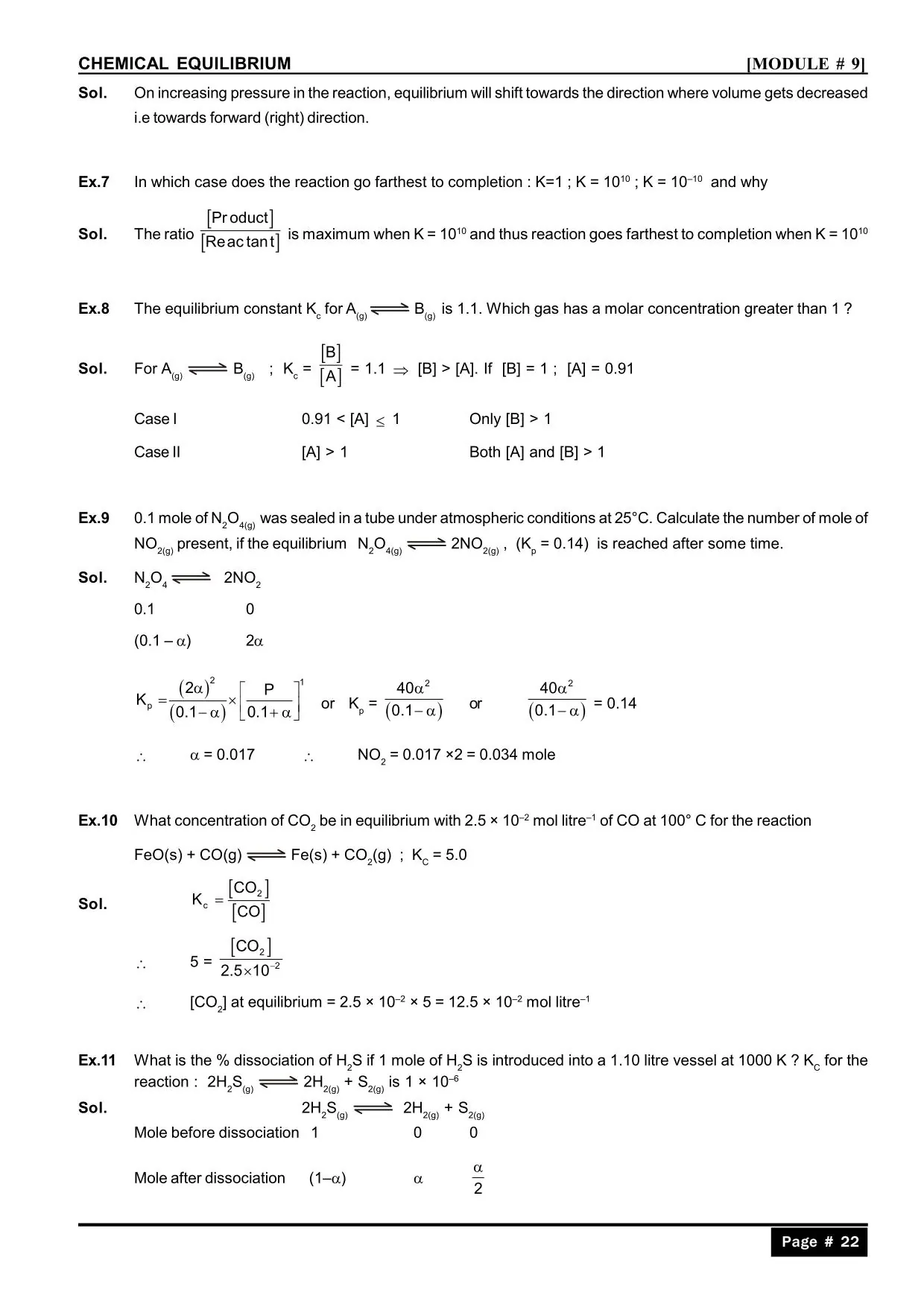
Set up an ICE table (Initial, Change, Equilibrium) with the degree of dissociation as α. Express equilibrium concentrations in terms of α and the initial concentration. Substitute into the Kc expression and solve for α. For small values (α << 1), simplify by ignoring α² terms in the denominator
Does adding a catalyst shift the equilibrium position?
A catalyst does not shift the equilibrium position or change the value of K. It only speeds up both the forward and reverse reactions equally, helping the system reach equilibrium faster. This is a common trap in NEET MCQs — the equilibrium composition remains unchanged.
What is the difference between Kc and Kp in chemical equilibrium?
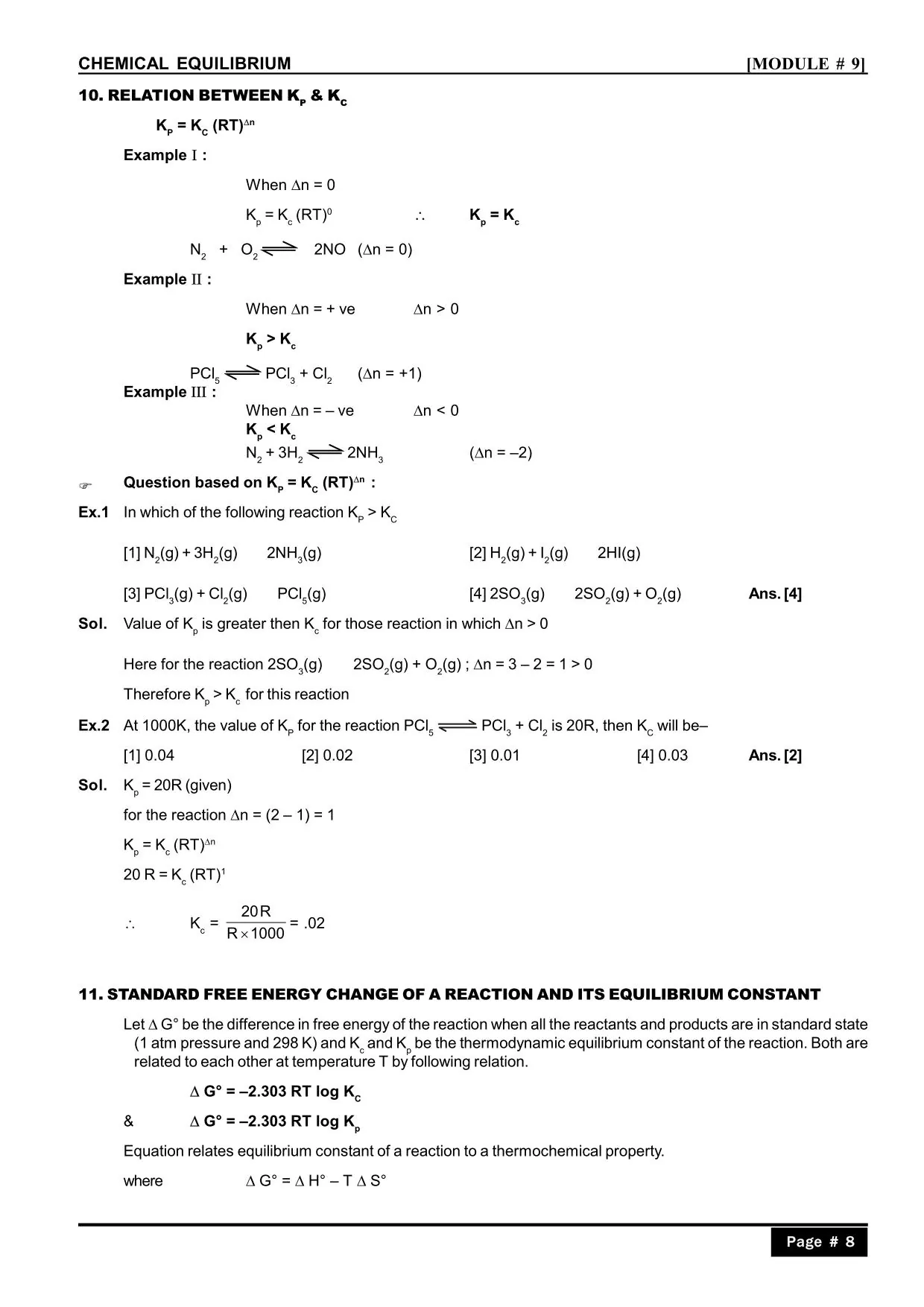
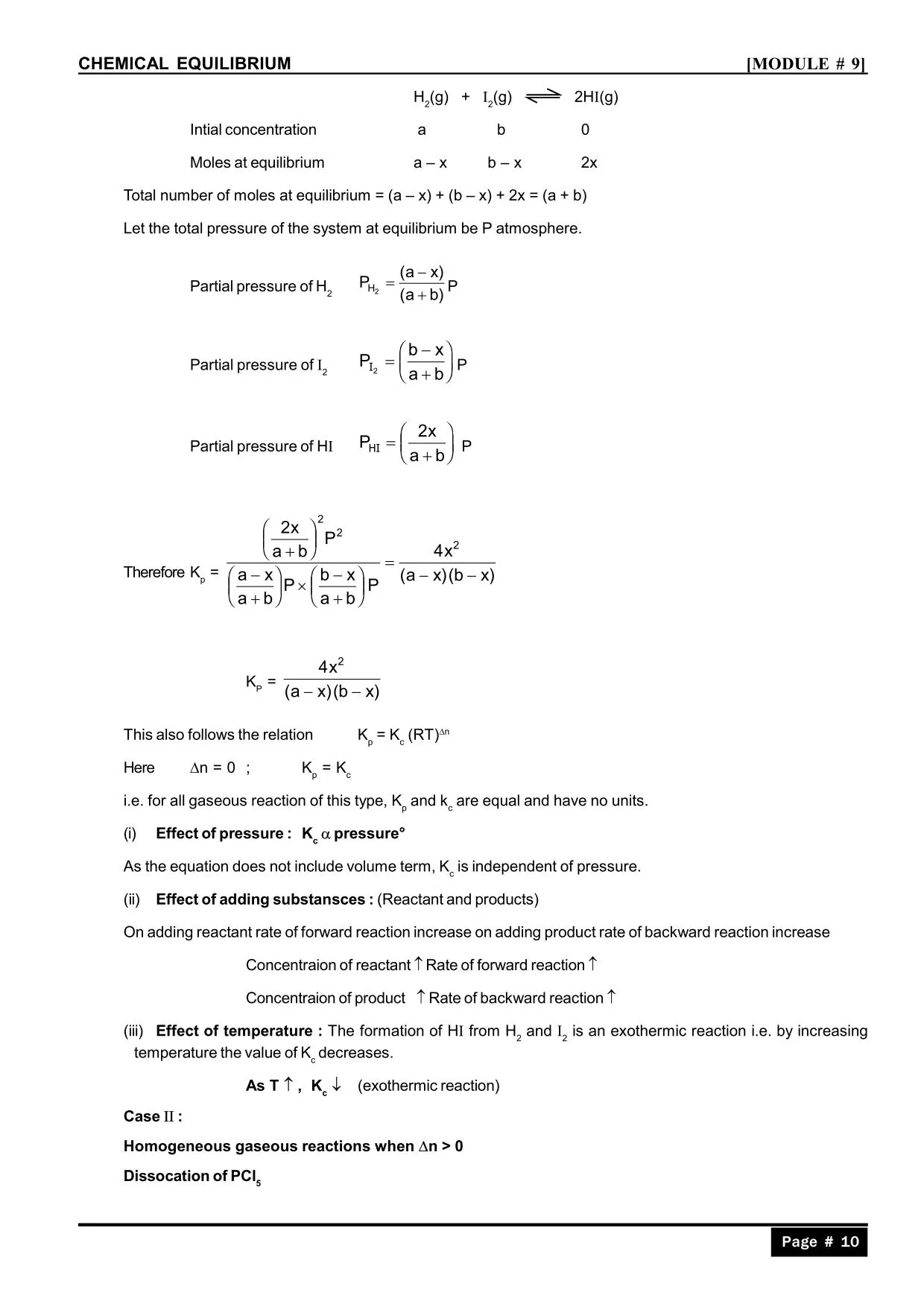
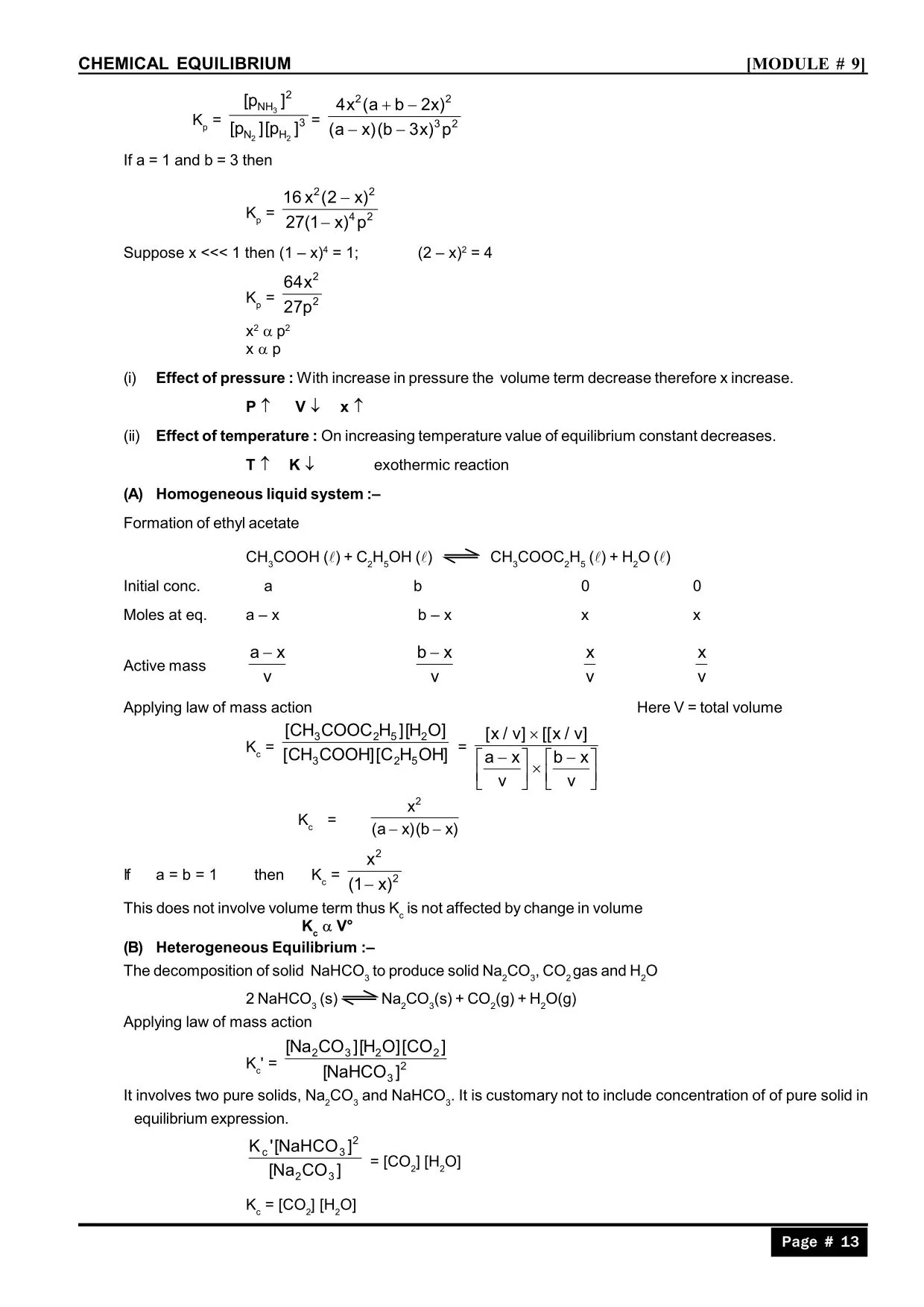
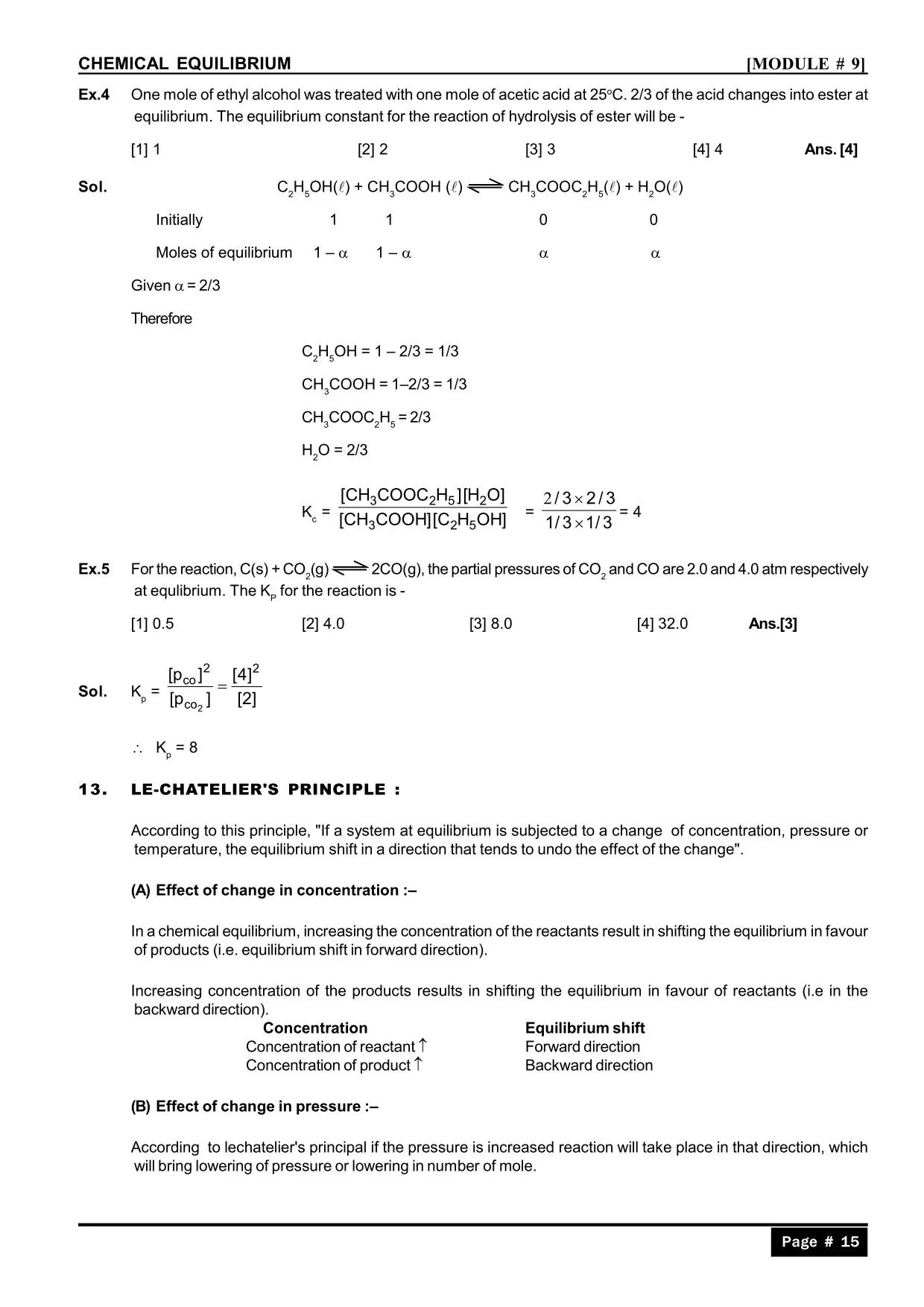
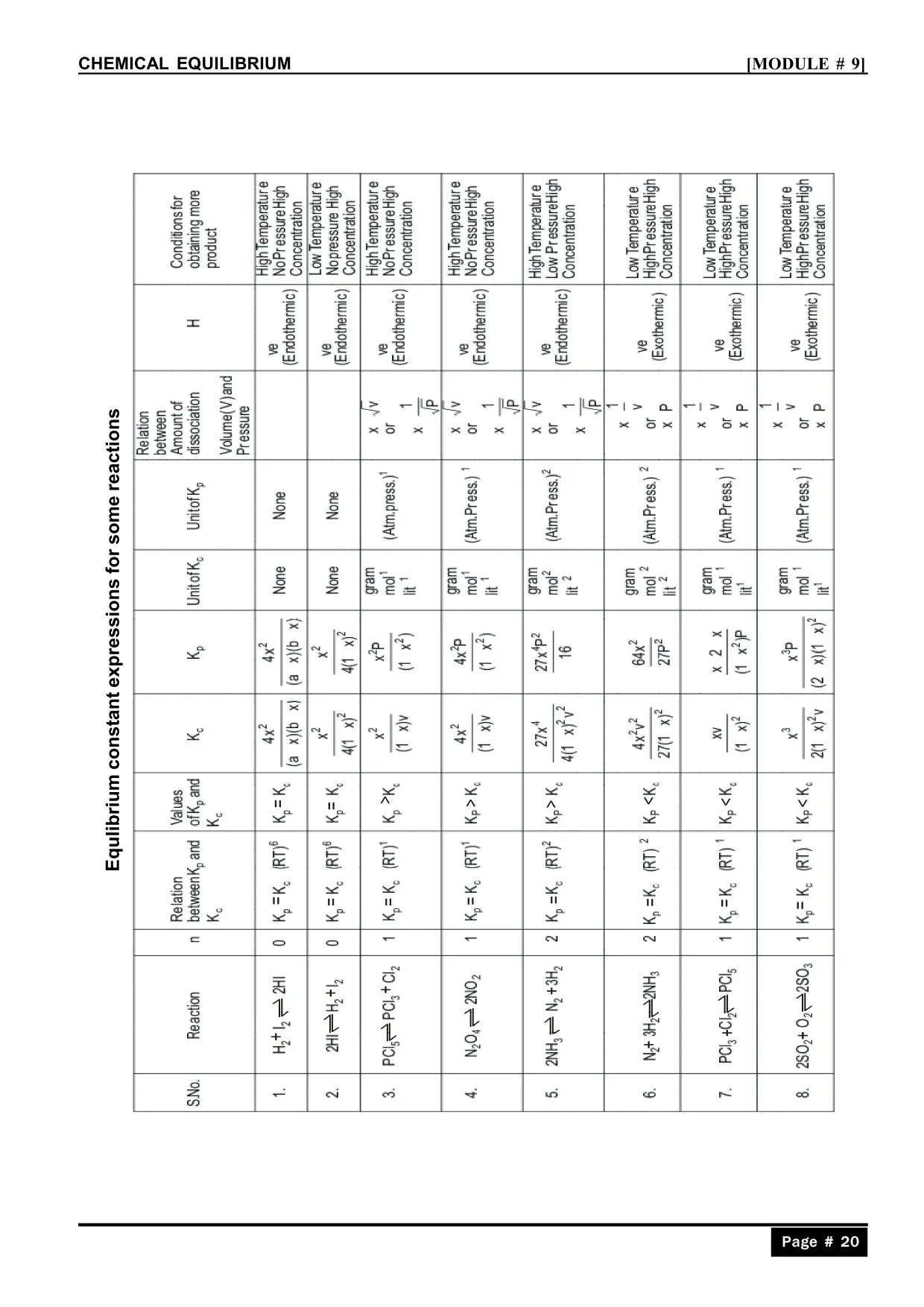
Kc is the equilibrium constant expressed in terms of molar concentrations of reactants and products. Kp is expressed in terms of partial pressures of gaseous species. They are related by the formula Kp = Kc × (RT)^Δn, where Δn is the change in moles of gas. When Δn = 0, Kp equals Kc numerically.
What is the Reaction Quotient (Q) and how is it used?
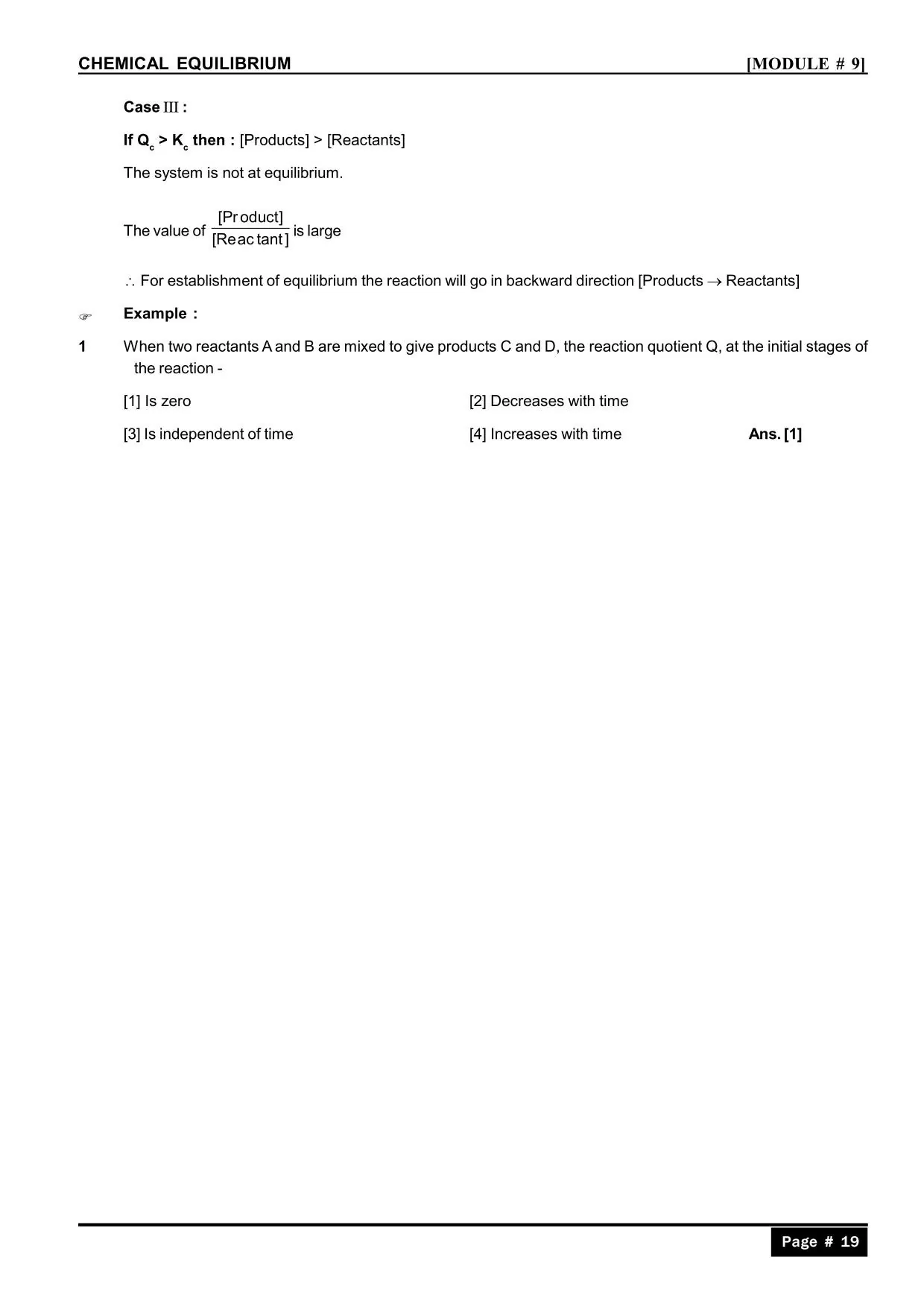
The Reaction Quotient Q is calculated using the same expression as Kc but with current (non-equilibrium) concentrations. Comparing Q to K tells you the direction the reaction will shift: if Q < K, the reaction proceeds forward; if Q > K, it shifts backward; if Q = K, the system is already at equilibrium. JEE Main tests this concept directly.
Is Chemical Equilibrium important for NEET 2026?
Yes. Chemical Equilibrium is a confirmed topic in the NEET 2026 Chemistry syllabus as listed on NTA's official website. It typically contributes 2–3 questions per paper, covering Le Chatelier's Principle and Kc/Kp calculations. These questions are largely concept-based and become straightforward with well-structured notes and consistent practice.
What happens to equilibrium when pressure is increased?
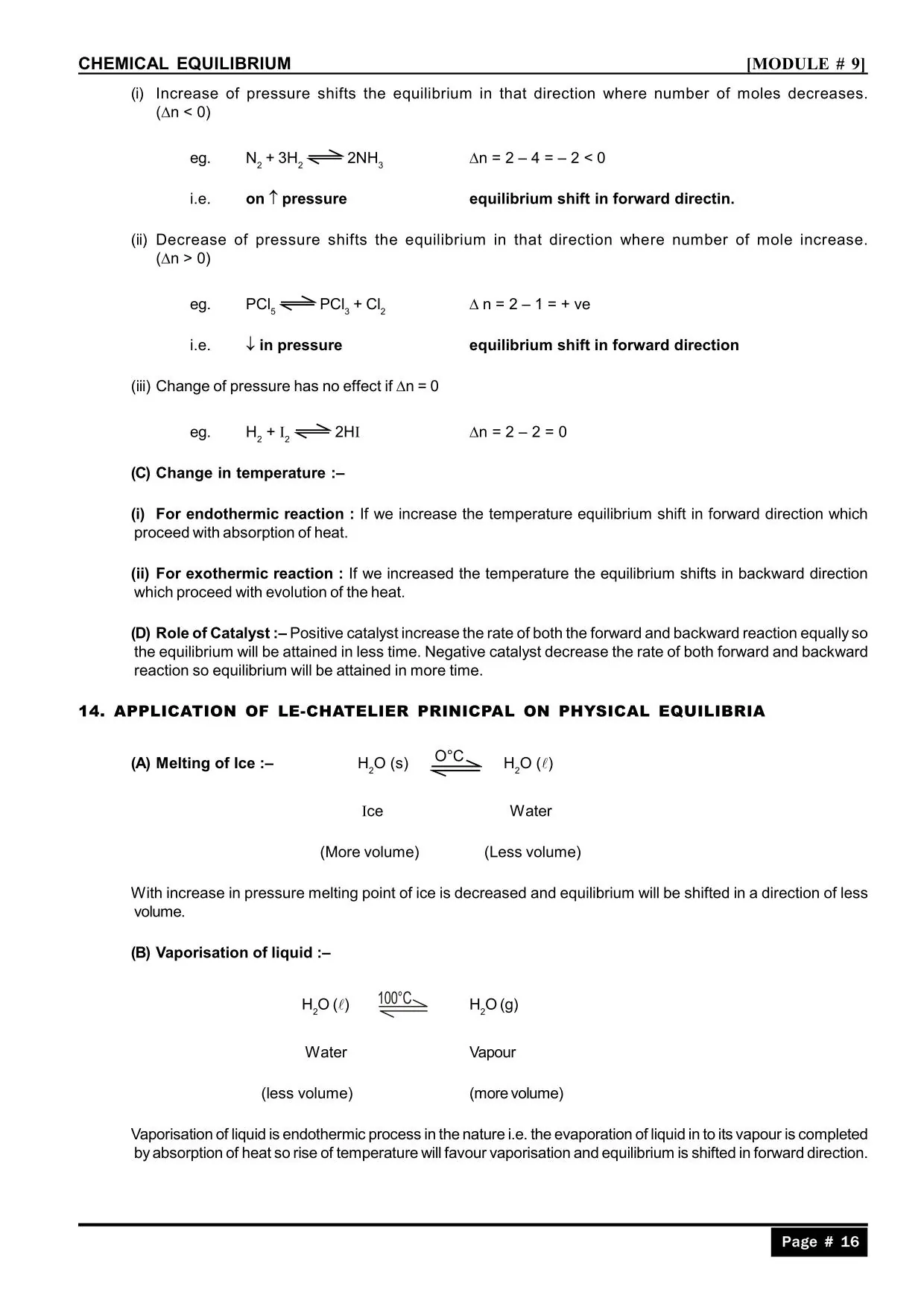
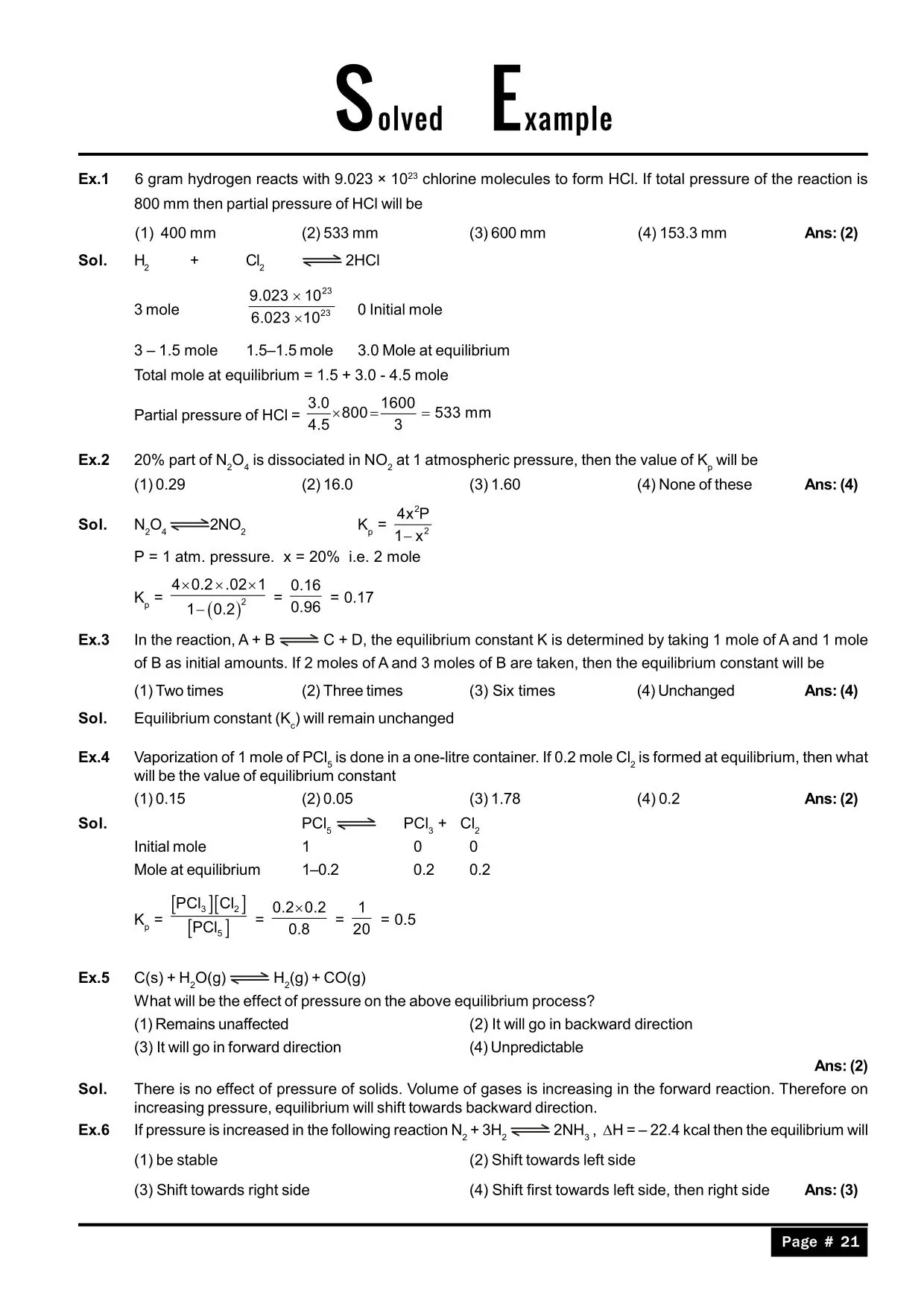
Increasing pressure at constant temperature shifts equilibrium toward the side with fewer moles of gas, as per Le Chatelier's Principle. If Δn = 0, pressure has no effect on equilibrium position. Adding an inert gas at constant volume also has no effect on equilibrium position since partial pressures of reacting species do not change.