Excretory Products & their elimination - NEET Previous Year Questions with Complete Solutions
Excretory Products and Their Elimination is a high-weightage NEET Biology chapter focused on nephron structure, urine formation, kidney function, and excretory disorders, making PYQ practice essential for scoring well.
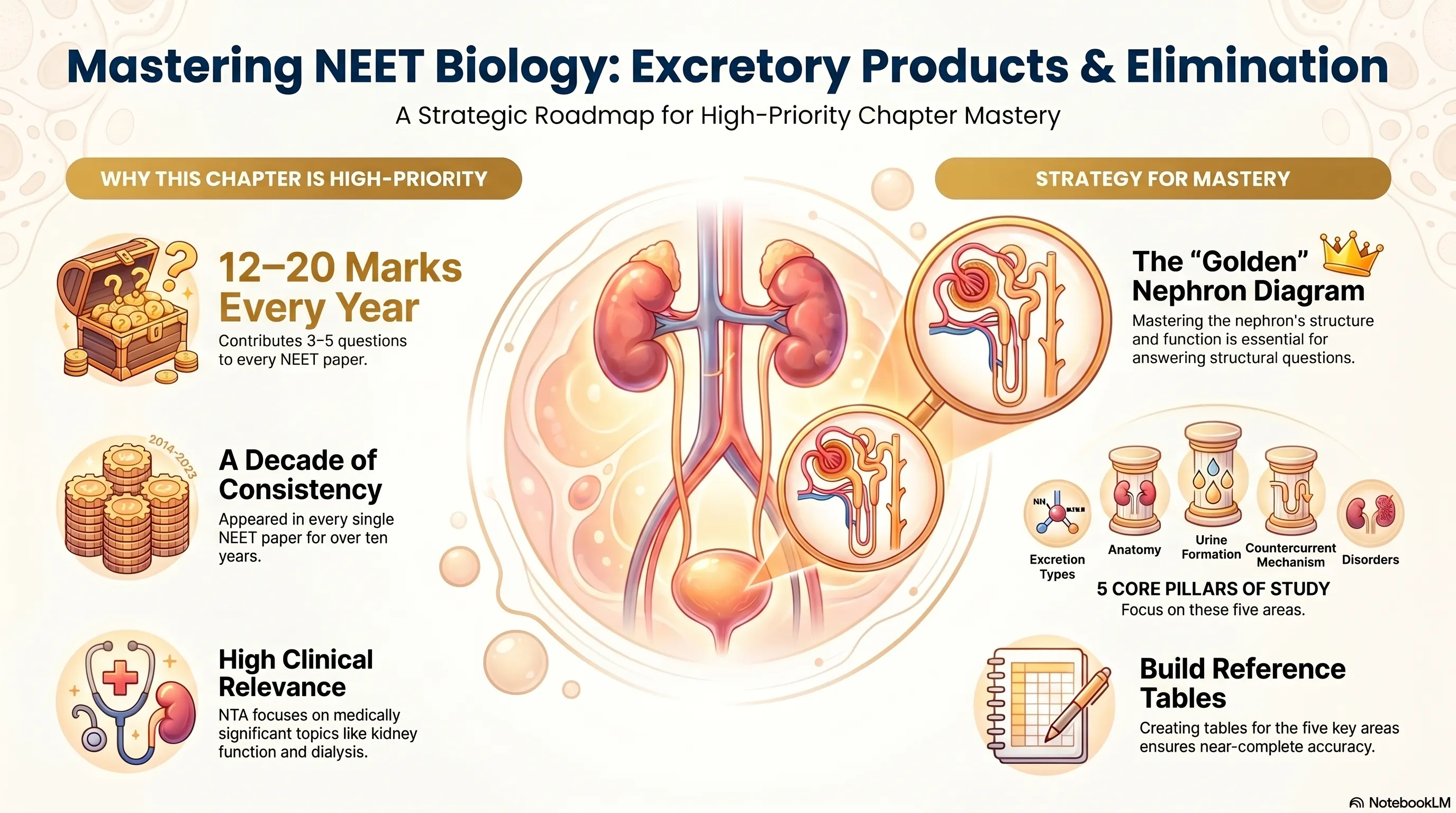
Table of Contents

eSaral › NEET ›Excretory Products & their elimination

Why This Chapter Is a High-Priority NEET Biology Chapter
Excretory Products and Their Elimination (Class 11, Chapter 19) is one of the most reliably tested chapters in NEET UG Biology. It contributes 3–5 questions every year — approximately 12–20 marks — and has appeared in every single NEET paper for over a decade.
The chapter is valuable for NEET because of its medical relevance. Kidney function, dialysis, nephron anatomy, and osmoregulatory disorders are clinically significant topics that NTA tests with precision. A student who has mastered the nephron diagram and urine formation steps will find these questions among the easiest marks available in the Biology section.
What makes this chapter especially learnable is its structure: the key testable content falls into five well-defined areas — types of excretion, kidney and nephron anatomy, urine formation stages, countercurrent mechanism, and kidney disorders. Students who have built strong reference tables for each area report answering Excretory Products questions with near-complete accuracy.
💡 Expert Tip by eSaral Biology Faculty: "The nephron diagram is the most important single diagram in this chapter — and arguably one of the most important diagrams in all of NEET Biology. If you can draw a nephron from memory with every part labelled and its function noted beside it, you will answer every structural question NTA asks from this chapter. Invest 30 minutes drawing this diagram daily for one week and it will be yours for life."
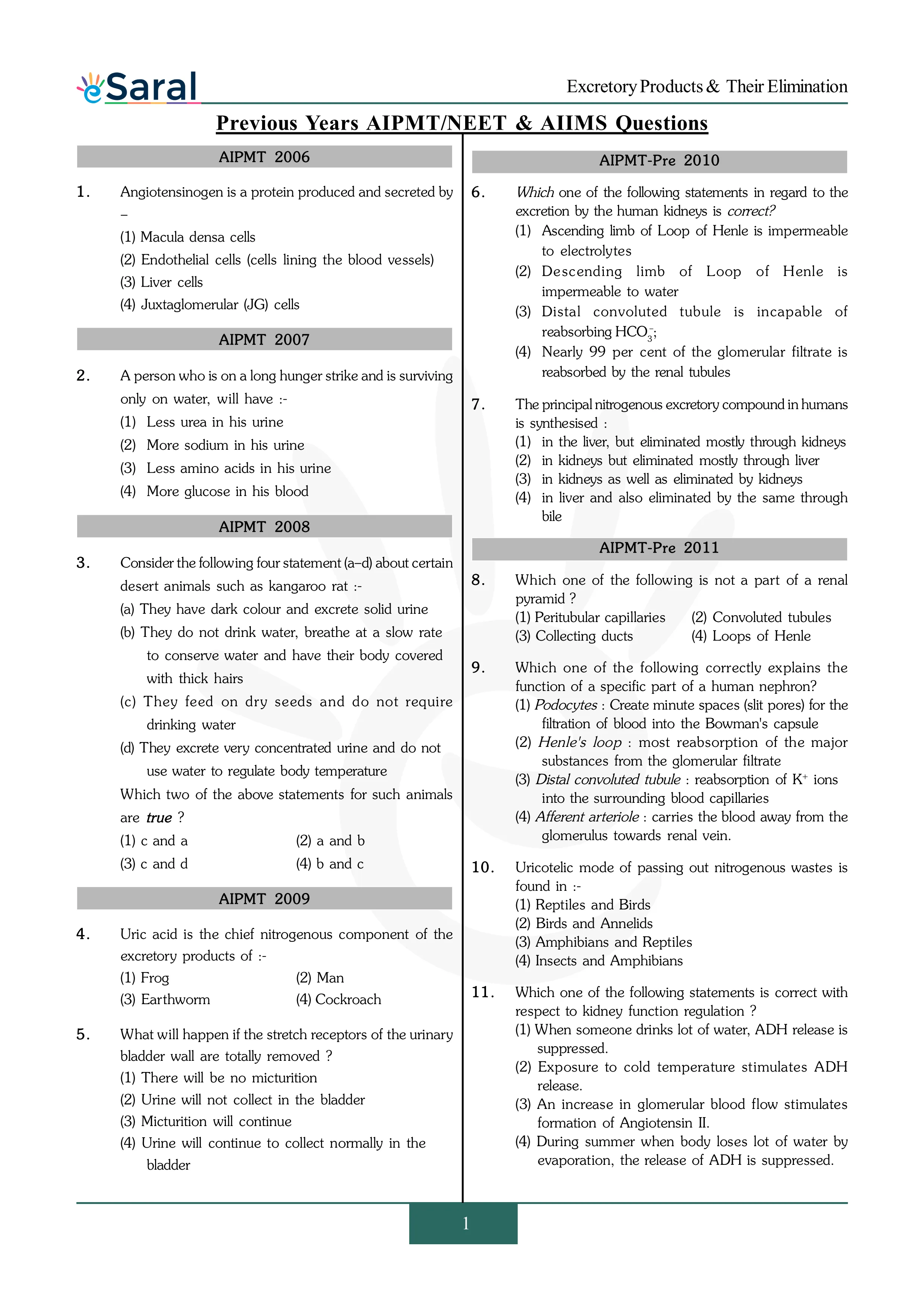
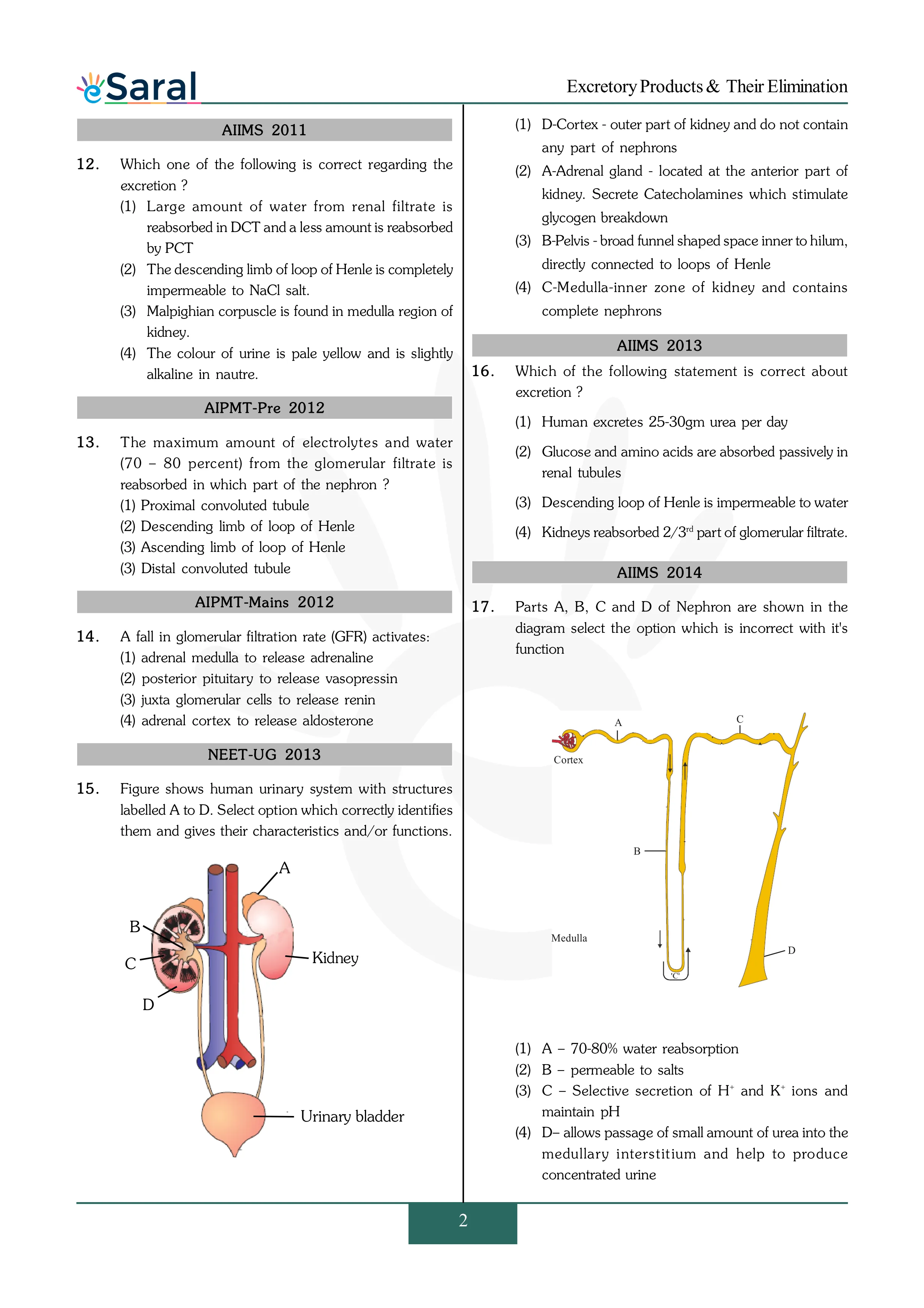
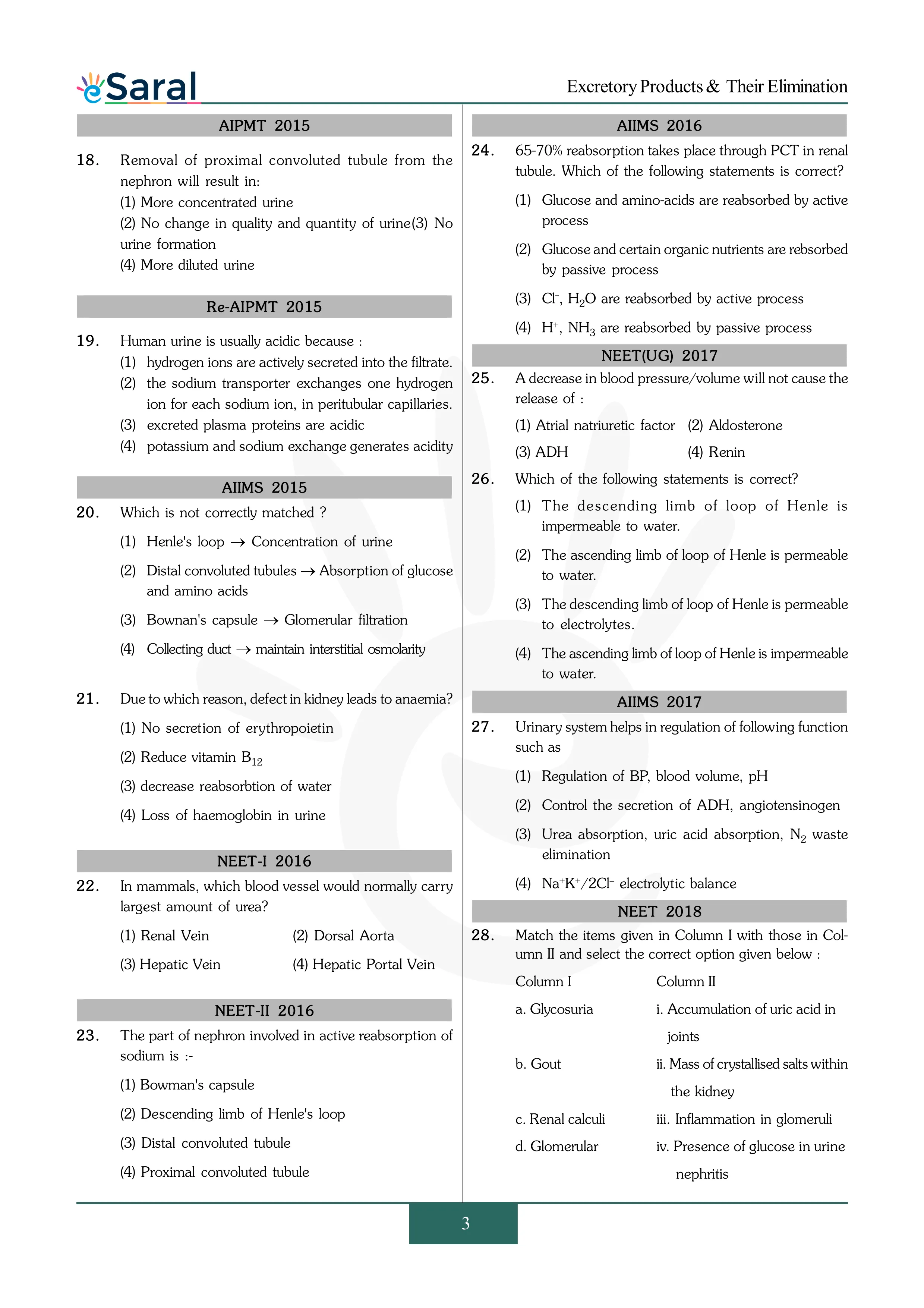
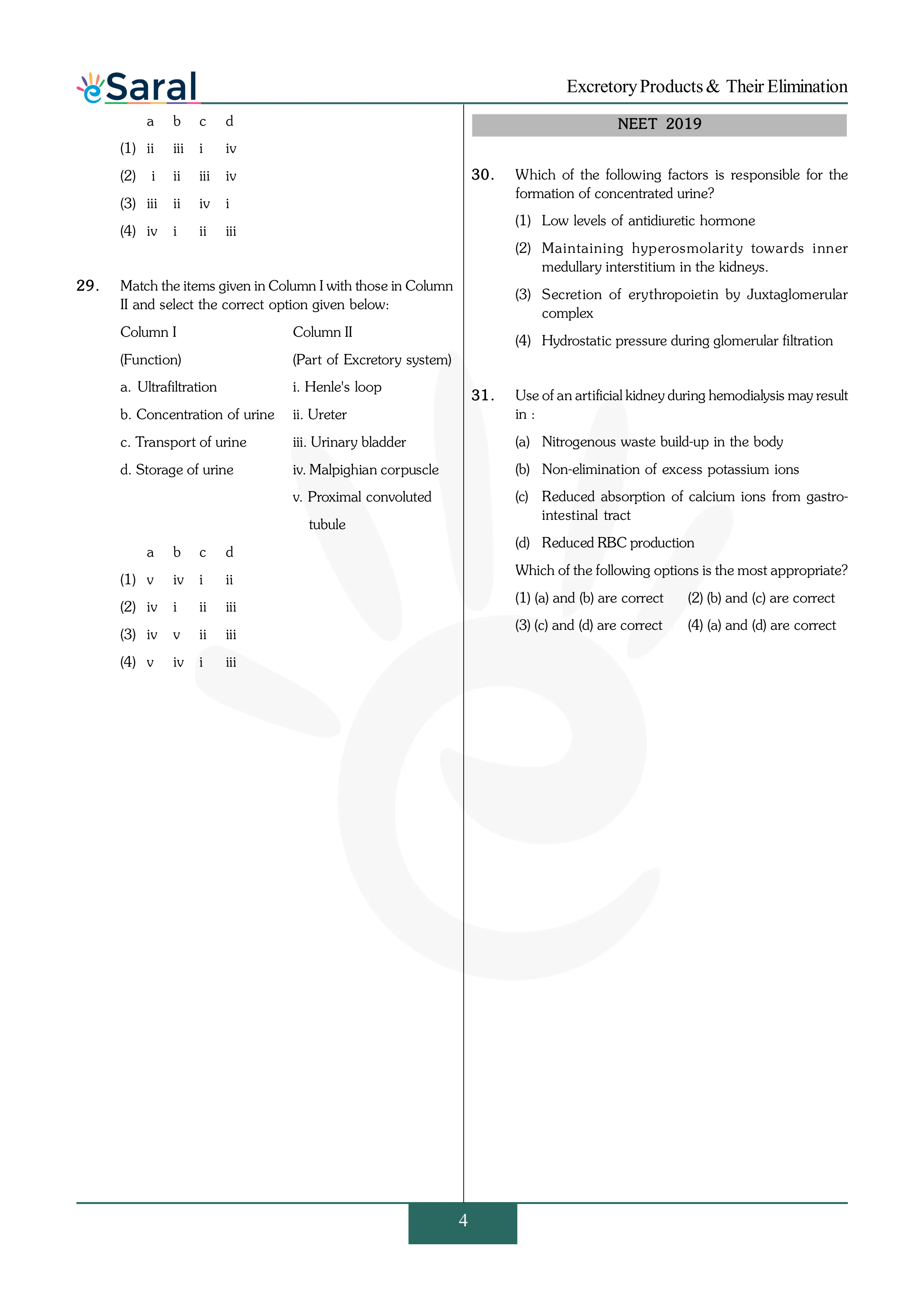
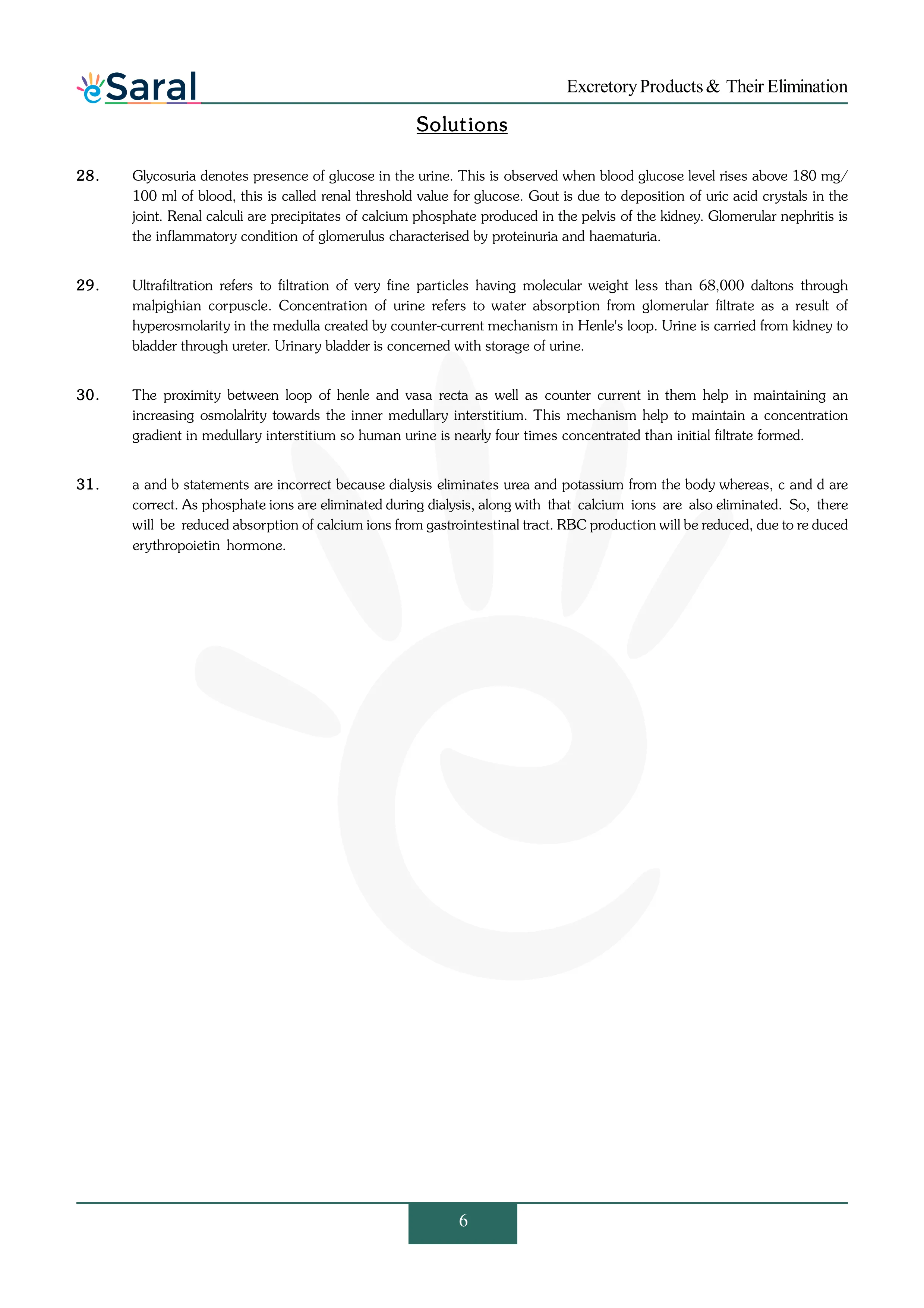
Excretory Products NEET PYQ: Previous Year Questions with Solutions

Frequently Asked Questions
Find answers to common questions.
How many questions come from Excretory Products in NEET?
.
Excretory Products and Their Elimination contributes 3–5 questions in almost every NEET UG Biology paper. The average over the last 8 years is approximately 3.9 questions per year — around 16 marks. It is one of the top-5 highest-scoring Biology chapters in NEET, with highly predictable question types making it one of the most efficiently learnable chapters
What are the most important topics of Excretory Products for NEET?
The six highest-frequency topics are: nephron structure and the function of each part (especially PCT and Loop of Henle), ADH and collecting duct/DCT regulation, aldosterone and DCT Na⁺ reabsorption, the countercurrent mechanism (Loop of Henle permeability + vasa recta), types of excretion (uricotelism in reptiles/birds/insects), and excretory organs in other animals (Malpighian tubules, flame cells, nephridia).
What is the difference between PCT and DCT in the nephron?
The PCT (Proximal Convoluted Tubule) is the site of bulk reabsorption — it reabsorbs 100% of glucose and amino acids, about 75% of filtered water, and large amounts of Na⁺, K⁺, and HCO₃⁻, regardless of body needs (obligatory reabsorption). The DCT (Distal Convoluted Tubule) performs selective, hormone-regulated reabsorption — aldosterone controls Na⁺ reabsorption, ADH controls water reabsorption, and the DCT also secretes H⁺ and K⁺ for pH regulation.
Why do reptiles and birds excrete uric acid?
Reptiles and birds excrete uric acid (uricotelism) because uric acid is nearly insoluble in water and can be excreted as a semi-solid paste — requiring minimal water loss. This is critical for two reasons: (1) they live in dry terrestrial environments where water conservation is essential, and (2) their embryos develop inside cleidoic (shelled) eggs where liquid nitrogenous waste cannot be accumulated — uric acid can be stored safely as a solid within the egg.
Where can I get all NEET chapter-wise PYQs for Biology with solutions?
eSaral provides a free, complete collection of NEET chapter-wise previous year questions with solutions for Physics, Chemistry, and Biology — organised by chapter and year, with no sign-up required. For timed exam practice, the eSaral NEET Test Series replicates real NEET conditions with detailed performance analysis.