Human Health and Diseases - NEET Previous Year Questions with Complete Solutions
Human Health and Diseases is a high-scoring NEET Biology chapter covering human diseases, immunity, vaccination, and substance abuse, with most questions directly based on NCERT concepts, diagrams, and disease-pathogen associations.
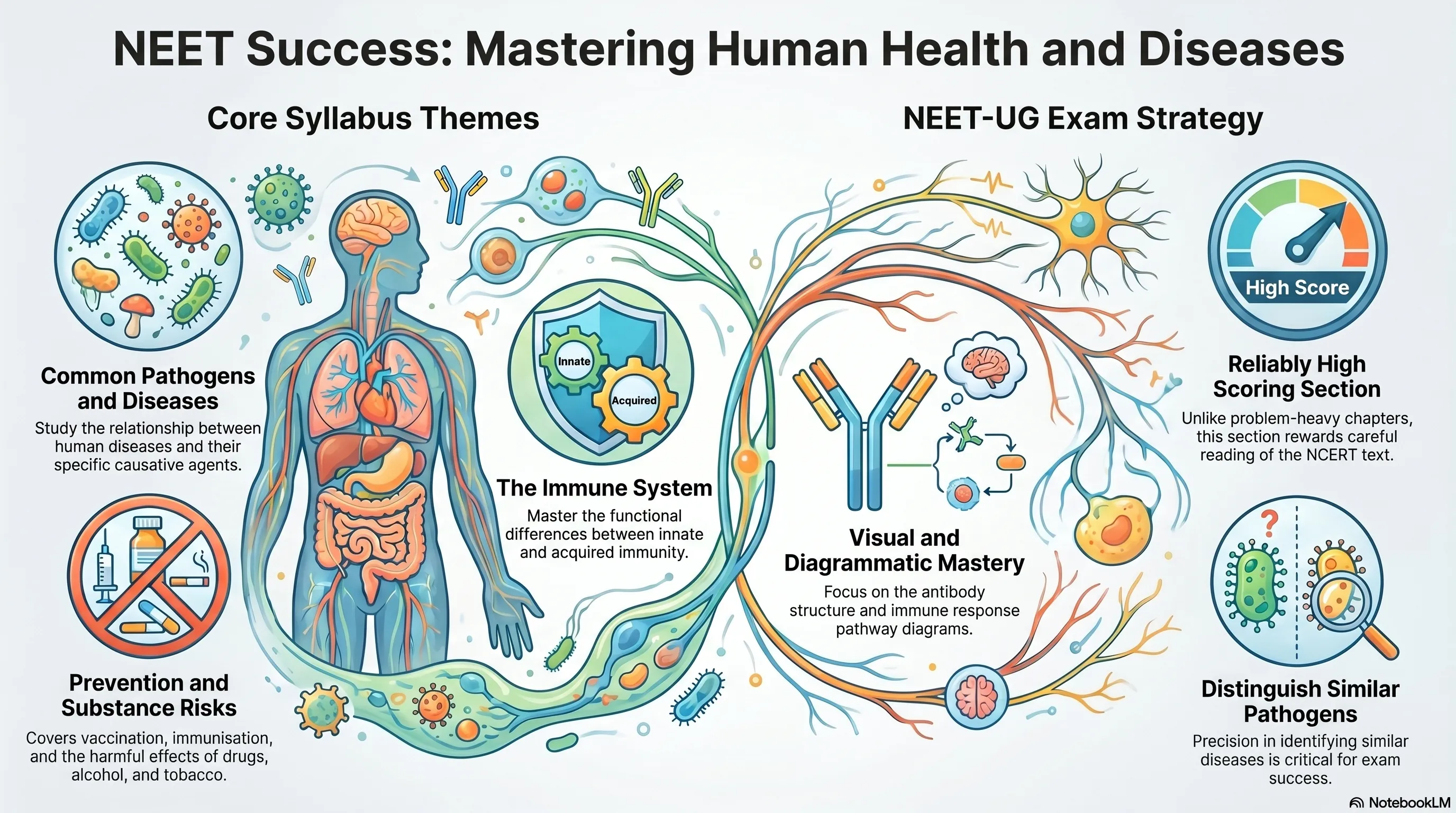
Table of Contents

eSaral › NEET › Human Health and Diseases

What Is This Chapter About and Why Does It Matter for NEET?
Human Health and Diseases is Chapter 8 of Class 12 Biology (NCERT), part of Unit VIII — Biology in Human Welfare. The chapter covers four major themes: common human diseases and their pathogens, the immune system (innate and acquired immunity), vaccination and immunisation, and the harmful effects of drugs, alcohol, and tobacco.
For NEET-UG aspirants, this chapter is one of the most reliably scoring sections in Biology. Unlike topics such as Genetics or Ecology, where problem-solving skills matter heavily, Human Health and Diseases rewards students who read NCERT carefully, understand diagrams (especially the antibody structure and immune response pathway), and can distinguish between similar diseases and their causative agents.
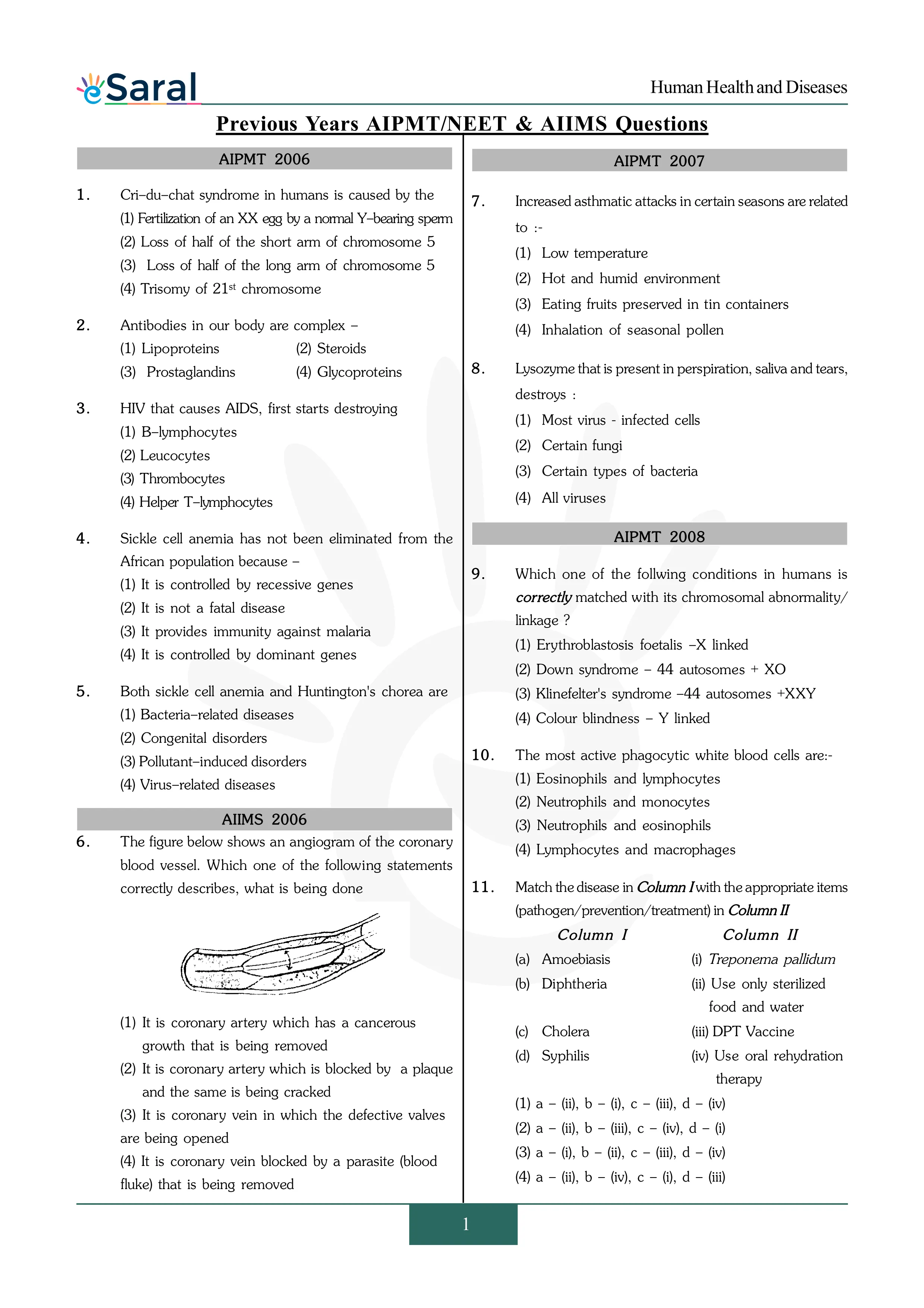
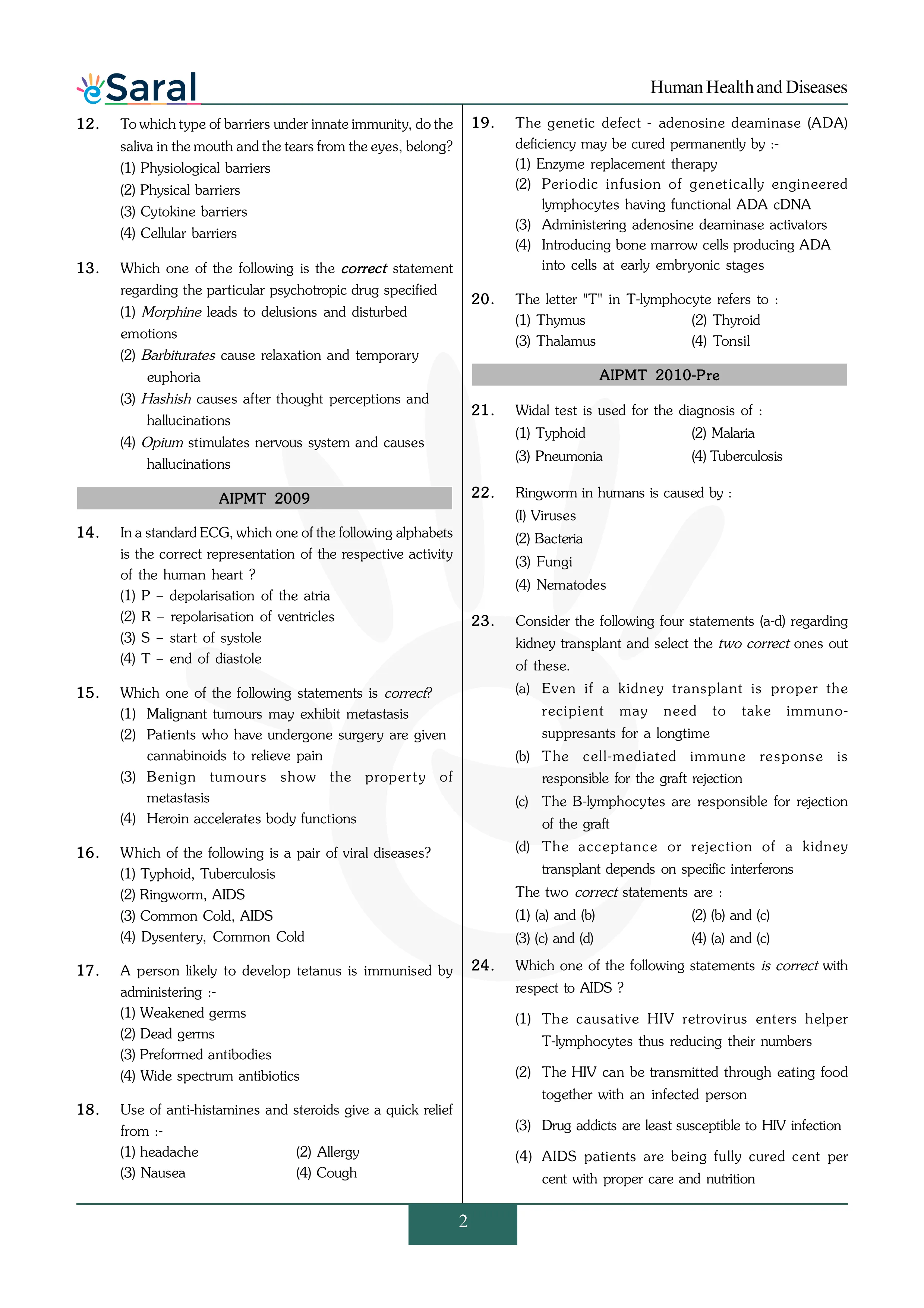
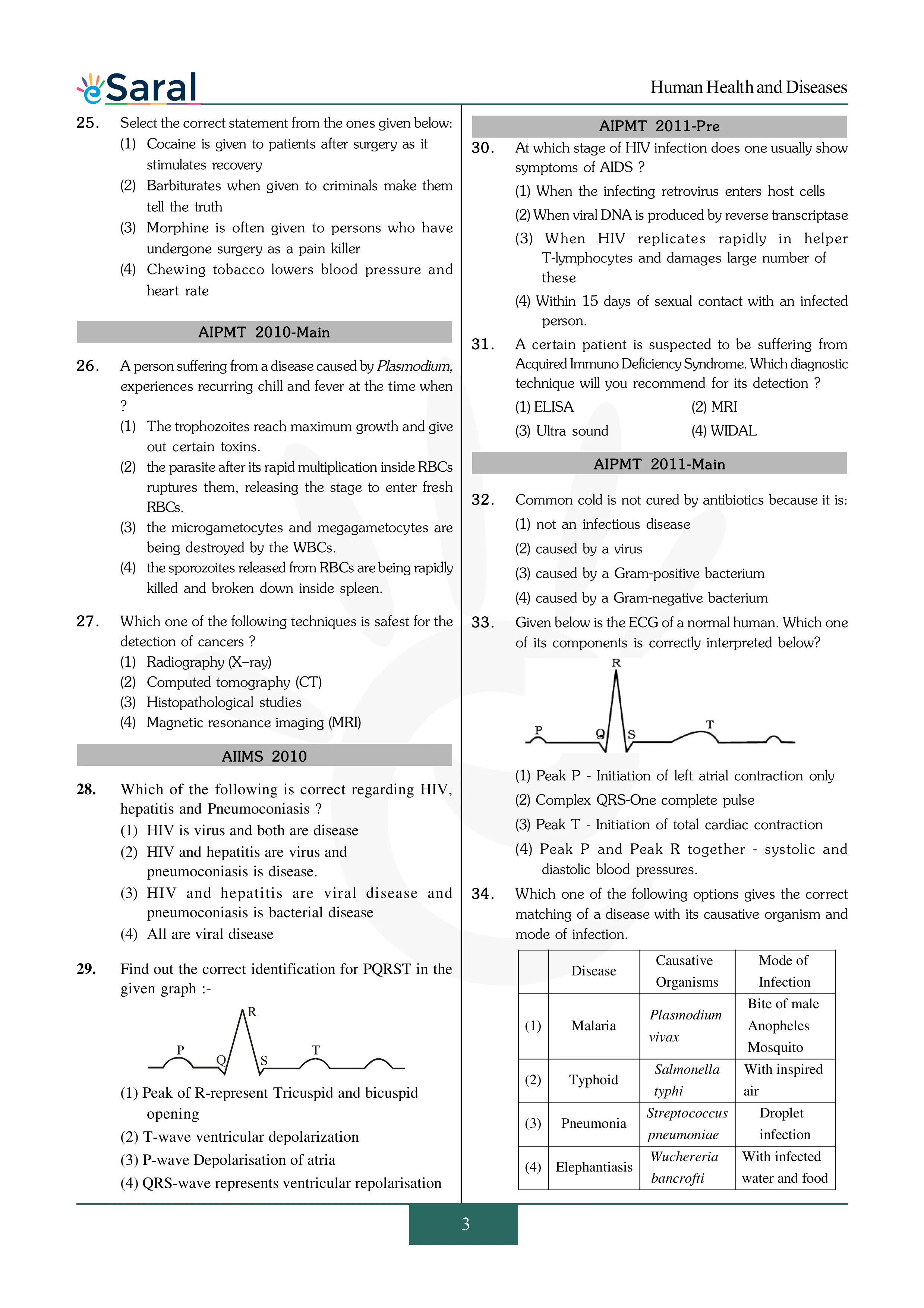
NEET Previous Year Questions
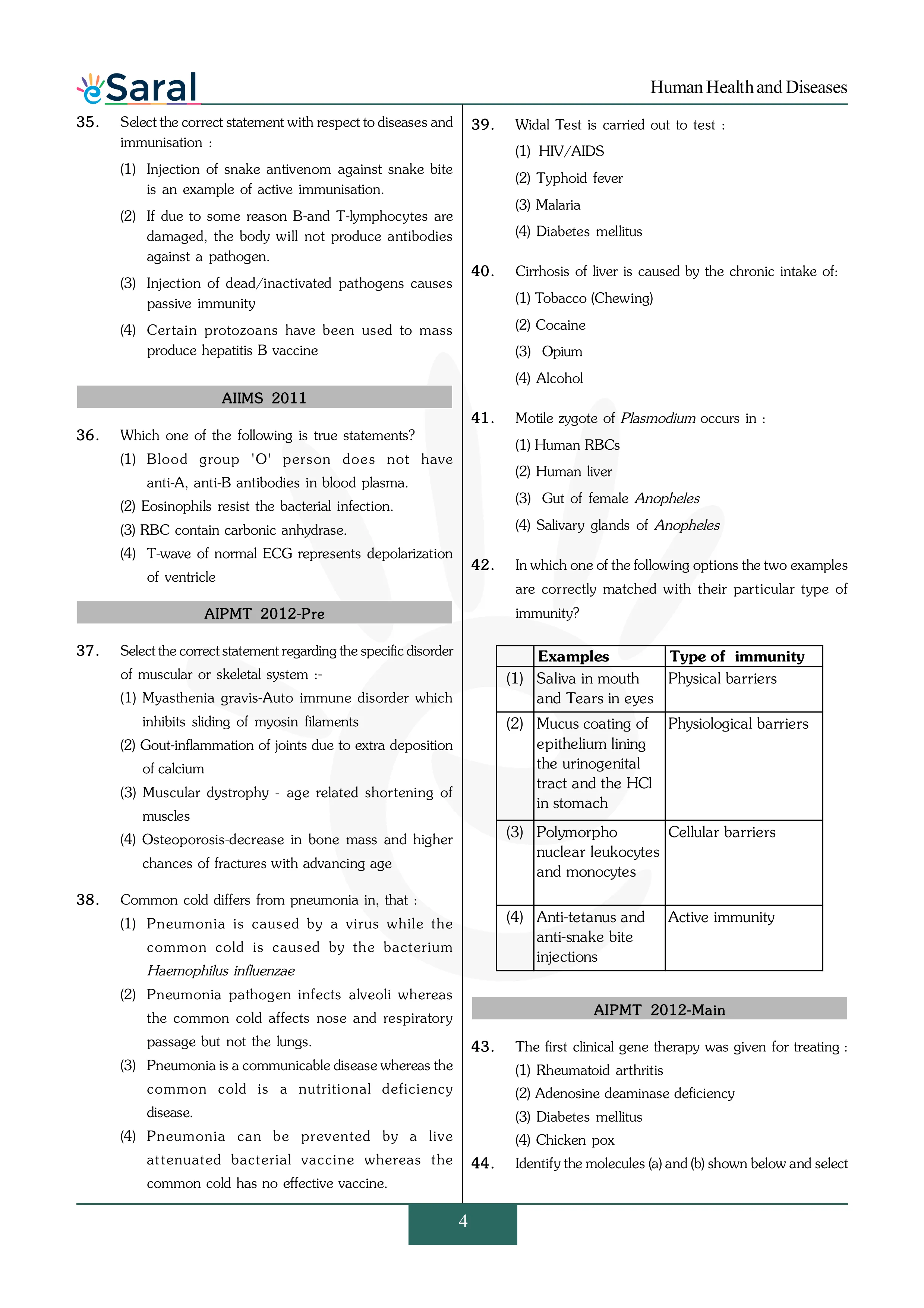
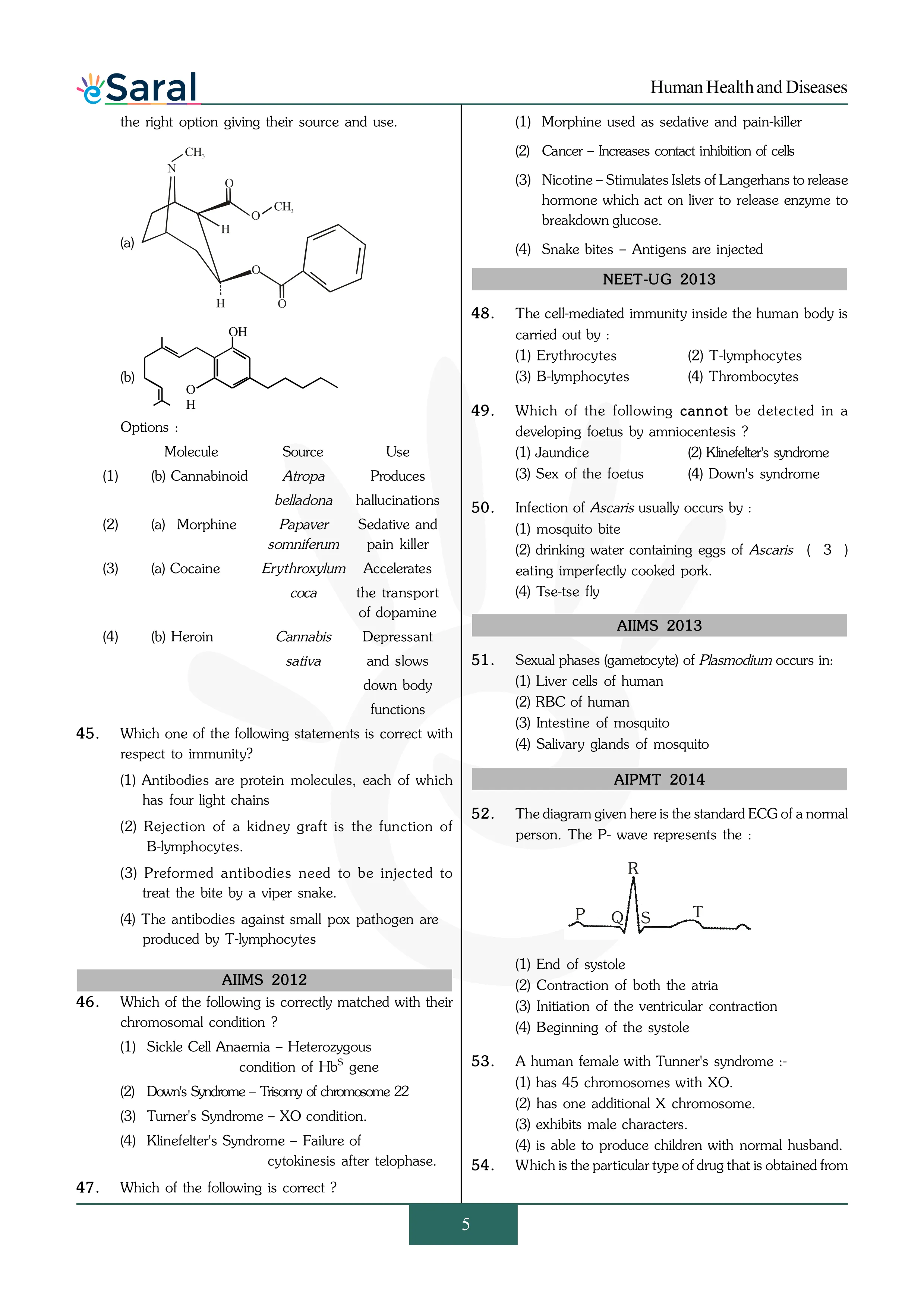
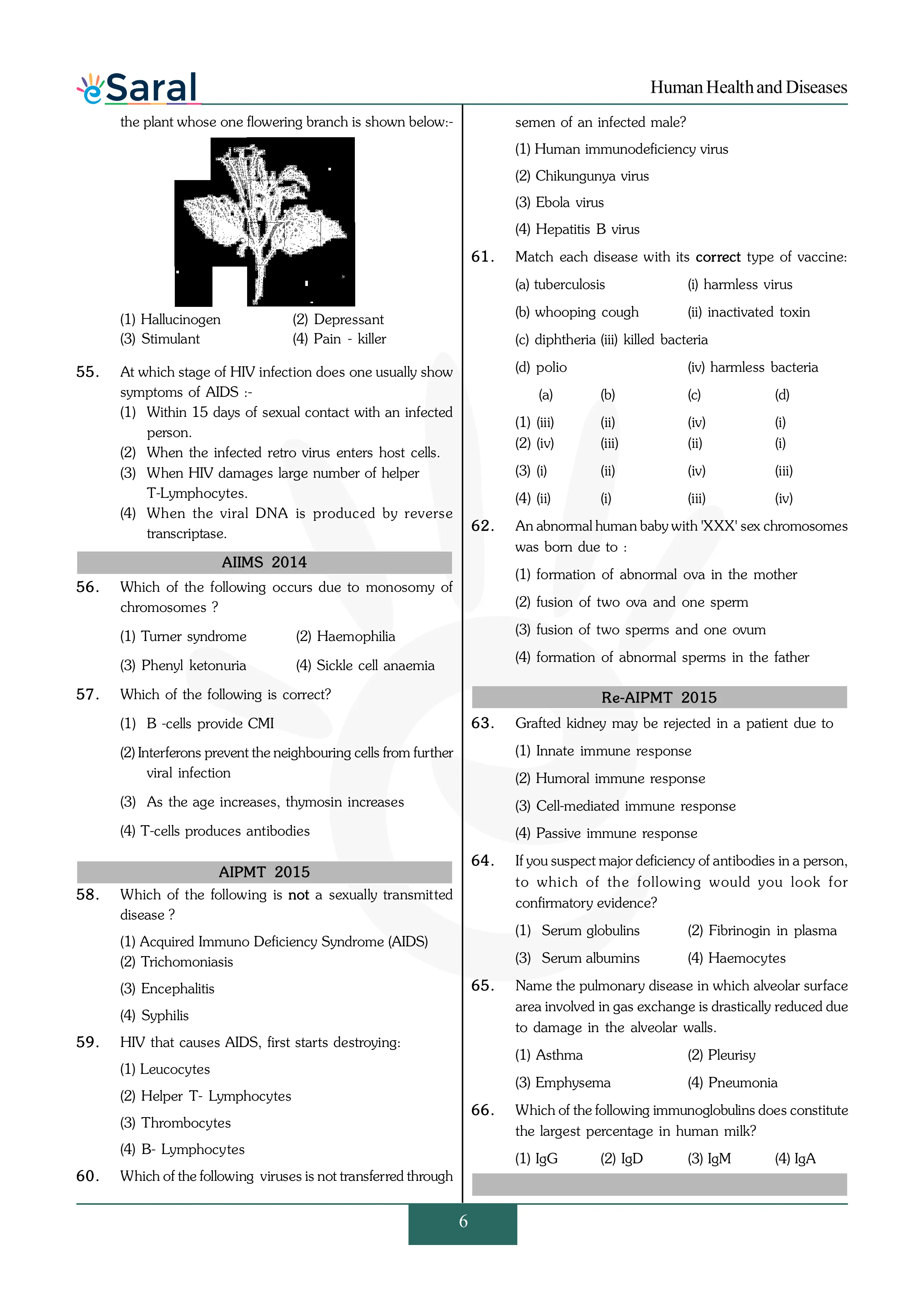
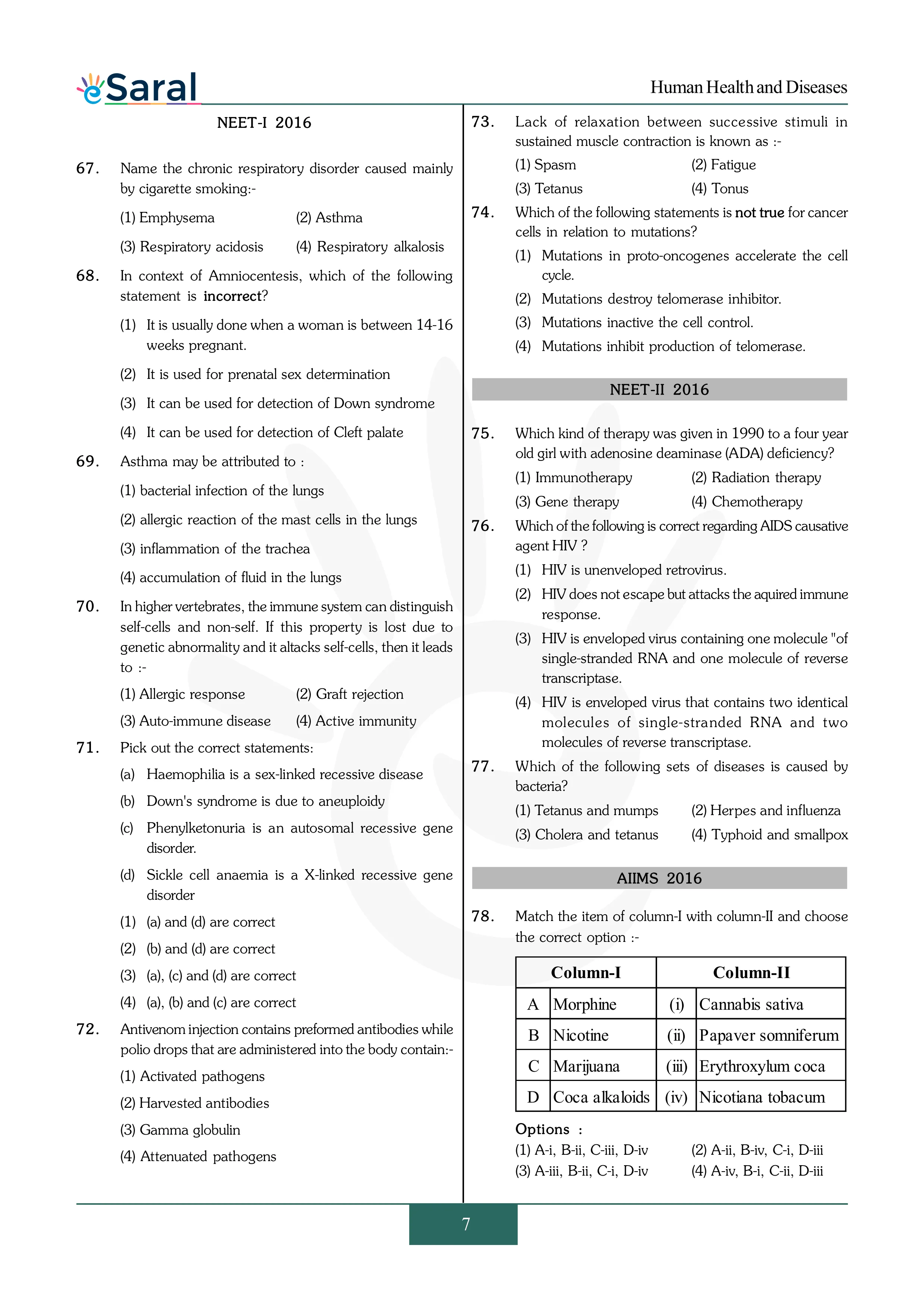
Frequently Asked Questions
Find answers to common questions.
How many questions are asked from Human Health and Diseases in NEET every year?
NEET typically asks 3–5 questions from Human Health and Diseases per year. The chapter has appeared in every NEET paper since 2013. Based on NTA data, the 2021 paper had the highest count at 5 questions. On average, expect 4 questions contributing around 16 marks to your Biology score.
Which topics in Human Health and Diseases have the highest weightage in NEET?
Immunity (innate vs. acquired, active vs. passive, antibody structure) and infectious diseases (especially Malaria, Typhoid, and Ringworm) carry the highest combined weightage. Cancer biology — particularly oncogenes, metastasis, and carcinogens — has been increasingly tested from 2019 onwards. Together, these three areas account for roughly 80% of questions from this chapter.
Is NCERT enough for Human Health and Diseases in NEET?
Yes, NCERT is sufficient for this chapter if read carefully and completely. Almost every NEET question from Human Health and Diseases can be traced directly to an NCERT line, diagram, or example box. Focus on the immunity diagrams, the disease summary tables, and the drug classification list. Supplement with PYQs to understand how NEET frames the questions.
What is the difference between active and passive immunity, as tested in NEET?
Active immunity develops when the body produces its own antibodies in response to an antigen — either through natural infection or vaccination. It is long-lasting. Passive immunity involves receiving readymade antibodies from an external source, such as mother's colostrum or antitoxin injections. It provides immediate protection but does not last long because no memory cells are formed.
Which drugs and their plant sources are most commonly asked in NEET?
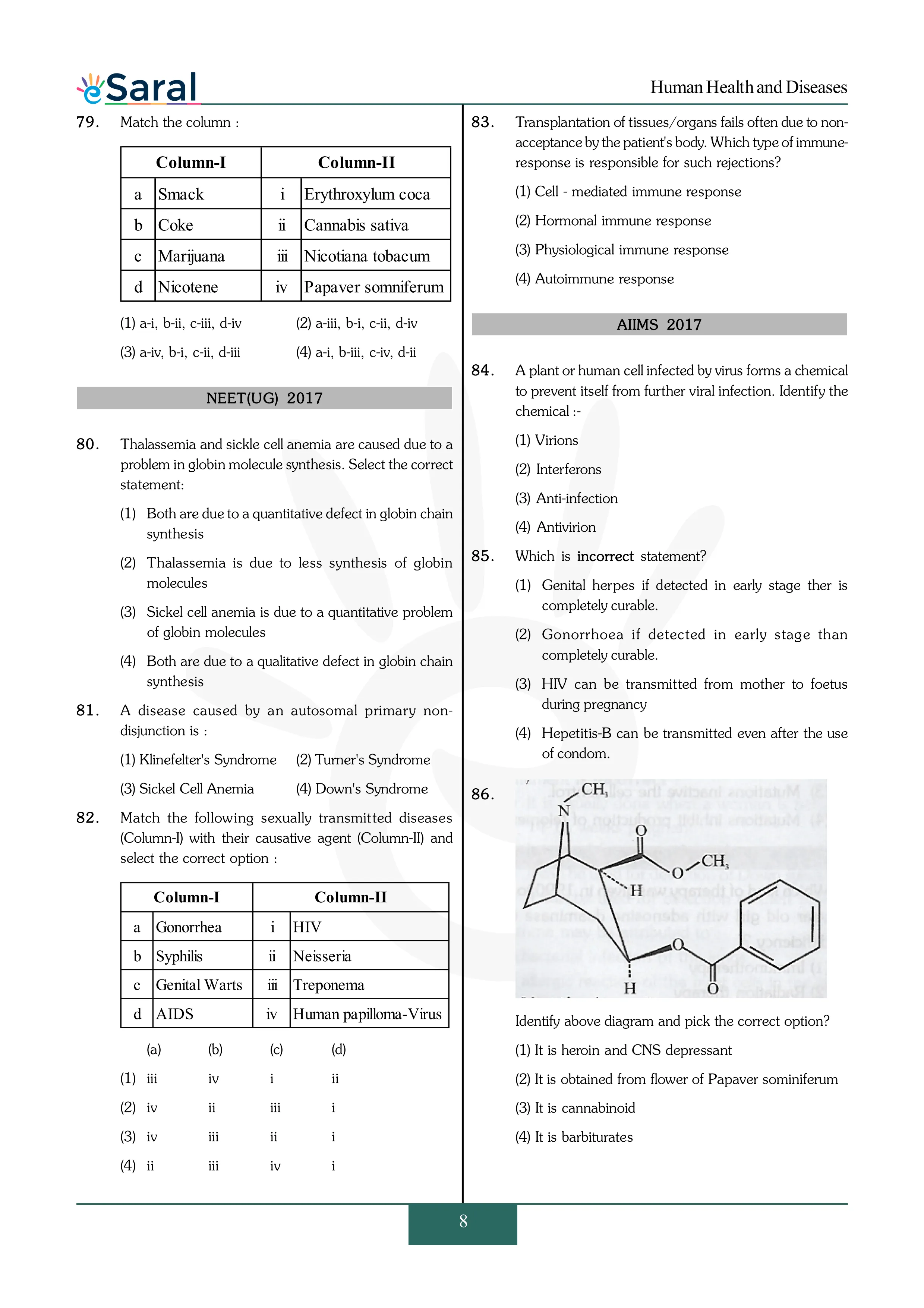
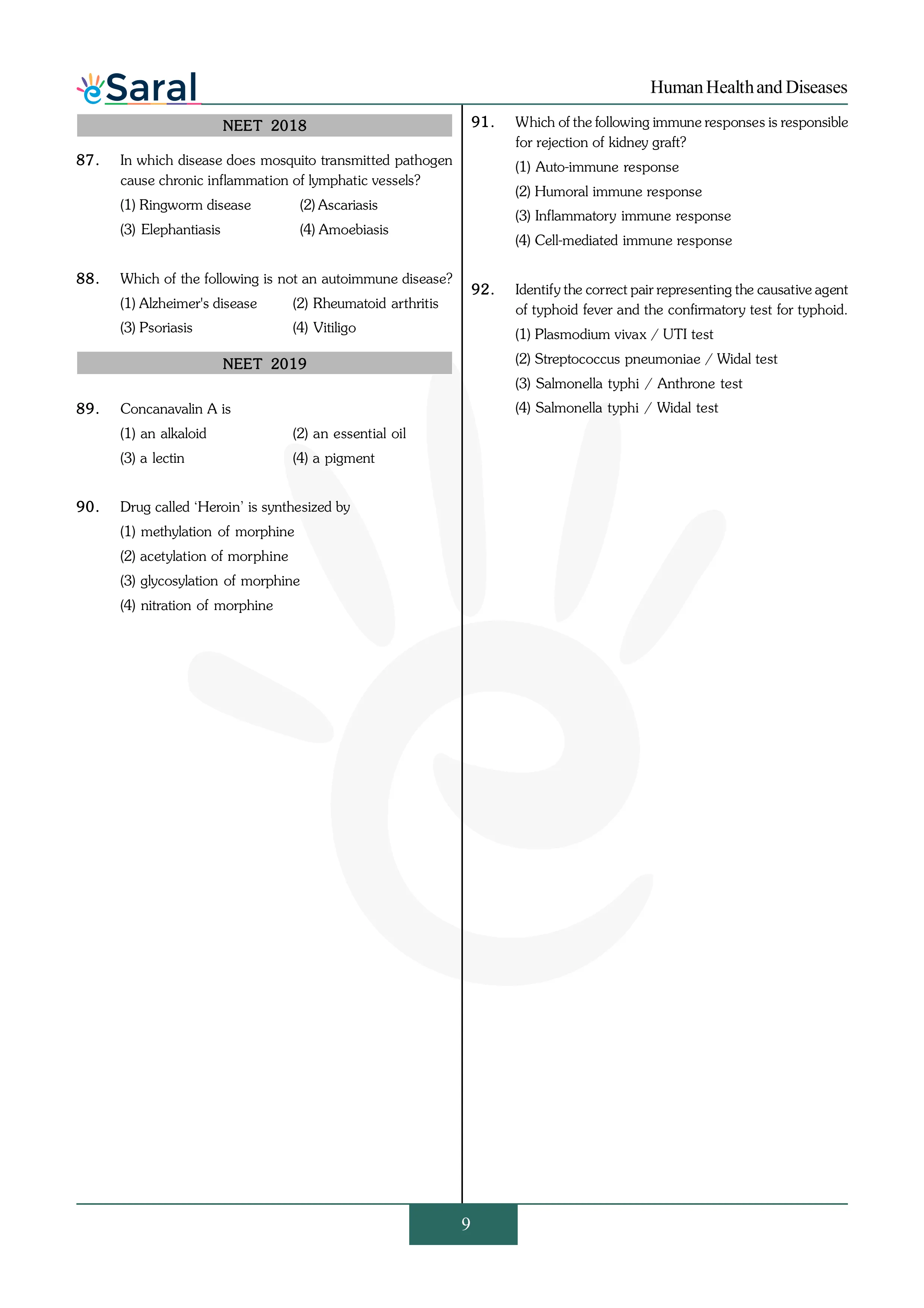
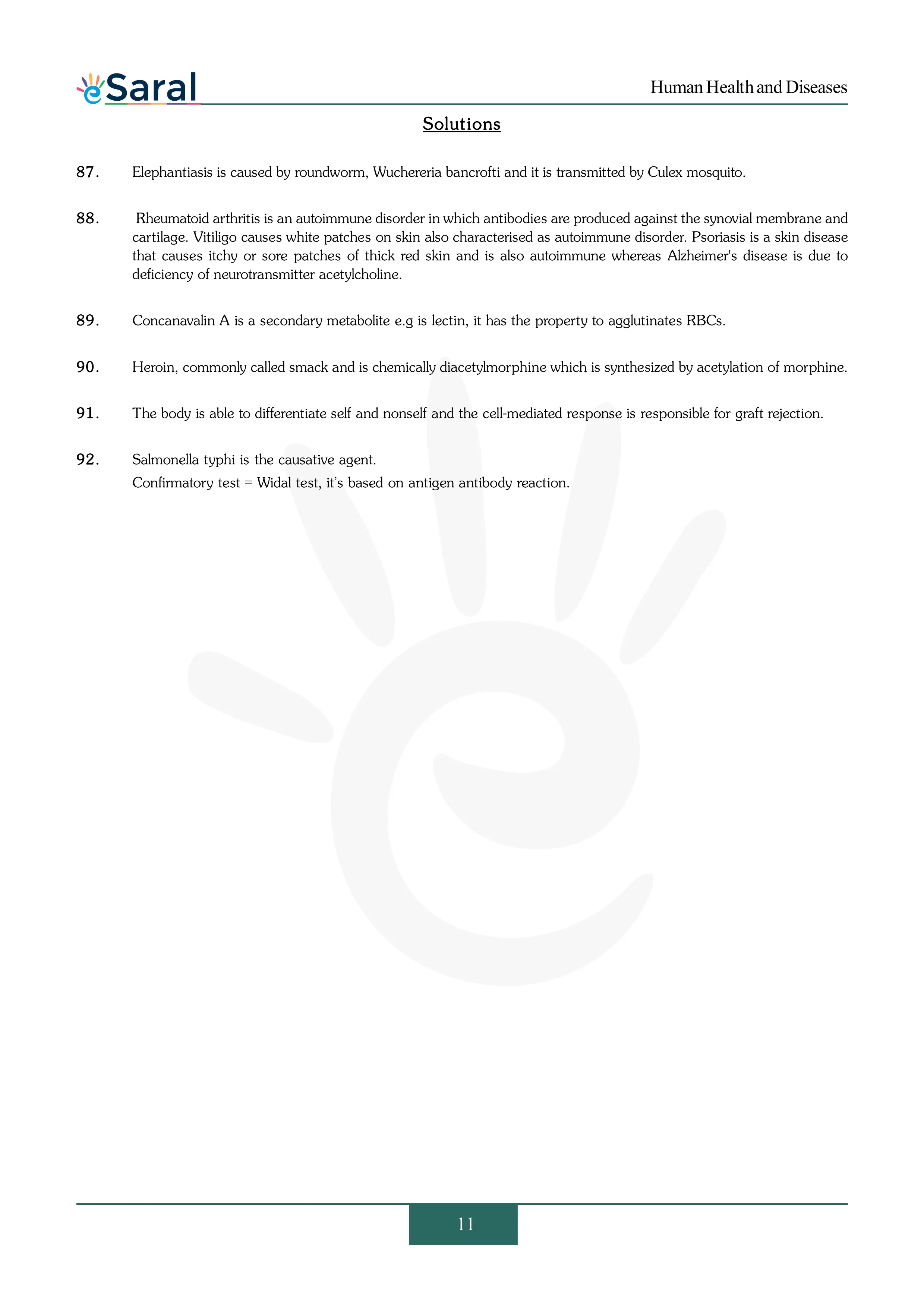
NEET frequently tests: Morphine and heroin from Papaver somniferum (opium poppy); THC (tetrahydrocannabinol) from Cannabis sativa; cocaine from Erythroxylum coca. These are classified as opioids, cannabinoids, and coca alkaloids respectively. Questions often ask for the plant source or the chemical extracted, so memorise all three pairs as a set.