Morphology of flowering plants - NEET Previous Year Questions with Complete Solutions
Morphology of Flowering Plants is an important NEET Biology chapter that covers the structure, modifications, and identification of roots, stems, leaves, flowers, fruits, and seeds, forming a key part of the Structural Organisation in Plants unit.
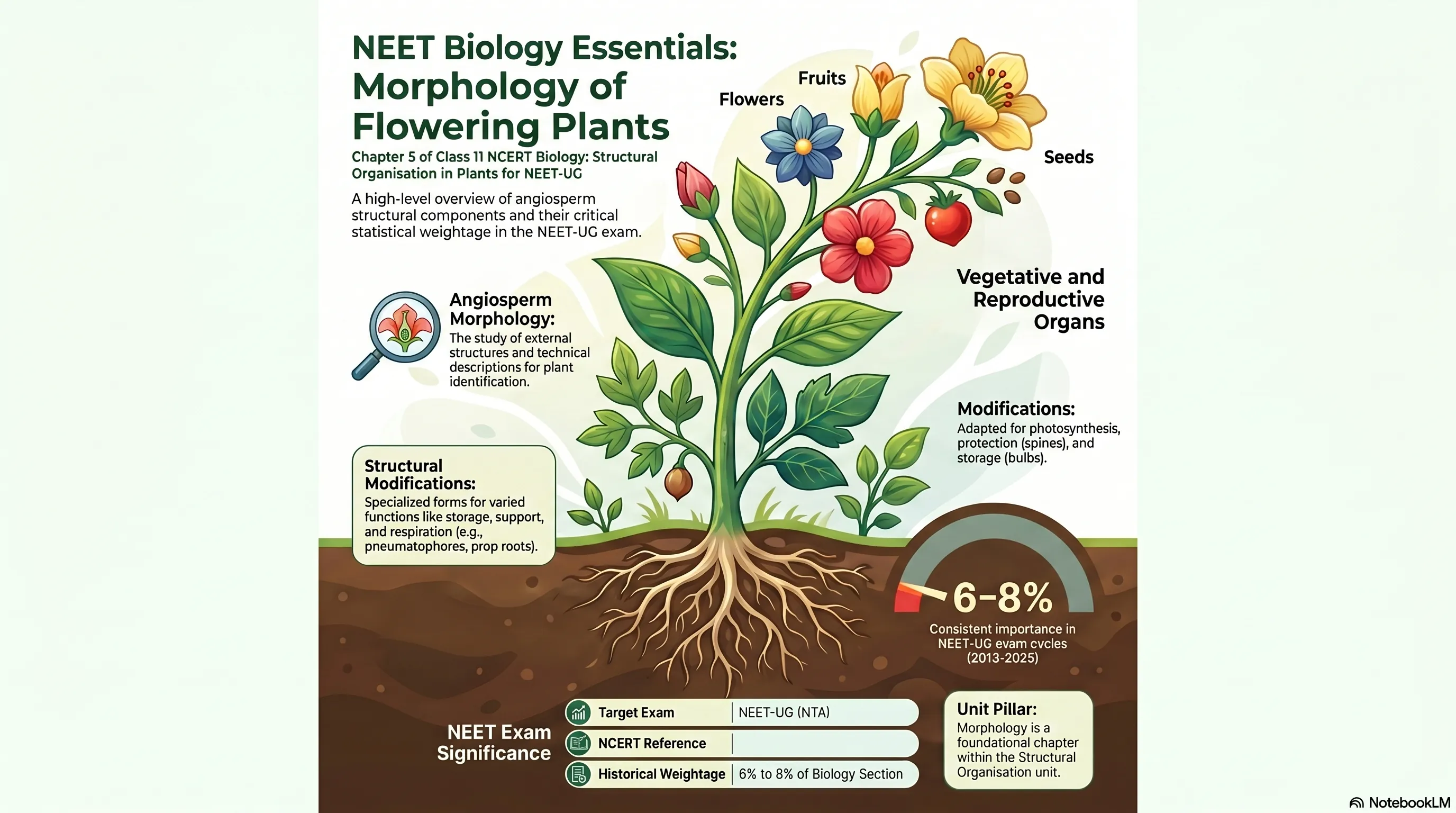
Table of Contents

eSaral › NEET › Morphology of flowering plants

What is the morphology of flowering plants in NEET?
The morphology of flowering plants is Chapter 5 of Class 11 NCERT Biology. It covers the external structure and form of flowering plants (angiosperms) — including roots, stems, leaves, flowers, fruits, and seeds — along with their modifications and the semi-technical descriptions used in plant identification.
For NEET-UG, this chapter falls under the Structural Organisation in Plants unit, which NTA has consistently weighted at 6–8% of the total Biology section across exam cycles from 2013 to 2025.
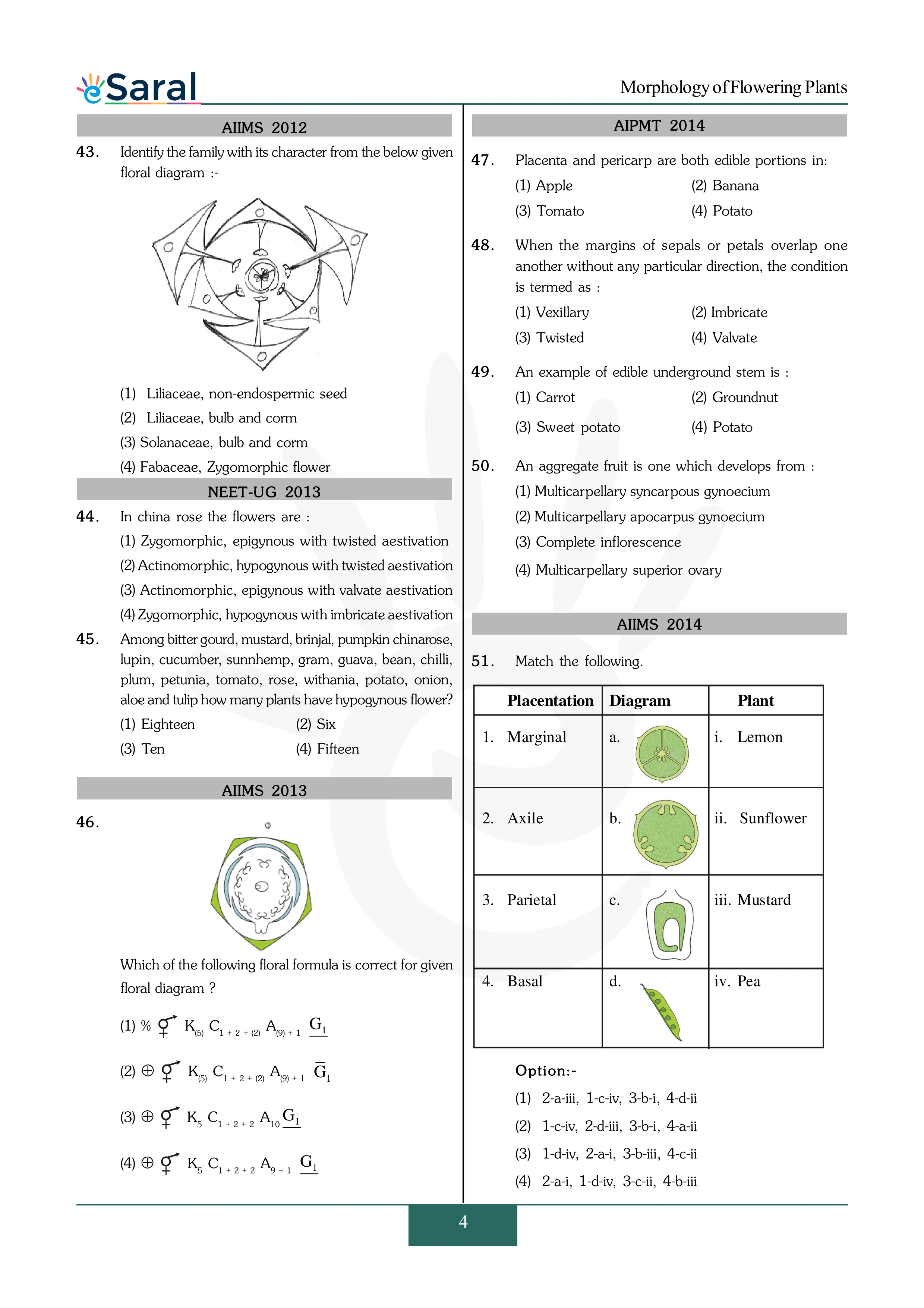
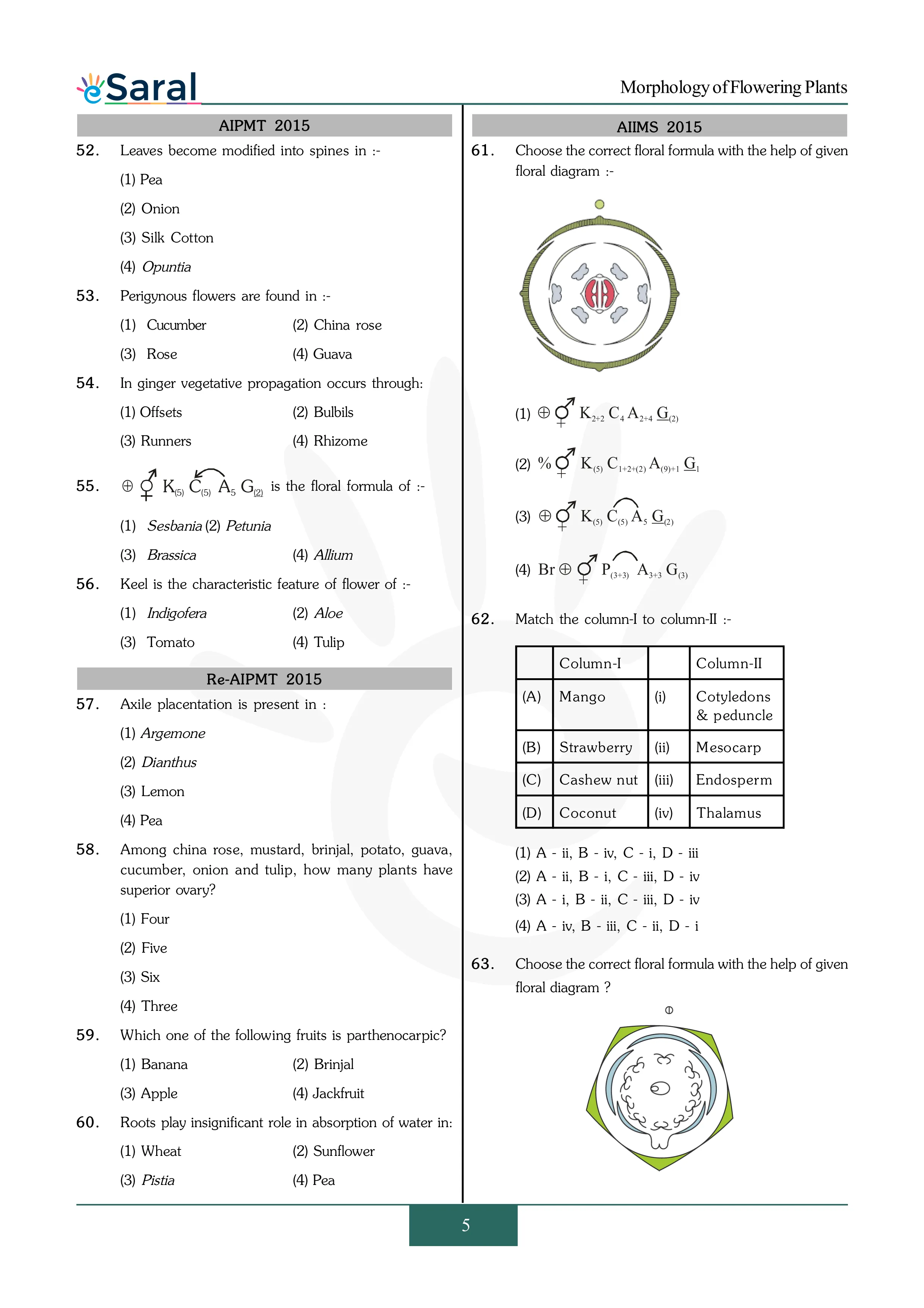
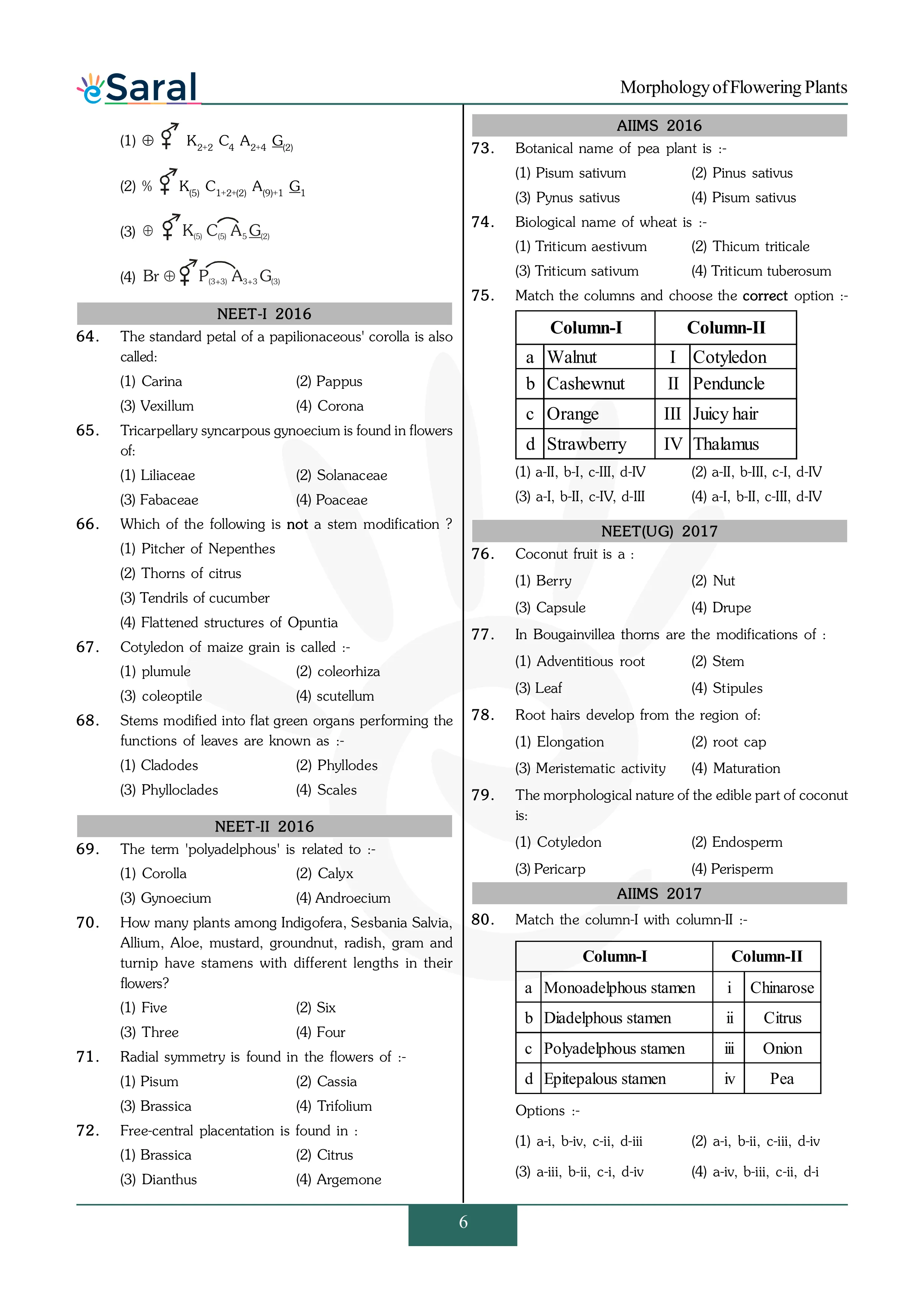
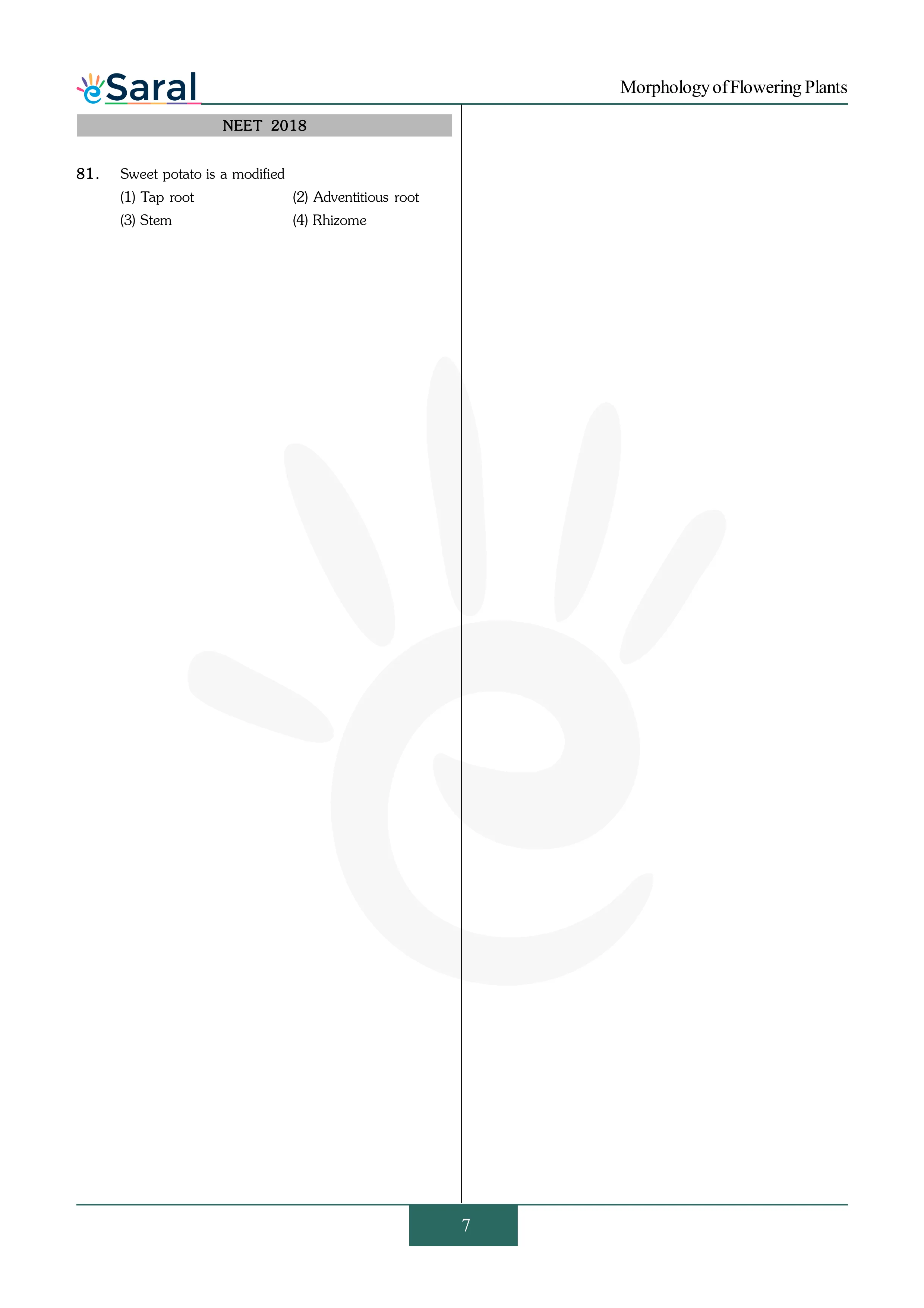
Morphology of Flowering Plants NEET PYQ with Solutions

Frequently Asked Questions
Find answers to common questions.
How many questions come from Morphology of Flowering Plants in NEET?
NEET typically has 2–4 questions from Morphology of Flowering Plants every year. Based on NTA official papers from 2013 to 2025, this chapter contributed an average of 3.1 questions per paper. At 4 marks per question, it accounts for roughly 8–16 marks, making it one of the more rewarding Class 11 Biology chapters to prepare thoroughly.
Is style absent in Papaver somniferum (opium poppy)?
Yes, the style is absent in Papaver somniferum. This is because the stigma sits directly on the ovary in a sessile arrangement — a condition called subsessile or sessile stigma. The stigma forms a flat disc (stigmatic disc) sitting directly on the top of the ovary. This is an exception to the typical pistil structure and has been tested in NEET objective questions.
What is the correct floral formula for Liliaceae in NEET?
The correct floral formula for Liliaceae according to NCERT Class 11 Chapter 5 is: ⊕ P(3+3) A3+3 G(3). The ovary is superior — represented by G(3), not G(3̄). Some older coaching notes incorrectly show an inferior ovary. Always rely on your NCERT textbook for this notation, as NEET marks strictly follow NCERT.
Are NEET biology PYQs available in Hindi?
eSaral's chapter-wise PYQ banks are currently available in English. NTA publishes official NEET question papers in Hindi on its official website (nta.ac.in), where you can access Hindi-medium papers from 2017 onwards. For Hindi-medium students, it is recommended to solve the NTA official Hindi papers and then use eSaral's solutions for answer explanations.
Which is more important for NEET — Morphology or Anatomy of Flowering Plants?
Both chapters are important and together they form the plant structure unit in Class 11 NCERT. Historically, Morphology of Flowering Plants yields slightly more questions (average 3.1/year) compared to Anatomy of Flowering Plants (average 2.3/year). However, both chapters are easy to score in once NCERT is read carefully, so neither should be skipped.